LDS Temple Garments Guide 2026: History, Styles & Buying Tips
Introduction to LDS Temple Garments
For members of The Church of Jesus Christ of Latter-day Saints, temple garments represent far more than a simple undergarment. They are a sacred, deeply personal reminder of covenants made with God inside the temple. Often referred to simply as 'garments' or 'Mormon underwear' by the general public, these garments are an essential part of daily life for endowed members of the faith. As of 2026, the Church has continued to refine the manufacturing, fabric technology, and distribution of these sacred items to meet the needs of a global membership spanning diverse climates and lifestyles.
This comprehensive guide explores the rich history of LDS temple garments, the modern fabric innovations available in 2026, sizing guidelines, and practical advice on how to purchase and care for them respectfully.
The Spiritual and Cultural Significance
To understand the garment, one must understand its purpose. According to the General Handbook of The Church of Jesus Christ of Latter-day Saints, the garment serves as a physical and spiritual shield, a reminder of the wearer's commitment to live a righteous life, and a symbol of their connection to the divine. Unlike religious vestments worn only during worship services (such as a cleric's collar or a prayer shawl), LDS garments are worn day and night, integrating spiritual mindfulness into everyday, secular life.
The garment features specific woven or embroidered marks—the compass, the square, the navel mark, and the knee mark. Each mark holds profound symbolic meaning related to morality, truth, and the eternal nature of the human soul. Because of this sacred nature, members are taught to treat the garments with the utmost respect, never displaying them casually or treating them as ordinary apparel.
Historical Evolution: From Nauvoo to the Modern Era
The origins of the temple garment trace back to the 1840s in Nauvoo, Illinois, during the lifetime of the Church's founder, Joseph Smith. Early garments were designed as a one-piece union suit, extending from the wrists to the ankles, featuring a collar and long sleeves. This design was heavily influenced by the modesty standards and practical underclothing of the 19th century.
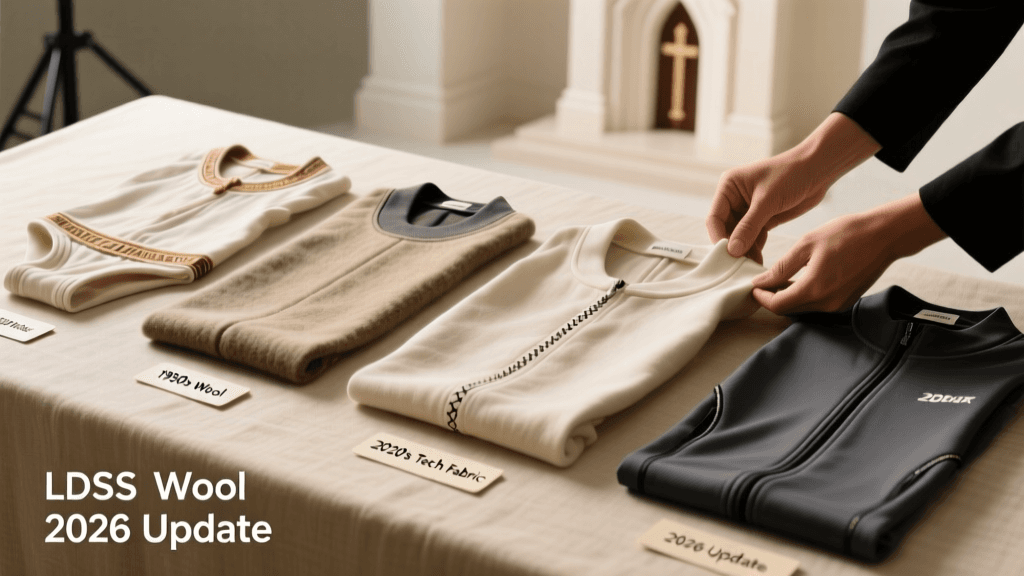
As the Church migrated to the Salt Lake Valley and the decades progressed, the garment underwent several practical adaptations, documented extensively by researchers at the BYU Religious Studies Center. In the 1920s and 1930s, the Church authorized the transition from a one-piece suit to a two-piece design (a t-shirt and shorts), which was a monumental shift for member comfort. Over the mid-to-late 20th century, further adjustments were made: the collar was removed, sleeves were shortened to the cap-sleeve or t-shirt length, and the hemlines were raised to accommodate modern clothing styles, such as short-sleeved shirts and knee-length skirts, while ensuring the sacred marks remained adequately covered.
2026 Fabric Innovations and Style Options
In 2026, the Church's distribution network offers a highly diversified lineup of garments designed for global climates, athletic lifestyles, and varying modesty needs. The shift toward sustainable, breathable, and stretch-oriented textiles has revolutionized how members experience daily wear.
Current Fabric Lines
- Classic Cotton: The traditional, breathable option. Best for temperate climates and those with sensitive skin.
- Cotton/Poly Blend: Offers enhanced durability, wrinkle resistance, and shape retention. Ideal for frequent travelers.
- Stretch Modal: The newest expansion in the 2026 catalog. Modal, derived from beech tree pulp, offers a silky feel, superior moisture-wicking, and four-way stretch. It is highly favored for maternity wear and active professionals.
- Athletic Mesh/Nylon: Designed specifically for high-humidity environments, tropical missions, and intense physical activity. Features targeted ventilation zones.
Fabric Comparison Chart (2026 Catalog)
| Fabric Type | Composition | Best Climate / Use Case | Care Instructions |
|---|---|---|---|
| Classic Cotton | 100% Combed Cotton | Temperate, daily office wear, sensitive skin | Machine wash warm, tumble dry low |
| Cotton/Poly Blend | 60% Cotton / 40% Polyester | Variable climates, travel, high-friction | Machine wash cold, tumble dry medium |
| Stretch Modal | 95% Modal / 5% Spandex | Active lifestyles, maternity, humid regions | Machine wash cold, lay flat or hang dry |
| Athletic Mesh | Nylon / Spandex Blend | Tropical missions, sports, extreme heat | Machine wash cold, air dry only |
Men's and Women's Cuts
For men, the 2026 lineup includes crew neck, v-neck, and low-crew tops, paired with bottoms available in mid-thigh, knee-length, and extended inseams for taller individuals. For women, options have expanded significantly to support modern fashion. Tops include cap-sleeve, v-neck, and camisole styles (some featuring integrated, modest shelf-bras). Bottoms range from boy-short cuts to mid-thigh and knee-length options, ensuring that women can wear contemporary professional and athletic attire while maintaining the required coverage of the sacred marks.
How to Purchase Garments in 2026
Purchasing temple garments is restricted to endowed members of the Church who hold a valid, current temple recommend. The Church does not sell these items to the general public, nor are they available on third-party retail sites. In 2026, the purchasing process is more streamlined than ever, managed entirely through Church Distribution Services.
Purchasing Channels
- Online Portal & App: Members can log into the official Church store using their Church Account. The 2026 app update includes an AI-assisted sizing tool that recommends fits based on previous purchases and user-inputted measurements, reducing return rates.
- Physical Distribution Centers: Located adjacent to most temples and in major metropolitan areas, these centers allow members to try on sample sizes and purchase inventory directly.
- Meetinghouse Kiosks: Some larger regional meetinghouses feature digital ordering kiosks where members can scan their recommend and order garments for direct home shipping.
Cost Considerations: As of 2026, a standard two-piece set (top and bottom) ranges from $12 to $18 USD, depending on the fabric technology chosen. The Church subsidizes the cost of garments to ensure they remain accessible to members worldwide, regardless of economic status.
Sizing, Fit, and Modesty Guidelines
The fit of a temple garment is crucial. Church leaders have consistently taught that garments should not be altered, cut, or modified to suit personal fashion preferences. The garment must be worn in a way that covers the sacred marks at all times. In 2026, the size matrix is incredibly granular, offering petite, regular, and tall variations, as well as specific maternity cuts that expand at the midsection without compromising the placement of the navel mark.
When wearing outer clothing, members are advised to ensure that their outer garments are modest enough that the temple garment is not exposed. For example, if wearing a boat-neck shirt, the garment's top should not be visible; if wearing a knee-length skirt, the garment bottom should remain hidden. This interplay between the garment and outer clothing dictates the modesty standards prevalent in LDS culture.
Care, Maintenance, and Respectful Disposal
Because of their sacred nature, garments require specific care. They should be washed with respect, ideally separate from heavily soiled outerwear. Mild detergents are recommended, especially for the modal and mesh fabrics, to preserve the elasticity and the integrity of the embroidered marks.
Respectful Disposal
When a garment becomes worn, stretched out, or damaged beyond repair, it cannot simply be thrown in the trash whole, nor can it be donated to thrift stores or charitable organizations. The official protocol requires members to carefully cut out the sacred marks using scissors. The marks are then disposed of privately and respectfully (often by burning or placing them in a secure waste receptacle). The remaining, unmarked fabric can then be cut up and discarded in the regular trash, ensuring that no recognizable piece of the sacred clothing is ever exposed to public view or misuse.
Conclusion
The LDS temple garment is a unique intersection of ancient covenant theology and modern textile engineering. As of 2026, the Church's commitment to providing high-quality, climate-appropriate, and modest options ensures that millions of members across the globe can honor their spiritual commitments without sacrificing daily comfort. Understanding the history, proper fit, and respectful care of these garments provides profound insight into the lived religious experience of Latter-day Saints in the Americas and beyond.