Ojibwe Jingle Dress Regalia: 2026 Powwow Maker Guide
The Healing Origins of the Ojibwe Jingle Dress
The Ojibwe jingle dress, widely revered as a healing garment, stands as one of the most spiritually significant and visually arresting pieces of Native American regalia. Originating in the early 20th century among the Ojibwe (Anishinaabe) people of the Great Lakes region, the dress was born from a vision of healing during a time of widespread illness. According to oral histories, a medicine man dreamed of a dress adorned with metal cones that, when danced in a specific rhythm, would bring healing to his ailing granddaughter. Upon her wearing the dress and dancing to the heartbeat of the drum, she was miraculously healed. Today, the jingle dress dance remains a powerful prayer in motion, and crafting the regalia is an act of deep cultural devotion.
As we navigate the 2026 powwow season, the jingle dress has evolved in its aesthetic construction while fiercely maintaining its sacred roots. Modern makers balance traditional methodologies with contemporary textile innovations, ensuring the garment can withstand the rigorous demands of the competitive powwow circuit while honoring its ancestral purpose. For Indigenous artisans and respectful regalia makers, understanding the precise materials, mathematical spacing, and cultural etiquette of the jingle dress is paramount.
Sourcing Materials: 2026 Market Trends
Creating a jingle dress requires a meticulous selection of fabrics, ribbons, and, most importantly, the metal cones that give the dress its signature rain-like sound. In 2026, the regalia supply market has seen a shift toward sustainable and high-durability textiles, driven by the physical demands of contest dancing.
Fabric and Ribbon Work
The foundation of a traditional jingle dress is typically cotton broadcloth or a cotton-polyester blend, chosen for its breathability and ability to hold heavy appliqué work. In 2026, premium cotton broadcloth ranges from $12 to $18 per yard, depending on the vibrancy of the dye and the tightness of the weave. Makers are increasingly favoring double-napped flannel for the bodice lining to provide structural support against the weight of the metal cones. Ribbon work, a hallmark of Great Lakes Indigenous textile art, utilizes satin or nylon ribbons. Current trends favor high-contrast geometric patterns, utilizing colors like deep turquoise, vibrant magenta, and metallic gold to catch the arena lights.
The Metal Cones: Sound and Sourcing
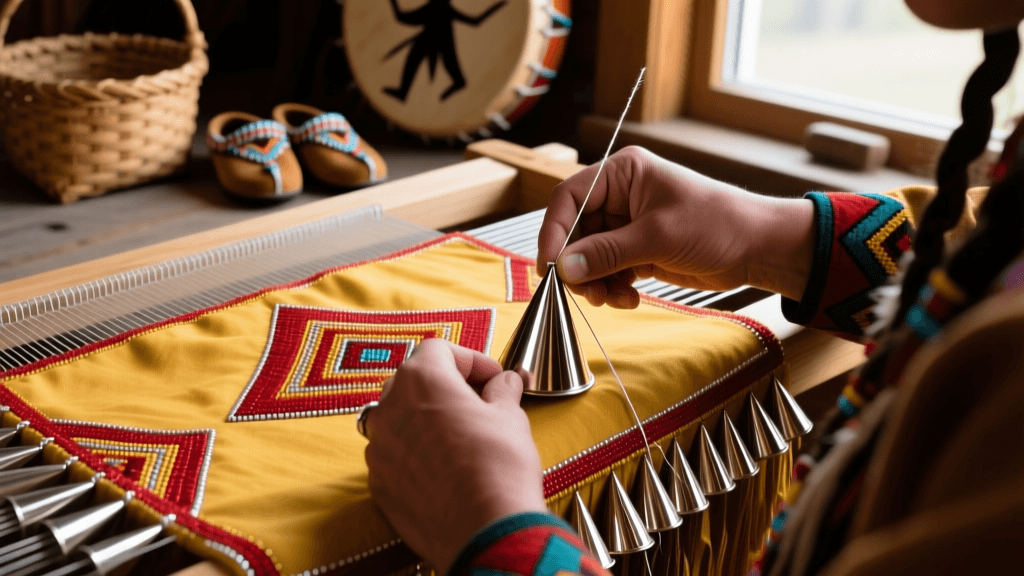
The soul of the regalia lies in the jingles. Historically crafted from rolled tobacco tin lids, modern jingles are manufactured from a variety of metals, each offering a distinct acoustic profile and weight. When sourcing jingles for the 2026 season, makers must consider the dancer's age, stamina, and the specific style of dance (traditional healing vs. contest).
| Cone Type | Material | Sound Profile | 2026 Avg. Cost (per 100) | Weight Impact |
|---|---|---|---|---|
| Traditional Rolled Tin | Upcycled Tin / Steel | Deep, resonant, rain-like | $45 - $60 | Heavy (requires reinforced bodice) |
| Modern Stamped Aluminum | Lightweight Aluminum | Bright, sharp, high-pitched | $25 - $35 | Light (ideal for youth/contest) |
| Brass Alloy Jingles | Polished Brass | Warm, melodic, sustained | $80 - $110 | Medium (premium aesthetic) |
Sizing, Measurements, and Jingle Placement
The mathematics of a jingle dress are as precise as its spiritual intent. A common misconception is that a dress must contain exactly 365 jingles—one for every day of the year. While this is a beautiful sentiment and true for some traditional healing dresses, contest dresses in 2026 often feature anywhere from 400 to over 700 jingles, depending on the dress size and the desired volume of sound.
Taking the Measurements
Accurate measurements ensure the dress moves fluidly with the dancer's footwork. Key measurements include:
- Shoulder to Hem: Measured from the base of the neck, over the shoulder, down to the desired hemline (typically mid-calf to just above the ankle to prevent tripping during complex footwork).
- Bodice Drop: The distance from the shoulder to the natural waist, crucial for placing the horizontal rows of jingles so they do not restrict arm movement.
- Sleeve Length: Jingle dresses often feature bell sleeves or straight sleeves adorned with ribbon appliqué. Measure from the shoulder seam to the wrist bone.
Calculating Row Spacing
Jingles are traditionally arranged in horizontal rows or V-shaped chevron patterns. To calculate the number of jingles per row, measure the circumference of the skirt at the hem and divide by the desired spacing (usually 1.5 to 2 inches apart). If the hem circumference is 120 inches and you space jingles 2 inches apart, you will need 60 jingles for the bottom row. Subsequent rows moving up the skirt will require fewer jingles as the circumference narrows. Makers must map this out on a grid before cutting fabric to ensure symmetry.
Step-by-Step Construction Guide
Constructing a jingle dress requires heavy-duty sewing equipment. A standard domestic machine may struggle with the multiple layers of broadcloth, twill tape, and ribbon. In 2026, many regalia makers utilize industrial walking-foot machines to ensure even feed rates across thick seams.
- Pattern Drafting and Cutting: Draft a basic A-line or shift dress pattern. Cut the bodice and skirt panels from your primary broadcloth, leaving a 5/8-inch seam allowance. Cut the lining from your double-napped flannel.
- Ribbon Appliqué: Before assembling the dress, apply your ribbon work to the front and back bodice panels, as well as the sleeves. Use a narrow zigzag stitch or an appliqué foot to secure the edges of the satin ribbons, preventing fraying during arena washes.
- Bodice and Skirt Assembly: Sew the bodice shoulders and side seams. Gather the skirt panel and attach it to the bodice waistline. Reinforce this waist seam with twill tape, as it will bear a significant portion of the dress's weight.
- Attaching the Jingles: This is the most time-consuming step. Never sew jingles directly to the broadcloth, as the metal will eventually tear through the fibers. Instead, sew heavy-duty cotton twill tape or grosgrain ribbon in horizontal rows across the skirt. Fold the top of the jingle cone over the tape and secure it using a heavy-duty nylon thread and a leather needle. Leave a 1/4-inch gap between the top of the cone and the tape to allow the metal to swing freely and produce a clear sound.
- Finishing Touches: Hem the skirt with a wide bias binding to add weight to the bottom edge, helping the dress swing outward during the dance. Add a fabric belt or sash adorned with beadwork to cinch the waist.
2026 Powwow Trends and Cultural Etiquette
The powwow circuit in 2026 continues to celebrate the vibrant evolution of Indigenous fashion, yet the jingle dress remains tethered to its sacred origins. While contest dancers may incorporate contemporary fabrics, LED-lit accessories for night exhibitions, and intricate 3D ribbon floral patterns, the fundamental respect for the dress's medicine is non-negotiable.
According to the Smithsonian National Museum of the American Indian, the jingle dress dance is deeply intertwined with community healing and spiritual resilience. When attending a powwow, spectators and fellow dancers must observe strict etiquette. If a dancer drops a jingle or a piece of regalia, it is not to be treated as mere litter; it is a fallen piece of medicine. One should never pick up dropped regalia without asking the dancer or an elder for permission, and it is customary to offer tobacco or a small gift in exchange for retrieving it.
Furthermore, as reported by Indian Country Today (ICT), the resurgence of traditional healing dances has prompted a renewed emphasis on the protocols surrounding the jingle dress. Non-Indigenous individuals should refrain from purchasing or wearing jingle dresses, as the garment is not a costume but a ceremonial item carrying specific cultural and spiritual weight. Resources like Powwows.com provide extensive community guidelines for both seasoned dancers and newcomers, emphasizing that the true beauty of the jingle dress lies not just in its shimmering metal and vibrant ribbons, but in the prayers it carries for the healing of the people.
Maintaining Your Regalia
Proper care ensures your regalia lasts for generations. After the 2026 powwow season, gently wipe down each metal cone with a dry microfiber cloth to remove arena dust and moisture, which can cause oxidation, particularly on rolled tin and brass jingles. Store the dress flat or rolled in a breathable cotton garment bag—never hang a fully jingled dress, as the sheer weight of the metal will distort the broadcloth and stretch the seams over time. By treating the materials with respect and maintaining the structural integrity of the garment, makers ensure the healing song of the jingle dress continues to ring out across Indian Country for years to come.