Mormon Temple Garments 2026: Complete History & Style Guide
Introduction to LDS Temple Garments
Within the diverse tapestry of American religious and cultural dress traditions, few garments carry as much profound personal and spiritual significance as the temple garments worn by members of The Church of Jesus Christ of Latter-day Saints (often referred to as LDS or Mormon garments). Unlike outer religious vestments that signal clerical status or public religious affiliation, temple garments are strictly private, intimate apparel worn beneath everyday clothing. They serve as a constant, physical reminder of sacred covenants made during the temple endowment ceremony. As we navigate the sartorial and textile landscape of 2026, the design, manufacturing, and distribution of these garments have evolved to meet the needs of a global, active membership while strictly preserving their sacred symbolism and modesty standards.
The Historical Evolution of the Garment
The origins of the LDS temple garment trace back to the 1840s in Nauvoo, Illinois, when the faith's founder, Joseph Smith, introduced the temple endowment. Early garments were essentially one-piece "union suits," typical of 19th-century undergarments, extending from the wrists to the ankles. These early iterations were made of heavy cotton or wool flannel and featured long sleeves and full-length legs. The sacred marks—symbols representing spiritual concepts and covenants—were initially hand-embroidered or stitched into the fabric by the wearer or a local seamstress.
As the 20th century progressed, the practicalities of modern life, changing fashion norms, and the expansion of the Church into diverse global climates necessitated design adaptations. The transition from the one-piece union suit to the modern two-piece garment (a separate top and bottom) was a significant milestone, allowing for greater comfort and versatility. By the late 20th and early 21st centuries, the Church centralized the manufacturing process. Today, in 2026, garments are produced in high-tech, Church-owned manufacturing facilities worldwide, utilizing advanced textile engineering to ensure durability, comfort, and adherence to modesty guidelines without the need for members to sew their own marks.
Spiritual Symbolism and Sacred Meaning
To understand the garment, one must look beyond its function as clothing and recognize its role as a spiritual shield. According to the Gospel Topics essays on Temples, the garment represents the "armor of God" and serves as a reminder of the wearer's commitment to live a righteous life. The specific marks woven into the fabric correspond to tokens of the Abrahamic covenant, representing concepts such as the compass (guiding one's path), the square (moral exactness and integrity), the navel (the center of life and spiritual nourishment), and the knee (reverence and prayer).
"The garment of the holy priesthood is an outward expression of an inward commitment to follow the Savior and to honor the covenants made in the temple." — Temples Clothing and Garments FAQ
Because of this sacred nature, members are instructed to treat the garments with the utmost respect. They are not to be displayed publicly, altered in ways that compromise their modesty, or worn in a manner that exposes them to public view.
2026 Garment Styles and Materials
The 2026 catalog of temple garments reflects a deep understanding of modern textile science and the diverse lifestyles of millions of wearers. The Church's distribution system now offers an impressive array of styles tailored to different climates, body types, and activities.
Women's Styles
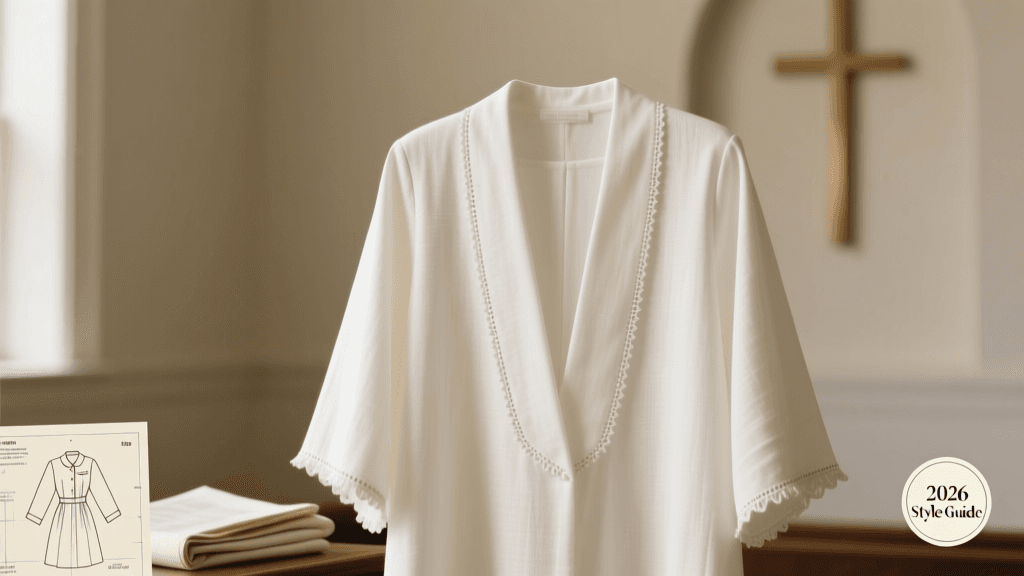
Women's garment tops in 2026 are available in multiple neckline options, including crew, v-neck, scoop, and sweetheart, allowing them to be worn discreetly under a wide variety of modern outerwear. Sleeve lengths range from cap sleeves to short sleeves and long thermal sleeves for winter months. Bottom styles include briefs, boy-shorts, and knee-length options. The introduction of specialized maternity garments with expandable abdominal panels and discreet nursing access has been a highly praised addition for expectant and nursing mothers.
Men's Styles
Men's tops similarly feature crew and v-neck options in short and long sleeves. Bottoms include traditional briefs, boxer-briefs, and extended knee-length styles that provide coverage during athletic activities or when wearing shorts in hot climates. The 2026 athletic lines feature reinforced stitching and gusseted seams to prevent chafing during rigorous physical activity.
Comparison Table: 2026 Garment Fabrics and Use Cases
| Fabric Type | Best For | Key Features (2026 Standards) |
|---|---|---|
| 100% Cotton | Everyday wear, sensitive skin | Breathable, traditional feel, highly durable, hypoallergenic |
| Cotton/Polyester Blend | Active lifestyles, travel, commuting | Wrinkle-resistant, retains shape after washing, quick-dry properties |
| Mesh / Performance | Hot climates, intense athletics, summer | Ultra-lightweight, advanced moisture-wicking, cooling ventilation zones |
| Stretch / Spandex Blend | Form-fitting clothing, maternity, medical | High elasticity, seamless look under modern attire, adaptive comfort |
Adaptive and Specialized Garments
Inclusivity and accessibility have become major focal points for the 2026 distribution catalog. Adaptive garments designed for individuals with limited mobility or those requiring frequent medical access feature discreet shoulder snaps, side-openings, and specialized closures. These designs ensure that members with disabilities or medical devices can wear the garment comfortably and with dignity, without requiring assistance to dress or undress. Furthermore, specialized heat-retaining thermal garments are available for members serving missions or living in extreme cold-weather regions, utilizing advanced micro-fleece linings that add warmth without excessive bulk.
Sizing, Fit, and Purchasing in 2026
Purchasing temple garments is restricted to members who have received their temple endowment and hold a current, valid temple recommend. In 2026, the primary method of acquisition is through the official online Church Distribution store or via physical Distribution centers located adjacent to temples worldwide.
The online portal utilizes a highly secure verification system linked to the member's Church record. Sizing has been vastly improved with comprehensive digital measuring guides and virtual fit-assistants that recommend sizes based on user-inputted measurements. Pricing in 2026 remains heavily subsidized by the Church to ensure global accessibility. A standard two-piece set typically costs between $16 and $24 USD, depending on the fabric technology selected, with specialized adaptive or maternity styles priced slightly higher to account for complex manufacturing.
Tips for Achieving the Perfect Fit
- Measure Accurately: Use a soft cloth measuring tape. For women, measure the bust, waist, and hips; for men, measure the chest, waist, and inseam.
- Consider Fabric Shrinkage: While 2026 manufacturing includes pre-shrinking processes, 100% cotton garments may still experience minor tightening. If you are between sizes, sizing up is often recommended for cotton, whereas stretch blends fit true to size.
- Neckline Selection: Choose necklines based on your professional and casual wardrobe. Scoop and sweetheart necklines are ideal for women's professional blouses, while crew necks are preferred for men's button-down shirts.
Care, Maintenance, and Respectful Disposal
Proper care extends the life of the garments and maintains the integrity of the sacred marks. Most 2026 performance and blend fabrics are machine washable in cold or warm water and can be tumble-dried on low heat. However, it is recommended to avoid harsh bleach or fabric softeners, which can degrade the moisture-wicking properties of the mesh and performance lines.
When garments become worn, torn, or no longer usable, they must be disposed of respectfully. The standard practice involves cutting out the sacred marks (the compass, square, navel, and knee) and destroying them so they are no longer recognizable. The remaining fabric, now stripped of its sacred markings, can be discarded in the regular trash or repurposed as cleaning rags. This careful disposal process underscores the reverence members hold for the symbols embedded within the textile.
Conclusion
The Mormon temple garment is a profound intersection of faith, history, and textile design. As of 2026, the evolution of these garments demonstrates a remarkable balance between preserving ancient spiritual covenants and embracing modern textile innovation. From the breathable mesh worn by missionaries in tropical climates to the adaptive designs serving members with mobility challenges, the garment remains a deeply personal, unifying thread in the lives of millions of Latter-day Saints across the Americas and the globe. Understanding the history, symbolism, and modern iterations of this sacred clothing provides a unique window into the lived religious experience and the intimate sartorial choices of a major American-born faith.