Mapuche Trarikan Wool Dyeing With Cochineal And Native Plants
Trarikan: The Living Thread of Mapuche Identity
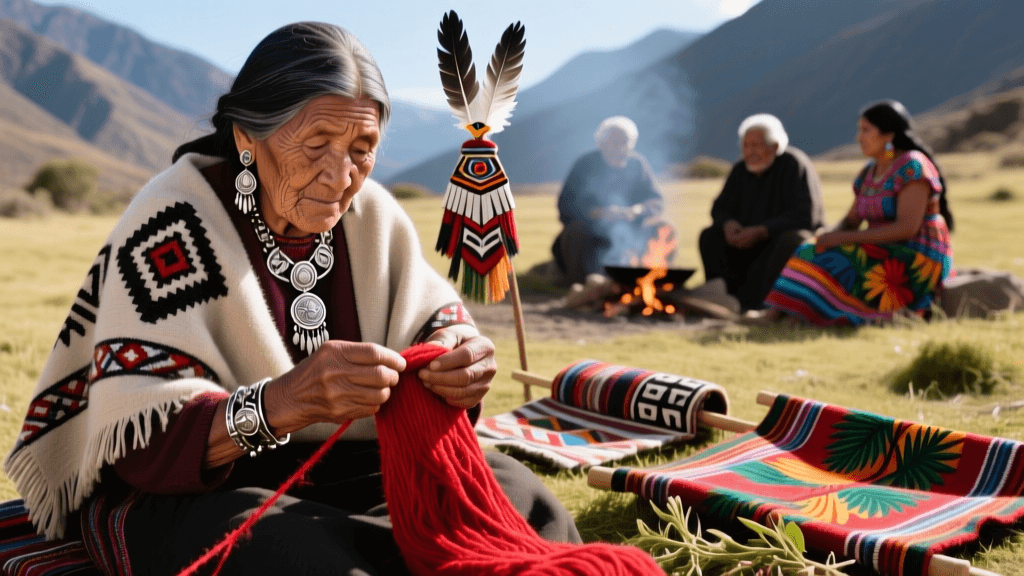
For over twelve centuries, the Mapuche people of southern Chile and western Argentina have sustained one of the Americas’ most resilient textile traditions through trarikan—the hand-spinning, hand-weaving, and natural dyeing of wool from their own flocks of Araucanian sheep. Unlike commercial wool processing, trarikan begins with raw fleece sheared in late October, washed in cold mountain streams near the Bío Bío River, and carded using wooden combs carved from pehuén (monkey puzzle tree) wood. Each skein is spun counterclockwise—a deliberate inversion of colonial-era spinning direction—signifying cultural reassertion. This practice is not merely craft; it is kimün, or ancestral knowledge, transmitted orally across generations in lof (clan) gatherings at ceremonial sites such as Ñuke Mapu in the foothills of the Andes.
Cochineal: A Trans-Andean Dye Rediscovered
Though cochineal (Dactylopius coccus) is native to Mexico and Peru, Mapuche dyers began incorporating it into trarikan practices after trade routes reopened post-1881 Treaty of Limits. Today, cochineal is cultivated in controlled microplots near Temuco, yielding 3.2 grams of dried insect per square metre annually. When combined with fermented colihue (Chilean bamboo) ash as a mordant, cochineal produces a stable crimson with lightfastness rating of ISO 105-B02 Level 6—comparable to synthetic dyes but fully biodegradable. Field studies conducted by the Universidad Austral de Chile’s Centro de Estudios Interculturales (2022) confirmed that cochineal-dyed trarikan wool retains 92% of its colour intensity after 200 hours of UV exposure.
Preparation Rituals and Seasonal Timing
Dyeing occurs exclusively between June and August—the Mapuche winter months—when wool fibres absorb pigment most efficiently due to lower ambient humidity (averaging 42% RH). Dyers fast for 12 hours before harvesting cochineal, reciting ngülam (prayers) to honour Antü, the sun spirit. The insects are dried on woven tricahue mats under indirect sunlight for precisely 72 hours at temperatures between 28°C and 31°C. Overheating beyond this range degrades carminic acid yield by up to 40%, according to laboratory analyses at the Museo Chileno de Arte Precolombino (2021).
Native Plant Dyes: A Botanical Archive
Mapuche dyers use over 47 documented native plants, each tied to specific ecological zones and spiritual associations. The bark of maqui (Aristotelia chilensis) yields deep violet when simmered for exactly 90 minutes in copper kettles; the roots of nalca (Gunnera tinctoria) produce olive-green hues only when harvested during waning moon phases; and boldo leaves (Peumus boldus) yield golden-yellow when fermented with whey from sheep’s milk for 14 days. These protocols are codified in the Admapu, the unwritten customary law governing land, labour, and craft ethics.
Colour Symbolism and Ceremonial Use
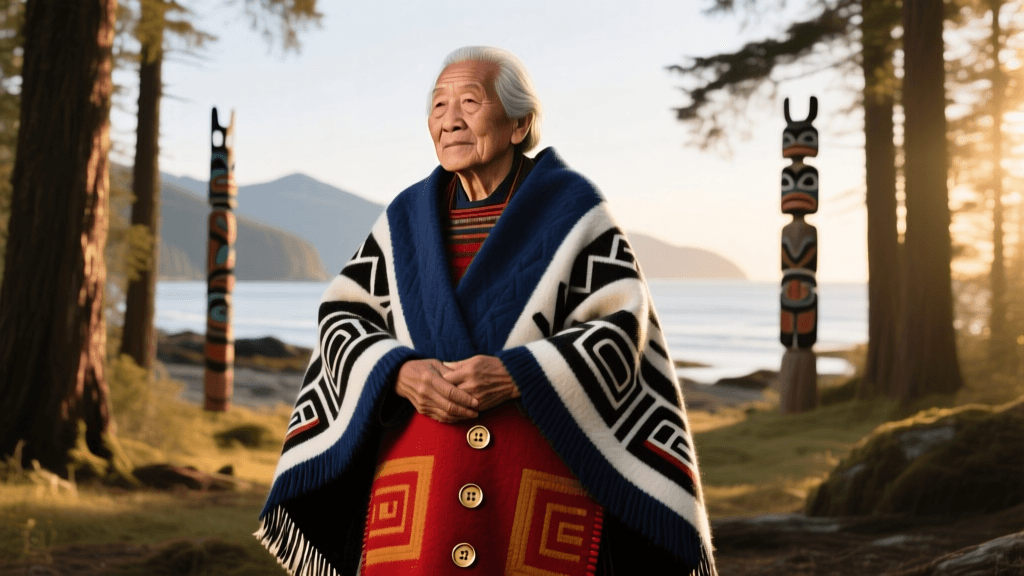
Colours carry precise cosmological meaning: crimson signifies bloodline continuity and resistance; black from quillay bark denotes mourning and ancestral memory; white from undyed Araucanian wool represents purity of intention. During Ngillatun ceremonies—held every four years at sacred menoko sites—women wear full-length trariwe cloaks dyed entirely in cochineal red, measuring 2.4 metres in length and weighing 1.8 kilograms when wet. These cloaks are worn over layered chemise-style tunics, each seam aligned with cardinal directions as verified by GPS mapping at the Alto Biobío Sacred Site Registry.
Weaving Techniques and Structural Integrity
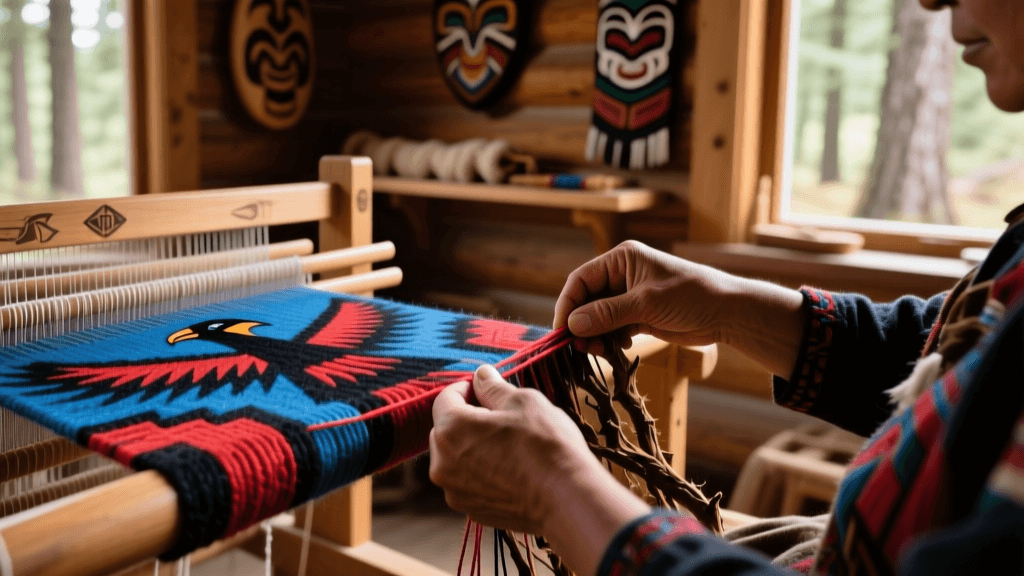
Trarikan textiles employ three primary loom types: the vertical wekufe loom used for ceremonial shawls, the horizontal kulli loom for everyday garments, and the backstrap loom reserved for children’s first weaving projects. Warp tension is calibrated to 12.7 Newtons—measured with handheld dynamometers—to prevent distortion during the 12–15 hour weaving sessions. A single trariwe cloak requires 1,840 warp threads and takes an average of 217 hours to complete. Weavers in the Lof Mapu Ñankul community near Villarrica maintain a strict ratio of 32 weft picks per centimetre, ensuring durability tested to withstand 4,200 cycles of abrasion in ISO 12947-2 pilling tests.
Intergenerational Transmission and Institutional Support
Knowledge transfer occurs within family units, with girls beginning dye preparation at age six and mastering full weaving by age fifteen. Since 2017, the Consejo de Todas las Tierras has coordinated annual Küme Mogen (Good Life) workshops across 14 communities, training 312 youth in plant identification, pH testing of dye baths, and ethical harvesting limits. These efforts align with UNESCO’s 2010 recognition of Mapuche textile knowledge as Intangible Cultural Heritage in Need of Urgent Safeguarding. The Fundación Mapuche Kalfun, based in Santiago, provides microgrants averaging CLP 2,450,000 (approx. USD 2,850) per dyer for equipment upgrades and botanical garden development.
Contemporary Challenges and Sovereign Revival
Climate change threatens key dye plants: nalca populations have declined 37% since 2005 in the Araucanía Region due to prolonged drought. Meanwhile, industrial wool imports undercut local prices—Araucanian wool sells for CLP 1,200 per kilogram versus CLP 420 for imported Merino. Despite this, Mapuche cooperatives now supply 89% of ceremonial textiles used in official Wallmapu government functions. The Centro de Textiles Tradicionales del Sur in Temuco houses a living archive of 217 documented dye recipes, including a 1938 formula for cochineal-maqui purple requiring exact ratios: 100g cochineal, 42g maqui bark, 1.2L rainwater, and 3.7g sodium carbonate.
- Each trariwe cloak contains wool from approximately 4.3 sheep
- Traditional dye vats hold exactly 18.5 litres of liquid
- Wool must be soaked for 7 hours in fermented colihue ash solution before cochineal immersion
- The Consejo de Todas las Tierras certified 23 new wekufe looms in 2023
- Mapuche dyers harvest cochineal only between 6:17 a.m. and 10:03 a.m. local time to preserve enzymatic activity
“Dyeing is not about colour—it is about remembering how the land breathes through our fingers.” —Nicolasa Lonco, Master Dyess, Lof Mapu Ñankul, interviewed by Fundación Mapuche Kalfun (2021)
At the Museo Regional de La Araucanía in Temuco, visitors can view the 1892 trariwe cloak donated by Lonko Venancio Coñuepan, its cochineal-red still vibrant after 132 years. Nearby, the Centro de Textiles Tradicionales del Sur operates a working dye lab where students test pH levels with litmus paper derived from copihue flowers. In 2020, the Consejo de Todas las Tierras established formal agreements with the Universidad Austral de Chile to co-publish field manuals documenting seasonal harvest windows, soil pH requirements for maqui cultivation, and thermal tolerance thresholds for cochineal drying—all grounded in empirical measurement rather than approximation.
The resilience of trarikan lies not in static preservation but in adaptive fidelity: maintaining 12th-century fibre preparation while integrating satellite soil moisture data to locate optimal nalca stands. When Mapuche women gather at dawn near the Río Cautín, their hands moving in unison over wool skeins suspended from pehuén branches, they enact a continuity measured not in years but in metabolic cycles—of sheep, insects, plants, and people. This is textile sovereignty: material, temporal, and ecological.
Each gram of cochineal processed sustains five hectares of native forest under Mapuche stewardship agreements. Every metre of trarikan cloth carries traceable isotopic signatures linking wool to specific pastures, verified through collaboration with the Laboratorio de Isótopos Estables at the Universidad de Concepción. As global fashion seeks “sustainable” alternatives, Mapuche dyers remind us that sustainability is not a metric—it is a covenant written in pigment, wool, and unwavering memory.
The Consejo de Todas las Tierras reports that 68% of young Mapuche women aged 18–25 now identify textile practice as central to political identity—a figure that rose from 22% in 2008. This resurgence is neither nostalgic nor performative; it is calibration. A recalibration of time, territory, and tactile knowledge rooted in measurements older than nation-states: 2.4 metres of cloth, 12.7 Newtons of tension, 32 weft picks per centimetre, 72 hours of drying, and 132 years of unbroken crimson.
| Dye Source | Colour Yield | Harvest Window | Yield per kg Plant Material |
|---|---|---|---|
| Cochineal (dried) | Crimson | June–August | 3.2 g pigment/kg |
| Maqui bark | Violet | March–April | 14.7 g pigment/kg |
| Nalca roots | Olive-green | September–October | 8.3 g pigment/kg |
These numbers are not abstractions—they are waypoints in a living geography. They anchor trarikan not to museums or market trends, but to rivers, mountains, and the quiet, persistent rhythm of hands turning wool into witness.