Pacific Northwest Button Blankets & Chilkat Robes 2026 Guide
The Living Textiles of the Pacific Northwest Coast
The Pacific Northwest Coast of North America is home to some of the most visually striking, culturally profound, and technically complex textile traditions in the world. As we navigate the cultural landscape of 2026, the renaissance of Indigenous North American dress traditions continues to accelerate, driven by a new generation of master weavers, cultural revitalization programs, and a global appreciation for authentic Indigenous artistry. For the Haida, Tlingit, Kwakwaka'wakw, and Tsimshian peoples, ceremonial garments are not merely clothing; they are living manifestations of clan lineage, spiritual authority, and ancestral memory. This comprehensive guide explores the current state of Pacific Northwest Coast regalia in 2026, focusing on the iconic button blankets and the painstakingly crafted Chilkat and Ravenstail woven robes. Whether you are a textile collector, a student of Indigenous material culture, or an enthusiast seeking to understand the profound depth of these garments, this guide provides actionable insights into their creation, cultural significance, and ethical acquisition.
The Evolution and Artistry of the Button Blanket
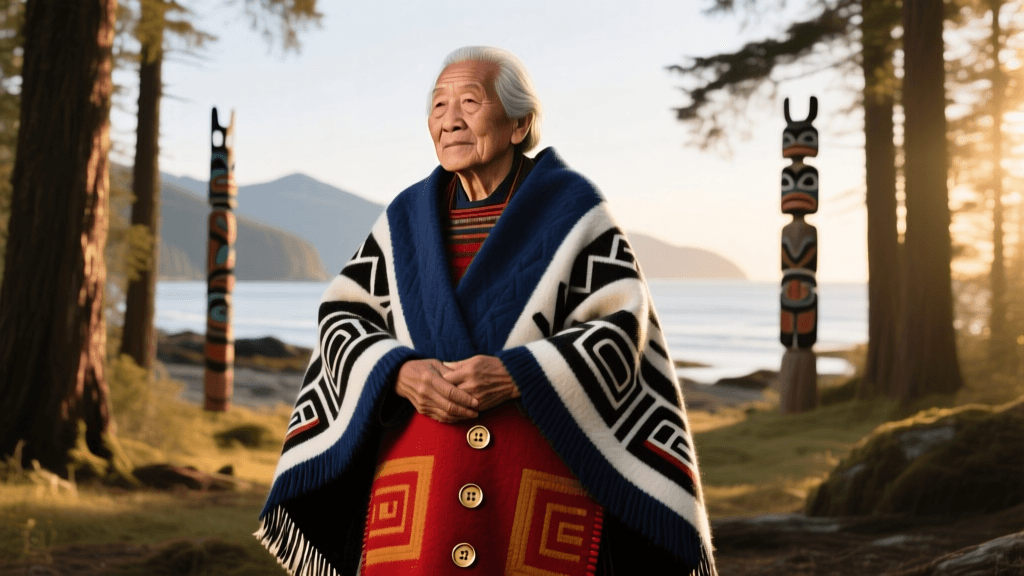
The button blanket, known in the Tlingit language as yeil koowú (though widely adopted and adapted across neighboring tribes), emerged in the late 19th century as a result of trade with European and American merchants. However, to view it merely as a trade-cloth adaptation is to misunderstand its profound cultural integration. By 2026, the button blanket has evolved into a premier canvas for Indigenous artistic expression, merging traditional formline design with contemporary textile techniques.
Materials and Sustainable Sourcing in 2026
Traditionally, button blankets were constructed from dark blue or black trade wool, heavily appliquéd with red flannel or melton wool to depict clan crests such as the Raven, Eagle, Bear, or Killer Whale. The defining feature, however, is the intricate outlining and filling of these designs with hundreds of gleaming buttons. Historically, these were mother-of-pearl or early glass trade buttons. Today, contemporary Haida and Kwakwaka'wakw artists are pushing the boundaries of the medium. In 2026, there is a massive movement toward sustainable and ethical sourcing. Artists are increasingly utilizing locally milled, sustainably dyed wools and ethically harvested abalone shell. The iridescent flash of abalone, when paired with hand-cut mirror pieces and precision glass beads, creates a mesmerizing effect during the dynamic movements of the potlatch dances. According to cultural preservation initiatives tracked by the Sealaska Heritage Institute, the integration of traditional ecological knowledge into material sourcing is a hallmark of the 2026 regalia revival.
The Appliqué Process and Formline Design
Creating a button blanket requires a mastery of Northwest Coast formline design—the continuous, flowing, and highly structured visual language that defines the region's art. The artist must first draft the crest design, ensuring it adheres to the strict rules of ovoids, U-shapes, and split U-shapes. The red melton wool is then meticulously hand-stitched onto the black wool base. In 2026, while some artists utilize heavy-duty sewing machines for the foundational structural seams, the appliqué and button-sewing remain fiercely hand-crafted. A single, high-quality ceremonial button blanket can require over 300 hours of labor and incorporate upwards of 2,000 individual buttons or shell pieces.
Chilkat and Ravenstail Weaving: A Masterclass in Patience
If the button blanket represents the brilliant adaptation of trade materials, Chilkat and Ravenstail weaving represent the ancient, unbroken continuity of Indigenous textile engineering. Originating with the Tlingit people and later adopted by the Haida and Tsimshian, Chilkat weaving is widely considered one of the most complex weaving techniques in the world. It is the only traditional weaving method that allows for the creation of curved shapes directly on the loom without the need for cutting or sewing the fabric afterward.
The Anatomy of a Chilkat Robe
A traditional Chilkat robe (naaxiin) is woven from a combination of mountain goat wool and the inner bark of the yellow cedar tree. The preparation of these materials alone takes months. The cedar bark is stripped, boiled, and pounded to separate the fibers, which are then twisted with the goat wool to create a strong, durable warp. The weft is pure, incredibly soft mountain goat wool, dyed using natural pigments: yellow from wolf lichen, green from copper oxide, and black from hemlock bark and iron-rich mud. In 2026, the scarcity of ethically hunted mountain goat wool has led to collaborative efforts between Indigenous weavers and wildlife management agencies to ensure sustainable harvesting. The weaving process itself is done on a simple tension loom, with the weaver working from the top down, using only their fingers and a wooden comb to pack the weft tightly. The resulting fabric is thick, heavy, and features a distinctive fringe that sways dramatically during ceremonial dances. Master weavers supported by institutions like the Burke Museum of Natural History and Culture continue to study historical fragments to revive lost techniques and dye recipes.
Ravenstail Weaving: The Geometric Predecessor
Predating Chilkat weaving, Ravenstail (yéil koowú) is characterized by its stark, striking geometric patterns, typically woven in natural white, black, and yellow. Unlike the curvilinear formline designs of the Chilkat robe, Ravenstail relies on sharp angles, zig-zags, and diamond shapes. The 2026 resurgence of Ravenstail weaving has been particularly notable, with younger weavers drawn to its bold, graphic aesthetic and its deep historical roots. Exhibitions hosted by the Museum of Anthropology at UBC have recently highlighted how contemporary Indigenous fashion designers are incorporating Ravenstail motifs into modern haute couture, bridging the gap between ancient ceremony and the global runway.
Comparative Analysis of PNW Ceremonial Garments
Understanding the distinctions between these garment types is crucial for collectors, historians, and cultural enthusiasts. Below is a structured comparison of the primary ceremonial textiles of the Pacific Northwest Coast as of 2026.
| Feature | Button Blanket | Chilkat Robe | Ravenstail Robe |
|---|---|---|---|
| Primary Origin | Haida, Kwakwaka'wakw, Tlingit (Post-Contact) | Tlingit (Pre-Contact) | Tlingit, Haida (Pre-Contact) |
| Core Materials | Melton wool, flannel, abalone, glass beads | Mountain goat wool, yellow cedar bark | Mountain goat wool, yellow cedar bark |
| Design Style | Curvilinear Formline (Crests) | Curvilinear Formline (Crests) | Geometric, angular, abstract |
| Production Time | 150 - 400 hours | 1,500 - 2,500+ hours (1-2 years) | 800 - 1,200 hours |
| 2026 Market Value | $3,000 - $12,000 | $25,000 - $60,000+ | $15,000 - $35,000 |
Navigating the 2026 Market: Authenticity and Ethical Acquisition
As global interest in Indigenous textiles grows, so does the market for inauthentic, mass-produced imitations. In 2026, it is more important than ever for buyers, museums, and collectors to adhere to strict ethical guidelines when acquiring Pacific Northwest Coast regalia. The Indian Arts and Crafts Act (IACA) in the United States and corresponding Canadian consumer protection laws strictly prohibit the misrepresentation of Native American or Indigenous art.
How to Verify Authenticity
When purchasing a button blanket or woven robe, always buy directly from the artist, an Indigenous-owned gallery, or a verified tribal cooperative. Request a certificate of authenticity that details the artist's tribal affiliation, the materials used, and the specific clan crests depicted. It is vital to understand that certain crests are the exclusive property of specific clans; a legitimate artist will only weave or sew the crests they have the hereditary or granted right to use. If a vendor is selling generic blankets featuring a mishmash of totemic animals without provenance, it is almost certainly a culturally appropriative mass-produced import.
Investment and Valuation
Authentic, master-crafted regalia is not merely an art purchase; it is an investment in cultural survival. In 2026, a master-weaver's Chilkat robe can easily command prices exceeding $40,000, reflecting the thousands of hours of labor, the scarcity of natural materials, and the lifetime of knowledge required to execute the work. Button blankets, while more accessible, still represent a significant financial investment, typically starting around $3,000 for apprentice-level work and scaling up to $12,000 or more for pieces created by renowned master artists featuring extensive abalone inlay.
Archival Care and Preservation of Natural Fiber Regalia
For those fortunate enough to own or steward these incredible garments, proper preservation is paramount. The organic materials used in Chilkat and Ravenstail weaving, as well as the wool used in button blankets, are highly susceptible to environmental damage, pest infestation, and light degradation.
- Climate Control: Store garments in a climate-controlled environment with a relative humidity of 45-55% and a stable temperature of around 65°F (18°C). Fluctuations in humidity can cause the cedar bark warp to become brittle and snap.
- Pest Management: Never use chemical mothballs, as they are toxic and can permanently alter the natural dyes. Instead, use traditional methods combined with modern archival practices. Store woven robes in custom-built, untreated cedar chests, which naturally repel moths and carpet beetles while allowing the fibers to breathe.
- Light Exposure: Ultraviolet light is the enemy of natural dyes, particularly the delicate yellows and greens used in Chilkat weaving. Display garments in low-light conditions (under 50 lux) and rotate them out of display every six months to prevent irreversible fading.
- Physical Support: Never hang a heavy Chilkat robe or fully beaded button blanket by its shoulders on a standard hanger. The immense weight of the wet-look wool and fringe will distort the warp threads over time. Always store them flat in archival boxes with acid-free tissue paper supporting the folds, or display them on custom-padded, angled mannequins designed to distribute the weight evenly.
Conclusion: The Living Thread of the Pacific Northwest
The button blankets and woven robes of the Pacific Northwest Coast are far more than historical artifacts confined to museum vitrines. In 2026, they are vibrant, living garments that continue to be worn, danced in, and passed down through generations. The dedication of contemporary Haida, Tlingit, and Kwakwaka'wakw artists ensures that the rhythmic clack of the weaving comb and the flash of abalone in the firelight will endure for centuries to come. By understanding the profound technical skill, cultural weight, and ethical considerations surrounding these garments, we can better appreciate and support the Indigenous communities who keep these magnificent traditions alive.