Southwestern Indigenous Regalia 2026: Navajo & Pueblo
The Living Legacy of Southwestern Indigenous Dress
The American Southwest is home to some of the most visually striking and culturally profound Indigenous textile traditions in the world. For centuries, the garments worn by the Native peoples of this arid, high-desert landscape have served not only as protection against the elements but as vital markers of identity, spirituality, and community resilience. As we navigate the cultural landscape in 2026, the intersection of ancestral knowledge and contemporary Indigenous fashion has never been more vibrant. Today, traditional regalia is not relegated to museum archives; it is a living, breathing art form worn at powwows, tribal ceremonies, graduations, and high-fashion runways.
Understanding the distinct dress traditions of the Southwest requires a nuanced look at the specific tribes, their environments, and their historical interactions. Two of the most iconic and widely recognized garment traditions in this region belong to the Diné (Navajo) and the various Pueblo communities. While they share geographic proximity, their textile histories, materials, and silhouettes are remarkably distinct. This comprehensive guide explores the evolution, regional distinctions, and modern sourcing of Navajo velvet and Pueblo manta dresses in 2026.
Diné (Navajo) Velvet Shirts and Blouses
The Diné velvet shirt and blouse is a masterclass in cultural adaptation and aesthetic brilliance. The origins of this garment trace back to the late 19th century, following the Diné's return from the tragic internment at Bosque Redondo. During this period of rebuilding, trading posts were established across the Navajo Nation, introducing new manufactured goods to the Diné people. Among these goods were cotton velvet and broadcloth, which quickly replaced traditional buckskin and hand-woven wool for everyday and ceremonial upper-body garments.
Historically, the velvet shirt for men and the velvet blouse for women were tailored with a distinct, relaxed fit, featuring a mandarin-style collar or a simple V-neck, often adorned with delicate rickrack or satin ribbon trim. In 2026, contemporary Diné artisans and fashion designers are elevating this tradition by sourcing high-pile, sustainably dyed velvets and incorporating modern tailoring techniques while strictly maintaining the garment's traditional silhouette. The rich, light-absorbing texture of the velvet provides a perfect visual anchor for the heavy, ornate silverwork that typically accompanies it.
No Diné velvet ensemble is complete without a concho belt and a squash blossom necklace. The concho belt, a series of oval or round silver plates linked by leather, is a hallmark of Navajo silversmithing. Today's master silversmiths continue to use traditional tufa-casting and intricate stamp-work techniques, often setting their pieces with high-grade, naturally occurring turquoise from mines such as Sleeping Beauty or Kingman. The juxtaposition of the soft, dark velvet against the heavy, oxidized silver and vibrant blue or green turquoise creates a visual impact that remains unparalleled in North American Indigenous fashion.
The Pueblo Manta Dress and Woven Traditions
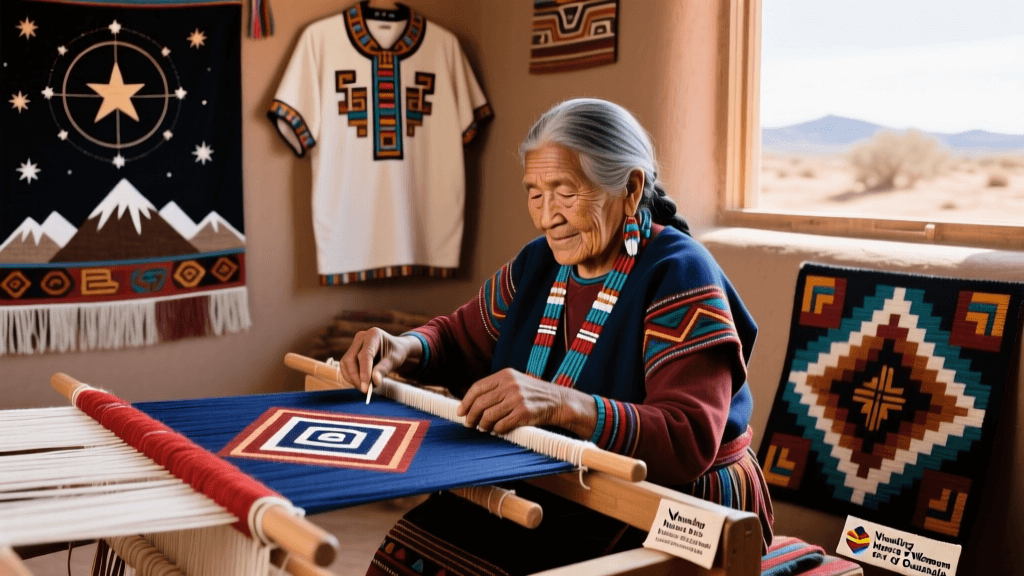
Moving east and north from the Navajo Nation, the Pueblo communities—including the Hopi, Zuni, Acoma, Laguna, and the Rio Grande Pueblos—maintain a deeply rooted weaving tradition that predates European contact. The cornerstone of Pueblo women's traditional regalia is the manta dress. Unlike the tailored, cut-and-sewn velvet garments of the Diné, the manta is a masterwork of the loom, woven as a single, continuous rectangular piece of fabric.
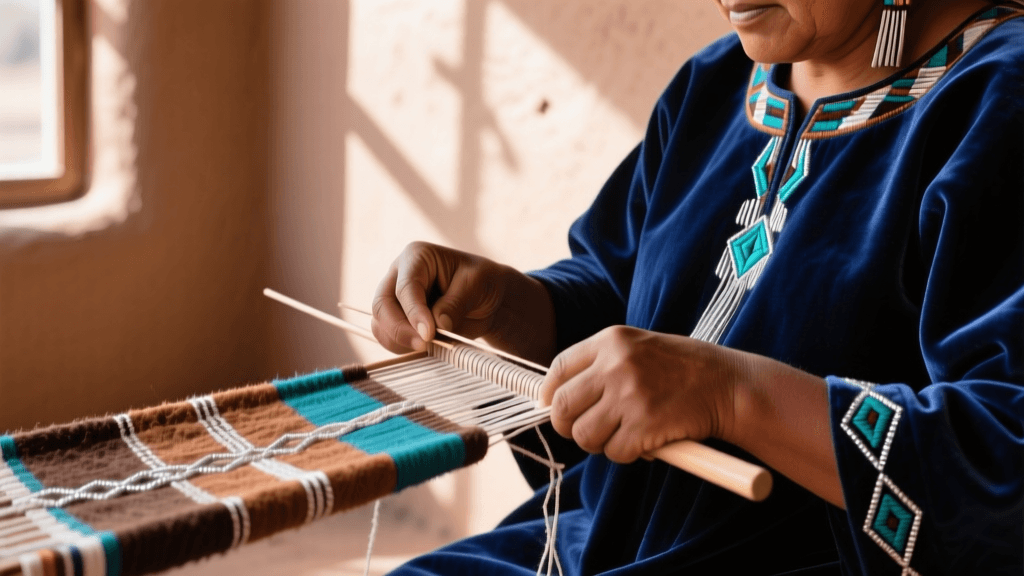
Traditionally woven on an upright Pueblo loom using hand-spun cotton or wool, the manta is worn wrapped around the body, with the corners draped diagonally over one shoulder and pinned or tied at the waist. According to The Metropolitan Museum of Art's Heilbrunn Timeline of Art History, the upright loom and the continuous weaving techniques utilized by Pueblo weavers represent some of the most sophisticated pre-Columbian textile technologies in North America. In 2026, there is a massive revitalization effort among younger Pueblo weavers to return to heirloom Navajo-Churro sheep wool and natural, plant-based dyes, such as rabbitbrush for yellows, wild walnut for rich browns, and indigo for deep blues.
The manta is typically worn over a white cotton under-dress, with the woven wool or cotton manta serving as the outer layer. The lower edge of the manta is often left with an elaborate, hand-knotted fringe that sways with the wearer's movements during ceremonial dances. Over the shoulders, a fringed woven shawl is draped, secured at the chest with a large, ornate silver pin or a traditional woven sash.
Regional Distinctions: Sashes, Shawls, and Footwear
While the foundational garments remain consistent, regional and tribal distinctions are vividly expressed through accessories. The woven sash, for example, is a critical component of Pueblo regalia. Hopi sashes are renowned for their complex, raised-weave techniques and intricate geometric patterns, often featuring long, elaborate fringes that touch the ground during dance. Zuni regalia, conversely, often incorporates elaborate floral and avian motifs in their embroidery and lapidary work, reflecting a distinct aesthetic vocabulary.
Footwear also provides vital clues to a wearer's tribal affiliation. Traditional Southwestern moccasins are generally constructed from brain-tanned deer or elk hide. Navajo moccasins are famously characterized by their tall, knee-high shafts, often wrapped with silver buttons or conchos, and featuring a hard, rawhide sole designed to protect the foot from the harsh desert terrain and cactus spines. Pueblo moccasins typically feature a lower, ankle-high cut, sometimes adorned with skunk fur at the heel or intricate beadwork, with soles crafted from thick, durable buckskin or rawhide.
Comparing Navajo and Pueblo Traditional Garments
To better understand the unique characteristics of these two distinct traditions, refer to the comparison table below:
| Feature | Diné (Navajo) Velvet | Pueblo Manta Dress |
|---|---|---|
| Primary Material | Cotton velvet, broadcloth, satin trim | Hand-woven wool, hand-spun cotton |
| Silhouette | Tailored shirt/blouse, full gathered skirt | Rectangular wrap, diagonal drape, pinned |
| Key Accessories | Concho belt, squash blossom necklace | Woven sash, fringed shawl, silver shawl pin |
| Footwear | Knee-high moccasins with silver wrappings | Ankle-high moccasins, skunk fur accents |
| Primary Loom/Method | Cut-and-sewn, adapted from trade goods | Upright Pueblo loom, continuous weave |
Sourcing Authentic Southwestern Regalia in 2026
As the global appreciation for Indigenous fashion continues to grow in 2026, so does the unfortunate proliferation of mass-produced, culturally appropriated knockoffs. Sourcing authentic Southwestern regalia requires diligence, respect, and an understanding of federal protections. The Indian Arts and Crafts Board (IACB), a division of the U.S. Department of the Interior, enforces the Indian Arts and Crafts Act, which makes it illegal to offer or display for sale any art or craft product in a manner that falsely suggests it is Indian-produced. When purchasing a velvet shirt, a hand-woven manta, or a piece of turquoise silverwork, buyers must ensure the artisan is an enrolled member of a federally or state-recognized tribe.
For collectors, cultural institutions, and individuals seeking to invest in authentic, high-quality garments, attending premier juried markets remains the gold standard. The Southwestern Association for Indian Arts (SWAIA), which hosts the world-renowned Santa Fe Indian Market, rigorously vets its artists to ensure tribal enrollment and the authenticity of materials. Purchasing directly from artists at these markets, or through their verified online galleries, ensures that your investment directly supports Indigenous economies and the continuation of ancestral knowledge.
When evaluating a piece online or in a gallery in 2026, look for transparency regarding materials. Authentic weavers will proudly disclose the source of their wool (such as locally raised Churro), the natural dyes used, and the time required to spin and weave the garment—a process that can take hundreds of hours. Similarly, master silversmiths will provide documentation regarding the origin of their turquoise and the specific lapidary or casting techniques employed.
Conclusion
The traditional garments of the American Southwest are far more than mere clothing; they are woven narratives of survival, adaptation, and profound cultural pride. Whether it is the deep, resonant folds of a Diné velvet blouse heavy with tufa-cast silver, or the intricate, geometric weave of a Pueblo manta dress dyed with desert botanicals, these garments command respect and admiration. By understanding the distinct regional traditions and committing to ethical, authentic sourcing, we help ensure that these magnificent textile arts continue to thrive and evolve for generations to come.