2026 Guide to LDS Temple Garment Styles & Fabrics
The Evolution of Sacred Textiles: LDS Temple Garments in 2026
For members of The Church of Jesus Christ of Latter-day Saints, temple garments hold profound spiritual significance. They serve as a tangible reminder of sacred covenants made in the temple, offering spiritual protection and encouraging modesty in daily life. While the core symbolism and sacred markings of the garments remain entirely unchanged, the textile engineering, fabric blends, and stylistic options have evolved dramatically to meet the practical needs of modern members. As of 2026, the intersection of reverence and advanced textile technology has resulted in the most comfortable, durable, and versatile garment options available in the Church's history.
At The Garment Atlas, we analyze traditional and religious clothing through the lens of material culture and textile science. In this comprehensive 2026 guide, we explore the latest LDS temple garment styles, the cutting-edge fabric blends now available, and practical advice for purchasing and caring for these sacred items.
Historical Context: From Union Suits to Modern Two-Piece Designs
To appreciate the 2026 innovations, it is helpful to understand the garment's sartorial evolution. In the mid-19th century, early Latter-day Saints wore one-piece undergarments that closely resembled the standard 'union suits' of the Victorian era. These heavy, full-length cotton garments were suited for the harsh winters of the American West but were highly impractical for warmer climates and active labor.
The transition to the modern two-piece design (a separate top and bottom) was officially introduced in the 1920s and 1930s, reflecting broader shifts in global undergarment manufacturing. Over the decades, the hemlines shortened to the knee and elbow, and eventually to the modern mid-thigh and cap-sleeve lengths. Today, the focus of the Church's distribution centers and manufacturing partners is entirely on micro-climate regulation, four-way stretch capabilities, and inclusive sizing, ensuring that members from diverse global climates can wear the garments comfortably.
2026 Fabric Technologies and Material Blends
The most significant updates in recent years have been in yarn technology and fabric milling. According to the official guidelines on temple garments, members are encouraged to choose fabrics that suit their personal comfort and local climate. As of 2026, the primary fabric categories include:
1. Premium Cotton and Cotton Blends
Traditional 100% cotton remains a staple for those with sensitive skin or those who prefer natural fibers. However, the 2026 cotton weaves utilize long-staple combed cotton, which drastically reduces pilling and increases the tensile strength of the fabric. For added durability, a 95% cotton / 5% elastane blend is now the standard for 'stretch cotton,' providing a tailored fit that recovers its shape after washing.
2. Modal and MicroModal
Derived from sustainably harvested beechwood pulp, modal fabrics have become the most popular choice for everyday wear. The 2026 MicroModal iterations are exceptionally soft, breathable, and resistant to shrinking. Modal's natural moisture-wicking properties make it superior to cotton for members living in humid environments or those with active lifestyles. The drape of modal is also highly favored for women's styles, as it moves fluidly under modern clothing silhouettes without adding bulk.
3. Performance Microfiber and Athletic Blends
For athletes, manual laborers, and members in tropical climates, performance microfiber is the ultimate functional textile. The 2026 performance line features advanced capillary-action yarns that pull sweat away from the skin to the exterior of the fabric for rapid evaporation. These garments also feature anti-microbial silver-ion treatments to prevent odor buildup during long, active days.
4. Bamboo and Sustainable Viscose
Aligning with global eco-textile trends, bamboo-based viscose blends have been fully integrated into the 2026 catalog. Bamboo fabric is naturally hypoallergenic, thermoregulating (cool in summer, warm in winter), and incredibly soft. It is an excellent choice for members who experience skin irritation from synthetic fibers.
Comparison Chart: 2026 Garment Fabric Blends
The following table breaks down the primary material options available through Church Distribution Services to help you select the best textile for your lifestyle.
| Fabric Blend | Primary Benefits | Best Suited For | Care Considerations |
|---|---|---|---|
| Combed Cotton | Breathable, natural, hypoallergenic | Sensitive skin, moderate climates | May shrink slightly; tumble dry low |
| Stretch Cotton (95/5) | Retains shape, comfortable movement | Daily wear, office environments | Highly durable, standard machine wash |
| MicroModal | Ultra-soft, excellent drape, resists pilling | Humid climates, wearing under fitted clothes | Wash cold, avoid high heat to preserve fibers |
| Performance Microfiber | Moisture-wicking, quick-drying, lightweight | Athletes, outdoor workers, tropical regions | Do not use fabric softeners (clogs wicking pores) |
| Bamboo Viscose | Thermoregulating, eco-friendly, silky feel | Temperature fluctuations, eco-conscious buyers | Gentle cycle, lay flat or tumble dry low |
Modern Styles and Neckline Variations
While the sacred marks and the requirement for the garment to cover the torso and upper thighs remain constant, the external cut and neckline have been adapted to accommodate modern wardrobes. The 2026 style catalog offers remarkable diversity, particularly in women's designs.
Women's Styles
- Crew and V-Neck: The classic standards, ideal for high-necked blouses and professional attire.
- Scoop Neck: A wider, lower curve that remains hidden under standard t-shirts and casual wear.
- Carmen (Off-the-Shoulder): Designed for boat-neck and wide-neck tops. The 2026 Carmen update includes a reinforced, skin-safe silicone grip strip along the inner hem, preventing the garment from slipping up the shoulder throughout the day.
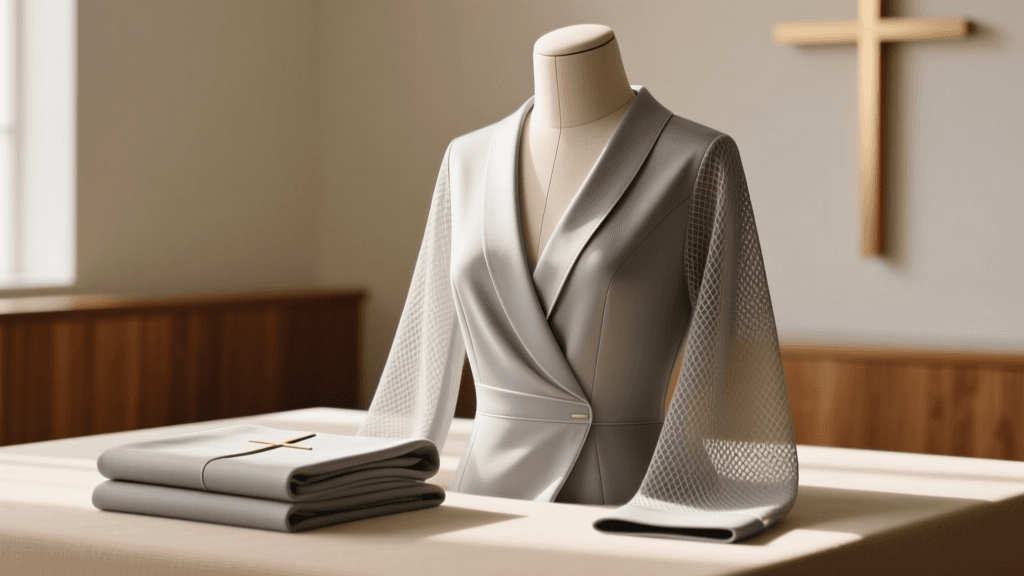
- Cap-Sleeve and Stretch Lace: For sleeveless dresses and tops, the stretch-lace sleeve options provide necessary coverage while remaining virtually invisible under sheer or tight armholes.
Men's Styles
- Crew and V-Neck: Available in standard and deep-V for unbuttoned collared shirts.
- Athletic Cut: The 2026 athletic bottom features a gusseted crotch and a slightly longer inseam to prevent riding up during running or weightlifting. The tops feature raglan sleeves to eliminate shoulder seams that could chafe under backpack straps or sports gear.
Maternity and Nursing Options
The 2026 maternity line features expandable side-panels and empire-waist cuts that grow with the body. For nursing mothers, the newly designed nursing tops utilize discreet, reinforced magnetic closures that allow for easy access while maintaining the structural integrity and modesty of the garment.
How to Purchase and Measure in 2026
Purchasing temple garments requires an active temple recommend, which is verified digitally at the point of sale or through your online Church account. You can purchase garments through local Deseret Book retailers, regional Church distribution centers, or the official online store.
Tips for Accurate Measuring
A proper fit is essential for both comfort and the longevity of the fabric. Garments that are too tight will experience premature seam failure, while garments that are too loose will bunch and cause chafing.
- Use a Soft Tailor's Tape: Measure over your undergarments, not over heavy clothing.
- Chest/Bust: Measure around the fullest part of your chest, keeping the tape level across your back.
- Waist: Measure at your natural waistline (the narrowest part of your torso).
- Hips: Measure around the fullest part of your hips and buttocks.
- Inseam: For bottoms, the standard 2026 inseam hits at the mid-thigh. If you are between sizes, sizing up in the bottom is generally recommended to prevent the fabric from stretching too thin across the thighs, which can distort the sacred markings.
Garment Care: Extending the Lifespan of Modern Blends
Proper textile care is crucial. The advanced yarns used in 2026 require specific laundering habits to maintain their moisture-wicking and stretch properties.
- Washing: Use cold or warm water. Hot water breaks down elastane (spandex) fibers over time, leading to sagging.
- Detergents: Avoid bleach and optical brighteners, which degrade modal and bamboo fibers. For performance microfiber, never use liquid fabric softeners; they coat the yarns and destroy the garment's ability to wick moisture. Use white vinegar in the rinse cycle instead to naturally soften the fabric.
- Drying: Tumble dry on low or medium heat. High heat will bake oils into the synthetic fibers and cause cotton blends to shrink. Removing garments from the dryer while slightly damp and laying them flat will eliminate wrinkles and preserve the flat-lock stitching.
Conclusion
The 2026 LDS temple garment catalog represents a masterclass in adapting sacred traditions to modern textile science. Whether you require the cooling properties of bamboo viscose for a tropical mission, the rugged durability of performance microfiber for physical labor, or the elegant drape of MicroModal for professional attire, the current options ensure that members do not have to compromise between spiritual reverence and physical comfort. By understanding the unique properties of these fabrics and utilizing proper care techniques, members can ensure their garments remain a comfortable, enduring reminder of their covenants.