2026 LDS Garment Guide: Modern Styles, Fabrics & Updates
Introduction to the 2026 Temple Garment Landscape
For members of The Church of Jesus Christ of Latter-day Saints, the temple garment is a sacred article of clothing that serves as a deeply personal reminder of the covenants made within the temple. While the spiritual significance and symbolic marks of the garment remain entirely unchanged, the physical construction, textiles, and available styles have undergone significant modernization. As of 2026, the Church’s distribution network offers a highly refined catalog of garments designed to accommodate diverse climates, body types, and active lifestyles.
Historically, members had limited options regarding fabric and cut, often relying on heavy cottons or early synthetic blends that lacked breathability. Today, advancements in textile engineering have allowed for a much more comfortable experience without compromising the sacred nature of the clothing. According to the official Gospel Topics essay on Temple Garments, the garment is intended to be worn day and night, making comfort, durability, and climate-appropriateness essential factors for modern members. This comprehensive guide explores the current 2026 styles, material innovations, and practical purchasing advice for LDS garments.
Exploring Current Garment Styles and Cuts
The 2026 garment catalog reflects years of iterative feedback from members worldwide. The Church has expanded its offerings to ensure that both men and women can find styles that fit seamlessly beneath modern, professional, and athletic wardrobes.
Top Styles
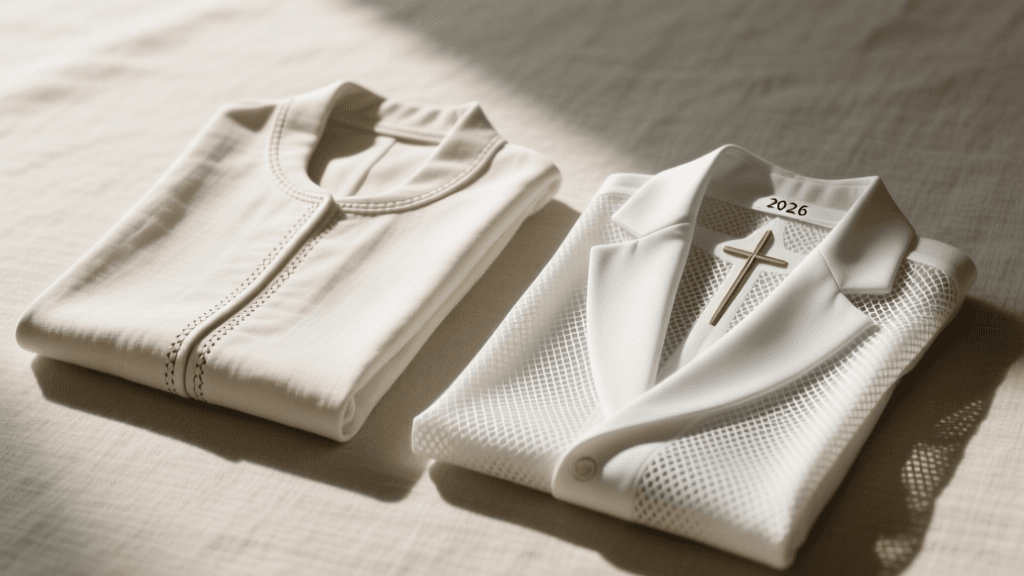
- Crew Neck: The traditional and most widely available style. It provides excellent coverage and is ideal for cooler climates or modest outerwear.
- V-Neck: Designed to remain hidden beneath unbuttoned collared shirts or lower-cut blouses, the V-neck remains a staple for professional environments.
- Stretch Tops: Featuring a slightly wider neckline and cap sleeves, these are constructed from high-elasticity blends that move with the body, making them highly popular for athletic activities.
- Women’s Camisole and Cap-Sleeve: In recent years, the Church introduced specialized women’s cuts that offer a more tailored fit through the torso and bust, eliminating excess fabric bunching under fitted clothing.
Bottom Styles
- Knee-Length: The standard bottom offering, providing full coverage down to the knee.
- Mid-Thigh / Boxer-Brief: A modern favorite for both men and women, this shorter cut prevents fabric from bunching at the knees and is ideal for wearing under shorts, skirts, or athletic wear.
- Maternity Bottoms: Featuring a soft, expandable over-belly panel, maternity garments have been a highly praised addition to the 2026 lineup, offering support and comfort during pregnancy.
Comprehensive Fabric Comparison Guide
Choosing the right fabric is arguably the most critical decision when purchasing garments in 2026. The Church Distribution Centers currently stock four primary fabric categories, each engineered for specific environmental conditions and sensory preferences.
| Fabric Type | Primary Composition | Breathability | Durability | Best Use Case / Climate |
|---|---|---|---|---|
| Cotton | 100% Combed Cotton | Moderate | High | Cool climates, sensitive skin, traditional preference |
| Cotton-Modal | Cotton / Modal Rayon Blend | High | Very High | Year-round wear, professional settings, soft drape |
| Nylon-Mesh | Nylon / Spandex Micro-Mesh | Very High | Moderate | Tropical climates, high-humidity, intense physical activity |
| Stretch | Cotton / Spandex Blend | High | High | Athletics, form-fitting outerwear, active lifestyles |
Deep Dive into 2026 Fabric Technologies
Cotton-Modal: Modal, a semi-synthetic fiber made from beech tree pulp, has revolutionized the garment experience. The 2026 cotton-modal blend is exceptionally soft, resists shrinking, and maintains its shape far better than pure cotton. It is currently the top-selling fabric globally due to its luxurious hand-feel and temperature-regulating properties.
Nylon-Mesh: For members living in equatorial regions, the American South, or Southeast Asia, the nylon micro-mesh is indispensable. The open-knit structure allows for maximum airflow and rapid moisture-wicking. Recent 2025-2026 manufacturing updates have improved the tensile strength of the mesh, addressing older complaints regarding snagging and tearing.
Stretch Blends: The incorporation of elastane (spandex) into cotton bases has created a garment that moves dynamically with the wearer. This is particularly beneficial for members who engage in weightlifting, running, or manual labor, as the fabric recovers its shape rather than bagging at the knees or elbows.
Recent Design and Material Updates
The transition into 2026 has brought several subtle but highly appreciated quality-of-life updates to garment manufacturing. Members browsing the official Church Distribution store will notice a strong emphasis on ergonomic comfort and modern textile finishing.
- Tagless Labels: The scratchy woven tags of the past have been entirely phased out. All 2026 garments utilize heat-transferred, tagless labeling for sizing and care instructions, eliminating neck and waistband irritation.
- Flatlock Seaming: To prevent chafing during physical activity, modern stretch and mesh garments now feature flatlock seams. This technique lays the seam flat against the skin, reducing friction and bulk under tight clothing.
- Mark Placement and Reinforcement: While the sacred marks remain exactly as prescribed, the embroidery and reinforcement techniques have been refined. The stitching is now smoother on the interior, preventing the marks from pressing uncomfortably into the skin during sleep or prolonged sitting.
- Eco-Friendly Packaging: Aligning with global sustainability trends, garments purchased online or in distribution centers in 2026 are now packaged in biodegradable, plant-based polymers rather than single-use plastics.
Sizing, Fit, and 2026 Pricing
Proper fit is essential for both comfort and the appropriate presentation of the garment marks. The Church provides detailed digital sizing charts on their distribution portal, utilizing standard chest, waist, and inseam measurements. In 2026, the sizing algorithm for online orders has been updated to account for the different shrinkage rates of modal versus pure cotton, providing highly accurate fit recommendations at checkout.
Current Pricing Structure
Garments are sold as separate tops and bottoms, allowing members to mix and match sizes and fabrics based on their individual needs. As of 2026, the pricing structure remains heavily subsidized by the Church to ensure accessibility for all endowed members:
- Cotton Tops & Bottoms: $9.00 - $11.00 USD per piece
- Cotton-Modal & Stretch: $12.00 - $14.00 USD per piece
- Nylon-Mesh: $11.00 - $13.00 USD per piece
- Specialty Cuts (Maternity/Camisole): $13.00 - $15.00 USD per piece
Note: Prices may vary slightly based on regional distribution center locations and international shipping tariffs, though the Church works diligently to keep global pricing equitable.
Best Practices for Garment Care and Longevity
To maximize the lifespan of modern fabrics, particularly the delicate nylon-mesh and modal blends, proper laundering is essential. The Deseret News faith section frequently highlights member discussions on garment care, and textile experts recommend the following 2026 best practices:
- Washing: Use cold or warm water (never hot, especially for modal and stretch fabrics, as high heat degrades elastane fibers). Wash with like colors and use a mild, bleach-free detergent. Chlorine bleach will rapidly destroy the structural integrity of mesh and spandex.
- Drying: Tumble dry on low heat or air-dry. The cotton-modal blend dries exceptionally fast on a line, which also helps preserve the softness of the modal fibers. High heat in commercial dryers is the primary cause of premature wear and elastic failure in the waistbands.
- Repairing vs. Retiring: Minor tears or loose seams can and should be repaired using a needle and thread. However, when a garment becomes overly worn, faded, or damaged beyond repair, it should be retired. The standard practice is to cut out the sacred marks (which are then disposed of respectfully) and discard or repurpose the remaining fabric.
Final Thoughts
The 2026 lineup of LDS temple garments represents a harmonious balance between sacred tradition and modern textile science. Whether you are navigating the humidity of a tropical climate in a nylon-mesh set, attending professional meetings in a tailored cotton-modal V-neck, or engaging in rigorous athletics in a stretch cap-sleeve, the current catalog ensures that members can honor their covenants in absolute comfort. By understanding the unique properties of each fabric and utilizing proper care techniques, members can ensure their garments remain a comfortable, durable, and sacred part of their daily lives.