Mormon Temple Garments 2026: Meaning, Styles & Fit Guide
Understanding the Sacred Purpose of LDS Garments
For members of The Church of Jesus Christ of Latter-day Saints, the temple garment is far more than a simple piece of clothing; it is a deeply sacred, spiritual artifact rooted in American religious history. Often referred to colloquially as 'Mormon garments,' these underclothes are worn by adult members who have participated in the endowment ordinance within a dedicated temple. As of 2026, millions of faithful members across the Americas and the globe wear these garments daily as a personal, private reminder of the covenants they have made with God.
The primary purpose of the garment is spiritual rather than physical. According to the Church's official Gospel Topics essay on Temple Garments, the garment serves as a 'shield and a protection' to the wearer. It acts as a constant, tactile reminder of the promises made during the temple endowment, encouraging modesty, personal righteousness, and a Christ-centered life. While the physical fabric provides a barrier against the elements, its true value lies in its symbolic representation of spiritual armor and divine protection.
Historical Traditions and Evolution in the Americas
The tradition of wearing sacred underclothing in the Latter-day Saint movement dates back to the 1840s in Nauvoo, Illinois, before the major pioneer migration to the Salt Lake Valley. Early iterations of the garment were one-piece, full-body union suits that extended to the wrists and ankles, reflecting the modesty standards and practical needs of the 19th-century American frontier. Over the decades, as global fashion and textile manufacturing evolved, the Church adapted the garment's design to maintain its sacred symbolism while accommodating modern lifestyles.
By the mid-20th century, the garment transitioned into the two-piece design (a separate top and bottom) that is universally recognized today. In 2026, the evolution continues with advanced textile engineering. The Church's Distribution Services now offer garments utilizing sustainable bamboo-rayon blends, ultra-lightweight modals, and advanced moisture-wicking meshes, ensuring that members living in diverse climates—from the humid tropics of Central America to the arid deserts of the American Southwest—can wear their sacred clothing comfortably year-round.
2026 Garment Styles: Balancing Modesty and Modern Fashion
One of the most common questions from newly endowed members in 2026 is how to balance current fashion trends with the modesty requirements dictated by the garment. The fundamental rule is that the outer clothing must adequately cover the garment. This means necklines, sleeve lengths, and hemlines must be chosen with intentionality.
Women's Styles
Women's garment tops in 2026 are available in several distinct cuts to accommodate various outerwear styles while maintaining sacred coverage. The standard crew neck remains the most popular for everyday wear. However, the V-neck, scoop neck, and low-scoop neck options have been refined in recent years to allow for slightly more open outer blouses without exposing the sacred marks or the edges of the garment itself. Bottoms are generally available in standard knee-length and a longer mid-calf length, which is highly preferred by women wearing longer skirts or dresses to prevent the garment from rolling up the thigh.
Men's Styles
Men's garments are slightly more standardized but offer crucial variations for different climates and activities. The standard crew neck and the deeper V-neck are available for wearing under unbuttoned casual shirts. For bottoms, men can choose between the traditional knee-length style and a shorter, mid-thigh 'athletic' cut introduced to accommodate modern slim-fit trousers and active wear without the fabric bunching at the knees.
Fabric Innovations and 2026 Pricing Guide
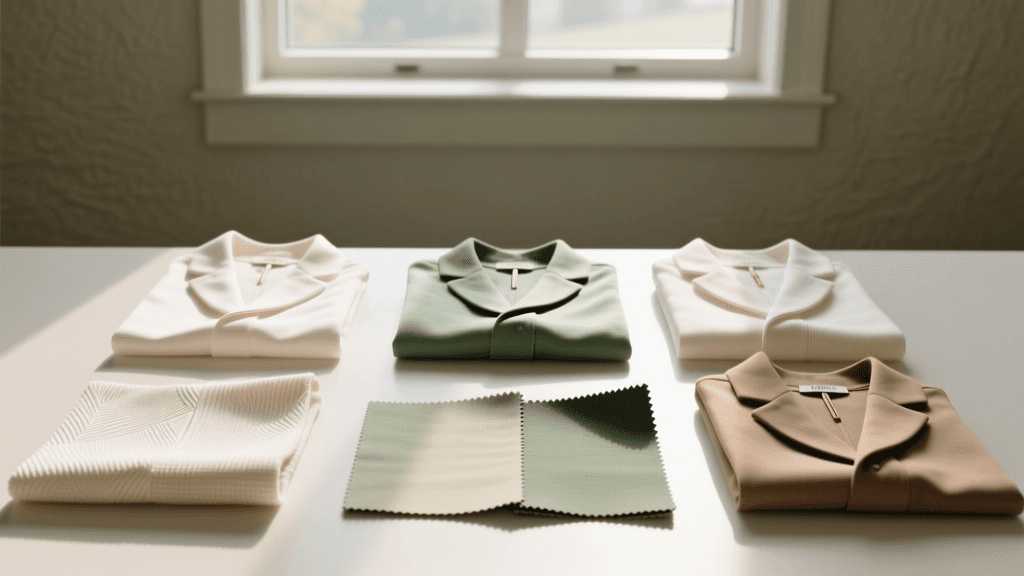
Choosing the right fabric is essential for daily comfort. The Church has significantly expanded its textile offerings to meet the demands of modern, active members. Below is a comparison of the primary fabrics available through the official Church Distribution Store in 2026.
| Fabric Type | Material Composition | Best Use Case | 2026 Est. Price (Top / Bottom) |
|---|---|---|---|
| Classic Cotton | 100% Combed Cotton | Everyday wear, sensitive skin, cooler climates | $8.50 / $9.00 |
| Stretch Blend | Cotton / Polyester / Spandex | Active lifestyles, travel, durability | $8.75 / $9.25 |
| Desert Mesh | Microfiber Nylon Mesh | Hot climates, desert summers, high humidity | $9.50 / $10.00 |
| Eco-Modal | Sustainable Bamboo-Rayon Blend | Ultimate softness, temperature regulation | $11.50 / $12.00 |
Note: Prices are approximate and subject to slight variations based on regional distribution center pricing and shipping costs in 2026.
How to Measure and Purchase Garments
Purchasing temple garments is a privilege reserved for members who hold a current, valid temple recommend. In 2026, the purchasing process is highly streamlined, combining the traditional in-person fitting experience with a robust digital storefront.
The In-Person Fitting Experience
For first-time buyers, visiting a physical Church Distribution Center located near a dedicated temple or major Latter-day Saint hub is highly recommended. Trained staff members assist with the sensitive and private process of measuring. They provide a private fitting room where members can try on sizing samples over their regular clothing to ensure the correct fit without compromising modesty.
Taking Your Own Measurements
If you are ordering online via the Church's official app or web portal, you will need to take precise measurements. Use a soft, flexible tailor's measuring tape:
- Chest/Bust: Measure around the fullest part of the chest/bust, keeping the tape level under the arms.
- Waist: Measure around the natural waistline (the narrowest part of the torso, usually just above the navel).
- Hips: For women's bottoms, measure around the fullest part of the hips and buttocks.
- Inseam: Measure from the crotch down to the desired hemline (knee or mid-calf).
When in doubt between two sizes, Church distribution guidelines generally recommend sizing up for comfort, as garments should fit snugly enough to stay in place but loosely enough to avoid chafing or restricting circulation.
Global Availability and Shipping in 2026
Historically, members living outside of North America faced significant challenges in acquiring garments, often relying on informal networks or infrequent temple trips. As of 2026, the Church's global supply chain has vastly improved. Members in Latin America, Europe, and Asia can order directly through localized regional distribution websites. While the Eco-Modal and specialized Mesh fabrics are primarily manufactured and shipped from the central distribution hub in Salt Lake City, Utah, standard cotton and stretch blends are increasingly stocked in regional centers in Mexico, Brazil, and the Philippines, reducing international shipping times from weeks to mere days.
Care, Maintenance, and Respectful Disposal
Because of their sacred nature, garments require respectful care. They should be washed with regular laundry but treated with the same dignity as any other sacred item. In 2026, with the prevalence of high-efficiency washing machines and advanced detergents, it is recommended to wash modal and mesh garments in cold water on a gentle cycle to preserve the elasticity of the spandex blends and prevent the sacred marks from degrading prematurely.
When a garment becomes worn, torn, or unwearable, it must be disposed of properly. The tradition dictates that the sacred marks (the embroidered or woven symbols located on the chest and knee areas) must be carefully cut out and destroyed—typically by cutting them into small pieces and disposing of them in the regular trash. The remaining, unmarked fabric can then be cut up and discarded, or if it is still in good condition as regular fabric, it can be repurposed into cleaning rags or donated to textile recycling programs. This careful process ensures that the sacred symbols are never treated with disrespect or exposed to public view.
Conclusion: A Living Tradition in the Modern Era
The Mormon temple garment remains one of the most unique and deeply personal religious garments in the Americas. As we navigate the complexities of 2026, the integration of modern, sustainable fabrics and streamlined global purchasing options ensures that this 19th-century tradition remains a vibrant, comfortable, and accessible part of daily life for millions of endowed Latter-day Saints. By understanding the profound spiritual meaning, selecting the appropriate modern styles, and treating the garments with the utmost reverence, members continue to honor a sacred covenant that bridges the historical pioneer era with the modern world.