Authentic Latvian Vainags & Baltic Amber Jewelry Guide 2026
The Renaissance of Baltic Folk Accessories in 2026
European folk dress is a tapestry of regional history, but nowhere is the intersection of metallurgy, natural resins, and cultural identity more vividly displayed than in the traditional accessories of the Baltic states. As we navigate the 2026 folk festival circuit and the global revival of heritage garments, traditional Baltic jewelry and headwear have experienced a massive resurgence. Collectors, cultural enthusiasts, and modern fashion historians are increasingly seeking out authentic pieces, driving a renewed interest in the craftsmanship of yesteryear. However, this surge in popularity has also flooded the market with mass-produced replicas and synthetic imitations. Understanding the nuanced construction of these accessories is essential for any serious collector or practitioner of European folk dress in 2026.
At the heart of this revival are two iconic elements: the Latvian vainags (silver crown) and genuine Baltic amber jewelry. With preparations already underway for the upcoming Latvian Song and Dance Festival, master artisans are currently booking commissions through late 2026 and into 2027, making now the critical window for sourcing, authenticating, and investing in these masterpieces. According to the Latvian National Cultural Centre, the preservation of these specific regional accessories is paramount to maintaining the visual dialect of Baltic folk costumes, as every bead, silver plate, and amber drop communicates the wearer's ancestral region, marital status, and social standing.
The Latvian Vainags: Anatomy of a Silver Crown
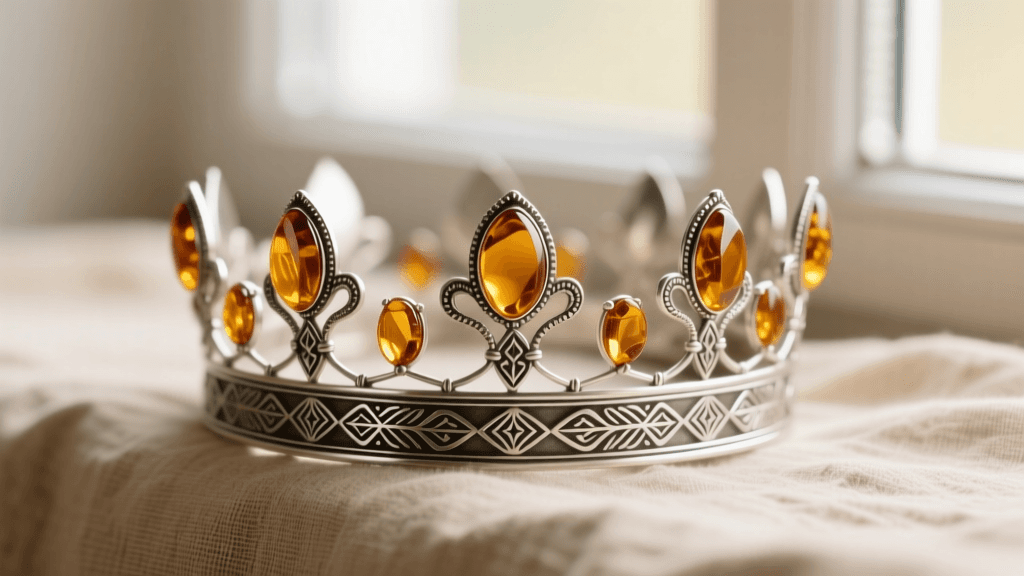
The vainags is arguably the most recognizable and prestigious piece of Latvian folk jewelry. Historically worn only by unmarried maidens, this elaborate crown is a marvel of silversmithing. Unlike the woven floral wreaths of Slavic traditions, the Latvian vainags is constructed from a rigid band of silver or silver-plated brass, heavily adorned with intricate metalwork, glass beads, and occasionally, polished amber. The crown signifies youth, purity, and a readiness for marriage, and it was traditionally passed down from mother to daughter or commissioned by a bride's family as part of her dowry.
Master silversmiths in 2026 continue to utilize traditional techniques such as filigree (delicate wirework) and granulation (fusing tiny silver spheres to the surface) to recreate historical patterns. The base of the vainags is typically lined with red or black woolen cloth to protect the wearer's hair and provide a striking contrast to the bright silver. The top edge is often crowned with small, stylized silver leaves, stars, or geometric spikes that catch the light during traditional circle dances. The sheer weight of a genuine, fully adorned vainags can exceed 400 grams, requiring the wearer to maintain impeccable posture—a physical reminder of the dignity and pride associated with Baltic heritage.
Regional Variations Across Latvia
To the untrained eye, all silver crowns may look similar, but experts in European folk dress know that the vainags is deeply regional. In 2026, authenticators look for specific design hallmarks to trace a piece back to its ethnographic roots:
- Vidzeme Region: Crowns from this central region are characterized by their tall, standing silver elements and the extensive use of vibrant, multi-colored glass beads (especially red, blue, and green) interwoven with silver wire. The silhouette is often more vertical and imposing.
- Kurzeme Region: Located on the western coast, Kurzeme vainags are famous for their heavy, ornate silver filigree and frequent use of gilding (gold-plating over silver). They often feature broad, flat silver plates and are heavily embellished with dangling silver pendants that chime softly when the wearer moves.
- Latgale Region: Influenced by neighboring Eastern European and Slavic traditions, Latgale headwear sometimes incorporates woven elements, linen, and red ribbons, though the silver crowns remain distinct with their wider, more band-like structures and heavier reliance on amber inlays rather than glass beads.
- Zemgale Region: The crowns here are generally more understated and elegant, featuring smoother silver bands with delicate, repeating geometric engravings and fewer dangling elements, reflecting the agricultural wealth and pragmatic sensibilities of the southern plains.
Authenticating Baltic Amber in the Modern Market
No discussion of Baltic folk accessories is complete without addressing 'Baltic Gold'—natural amber. The Metropolitan Museum of Art notes that Baltic amber (succinite) has been traded across Europe since the Neolithic era, making it one of the oldest materials used in European jewelry. In 2026, the market is saturated with copal (immature resin), dyed plastics, and glass imitations. Authenticating raw and polished amber requires a multi-step verification process.
First, the saltwater float test remains the gold standard for home authentication. Genuine Baltic amber has a specific gravity of approximately 1.05 to 1.10. By mixing one part table salt to four parts water, you create a solution dense enough that true amber will float, while glass, copal, and most plastics will sink. Second, the UV fluorescence test is highly reliable. When exposed to a 365nm UV flashlight, authentic Baltic amber will fluoresce a pale, milky blue or greenish-yellow hue. Copal, by contrast, will glow a stark, bright white, and plastic will show no fluorescence at all. Finally, the electrostatic test involves rubbing the amber vigorously against a natural wool cloth for 30 seconds; genuine amber will develop a static charge strong enough to pick up small pieces of tissue paper. The International Amber Association strongly advises buyers in 2026 to demand certificates of authenticity for any polished amber necklace priced above $300, as heat-treatment and pressing techniques have become incredibly sophisticated.
2026 Buyer’s Guide: Pricing and Sourcing
Sourcing authentic folk accessories requires navigating a mix of estate sales, master artisan commissions, and specialized heritage jewelers. Below is a comprehensive market breakdown for 2026, reflecting current pricing for authenticated, high-quality pieces.
| Accessory Type | Traditional Material | 2026 Authenticity Marker | Estimated 2026 Market Price (USD) |
|---|---|---|---|
| Vidzeme Vainags | Silver, Glass Beads, Wool | Maker's hallmark, regional color motifs | $850 - $1,600 |
| Kurzeme Vainags | Silver, Gilding, Pendants | Heavy filigree, chime-test on pendants | $1,400 - $2,800 |
| Amber Necklace (Raw/Uncut) | Natural Succinite | Inclusions, UV blue fluorescence | $150 - $450 |
| Amber Necklace (Polished Cognac) | Tumbled Baltic Amber | Saltwater float, static charge | $350 - $900 |
| Amber Brooch (Silver Setting) | Butterscotch Amber, 925 Silver | Acetone test (no stickiness on resin) | $200 - $550 |
When commissioning a custom vainags in 2026, expect a lead time of four to six months. Master silversmiths in Riga and Liepāja are currently charging a premium for historically accurate, hand-forged pieces, as opposed to cast replicas. Always request photographic documentation of the piece being constructed to ensure traditional wire-drawing and soldering methods are being employed.
Styling Traditional Headwear and Jewelry Today
While the vainags and heavy amber necklaces are traditionally reserved for complete, museum-grade folk costumes during Song and Dance Festivals, the 2026 fashion landscape has embraced the integration of these heritage pieces into contemporary wardrobes. A polished, multi-strand Baltic amber necklace in a deep 'cherry' or 'cognac' hue pairs beautifully with modern, minimalist linen garments, echoing the natural textile traditions of the Baltic coast without crossing into costume territory.
For those who own an authentic silver vainags, it is increasingly being displayed as a sculptural art piece in custom shadow boxes when not worn, or incorporated into modern bridal wear as a nod to Eastern European ancestry. If wearing the crown, ensure the traditional braided hairstyle is utilized; the weight of the silver requires the structural support of tightly woven hair to sit correctly on the crown of the head without slipping forward over the eyes.
Preservation and Care for Antique Folk Jewelry
Maintaining the integrity of 19th and early 20th-century Baltic accessories requires specialized care. Silver elements of the vainags should never be subjected to harsh, modern chemical silver dips, which can strip away the intentional oxidation (patina) that highlights the intricate filigree work. Instead, use a soft, untreated microfiber cloth and a mild, ammonia-free silver polish applied only to the raised surfaces. The woolen lining of the crown must be kept away from moth-infested storage areas; storing the piece in an acid-free textile box with natural cedar blocks is highly recommended.
Baltic amber, being an organic fossilized resin, is remarkably soft (ranking 2 to 2.5 on the Mohs hardness scale). It should never be stored in a box where it can rub against harder gemstones or metals, which will permanently scratch its surface. Furthermore, amber is sensitive to extreme temperature fluctuations and prolonged exposure to direct UV sunlight, which can cause the rich cognac colors to fade or the resin to develop micro-fractures (a process known as 'crazing'). In 2026, conservationists recommend lightly oiling polished amber once a year with pure, unrefined almond oil to maintain its luster and prevent dehydration, ensuring these magnificent pieces of European folk dress survive for generations to come.