Kyoto Yuzen Dyeing & Kimono Tailoring Masterclasses 2026
The 2026 Renaissance of Traditional Asian Garment Making
As we navigate through 2026, the renaissance of traditional Asian garment making has reached an unprecedented peak. Driven by a global resurgence of interest in slow fashion, sustainable textiles, and cultural preservation, workshops and seminars dedicated to traditional dress are more accessible—and more technologically integrated—than ever before. According to UNESCO's Intangible Cultural Heritage initiatives, the transmission of craftsmanship from aging artisans to a new generation of global makers has become a critical cultural priority. For enthusiasts, fashion students, and heritage preservationists, 2026 offers a unique window to learn the meticulous arts of kimono tailoring, Yuzen dyeing, hanbok construction, and cheongsam pattern drafting.
This comprehensive guide explores the top workshops and seminars available in 2026 for learning traditional Asian garment making, with a special focus on the legendary textile hub of Kyoto, Japan, alongside emerging hybrid learning models across East Asia.
The 2026 Landscape of Kimono and Textile Education
The landscape of traditional garment education has evolved significantly. While the core techniques remain centuries old, the pedagogical approach in 2026 leverages modern tools to overcome historical barriers such as language, geography, and material sourcing. The Japanese government's 2026 cultural subsidies have allowed historic ateliers in Kyoto to offer English-language instruction equipped with real-time AR (Augmented Reality) translation glasses, ensuring that international students can fully grasp the nuanced terminology of wasai (Japanese sewing) and senshoku (dyeing).
Furthermore, the Japan National Tourism Organization has heavily promoted 'craft-tourism' this year, bundling intensive weekend masterclasses with stays in traditional machiya (wooden townhouses), creating an immersive environment that extends beyond the workshop table.
Top In-Person Kimono Tailoring & Dyeing Workshops in Kyoto
1. The Maruyama Yuzen Masterclass (Weekend Intensive)
Yuzen dyeing is the quintessential Kyoto textile art, famous for its elaborate, multi-colored pictorial designs. The 2026 Maruyama Masterclass is a two-day intensive seminar designed for intermediate textile artists.
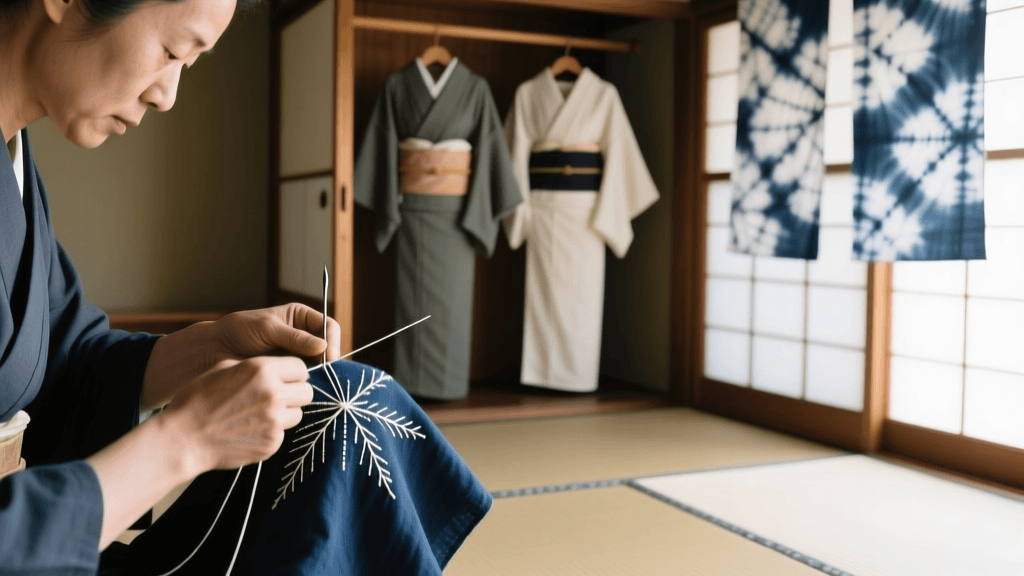
- Day 1: Design and Resist Application. Students learn itome-nori, the meticulous application of rice-paste resist using a specialized metal-tipped cone. The 2026 curriculum introduces eco-friendly, temperature-stable paste formulas that prevent cracking in varying studio humidities.
- Day 2: Color Insertion and Steaming. Participants apply synthetic and natural dyes within the resist boundaries, followed by traditional cedar-tub steaming to fix the colors into the silk fibers.
- Cost & Logistics: ¥65,000 (approx. $430 USD). Includes all silk swatches, dyes, and a bilingual instructor.
2. Nishijin Wasai (Traditional Sewing) Assembly Seminar
Unlike Western tailoring, which relies on curved seams and darts to contour the body, kimono construction (wasai) is based on straight-line cutting and folding. The Nishijin Assembly Seminar is a four-day deep dive into the architecture of the kimono.
Students work with a standard tanmono (a bolt of fabric measuring exactly 36 cm in width and 12 meters in length). The 2026 syllabus places a heavy emphasis on the kake-jaku (hidden stitches) and the precise alignment of the eri (collar), which dictates the garment's drape and the wearer's posture. Graduates of this seminar leave with a fully assembled, unlined yukata and the foundational skills to tackle lined silk kimono.
- Duration: 4 Days (32 hours of instruction).
- Cost: ¥120,000 (approx. $790 USD).
- Prerequisites: Basic hand-sewing proficiency.
Virtual & Hybrid Hanbok and Cheongsam Seminars
While Kyoto remains the epicenter for kimono education, 2026 has seen a massive expansion in hybrid seminars for other traditional Asian garments, making them accessible to a global audience.
Seoul Hanbok Draping & Goreum Tying (Hybrid Model)
South Korea's premier hanbok academies now offer a hybrid model. Students receive a physical '2026 Starter Kit' containing pre-cut myeongju (traditional silk) and stiff baerae (curved sleeve) templates. Through live-streamed, multi-angle 4K seminars, master tailors guide students through the creation of the jeogori (jacket) and the precise tying of the goreum (decorative bow). The virtual format allows instructors to digitally overlay historical 18th-century proportion guides onto the student's work in real-time.
Shanghai Qipao Pattern Drafting (Virtual AR Seminar)
The cheongsam (or qipao) requires an intimate understanding of the body's geometry. Shanghai's top virtual seminars in 2026 utilize companion smartphone apps that scan the student's body to generate a custom digital block pattern. The live seminar then teaches the traditional 'pushing and pulling' ironwork techniques used to shrink and stretch the wool or silk crepe around the bust and hips without using Western darts.
2026 Workshop Comparison Chart
To help you choose the right educational path, we have compared the top traditional garment workshops available this year based on format, investment, and skill requirements.
| Workshop / Seminar | Garment Focus | Format | Duration | 2026 Cost (USD) | Skill Level |
|---|---|---|---|---|---|
| Maruyama Yuzen Masterclass | Kimono (Textile Dyeing) | In-Person (Kyoto) | 2 Days | $430 | Intermediate |
| Nishijin Wasai Assembly | Kimono (Tailoring) | In-Person (Kyoto) | 4 Days | $790 | Beginner/Intermediate |
| Seoul Hanbok Hybrid Cohort | Hanbok (Jeogori & Chima) | Hybrid (Virtual + Kit) | 3 Weeks | $350 | Beginner |
| Shanghai Qipao AR Drafting | Cheongsam (Pattern & Ironwork) | Virtual (Live) | 1 Week | $250 | Advanced |
Essential Tools for the 2026 Artisan
Whether you are attending an in-person masterclass in Japan or a virtual seminar from your home studio, having the correct tools is paramount. Traditional Asian garment making relies on specialized implements that differ vastly from Western sewing kits.
- Hera (Silk Spatula): A bamboo or bone tool used to crease silk without damaging the fibers. Essential for marking seam allowances in kimono making.
- Kote (Traditional Iron): While modern steam irons are common, 2026 purist seminars still require the use of a kote or a specialized heavy, dry-heat iron to press seams open without flattening the silk's natural luster.
- Kakehari (Tension Frame): Used in Yuzen dyeing and intricate embroidery to keep the fabric drum-tight. Modern 2026 versions feature lightweight carbon-fiber rings for easier travel.
- Chalk and Soapstone: Unlike Western tailor's chalk, traditional shiroshita (white clay) or specialized soapstone is used to mark dark silks, as it brushes away cleanly without leaving oil residue.
Preserving the Past with Modern Methodologies
The institutions hosting these seminars are not merely teaching sewing; they are safeguarding living history. As noted by the Victoria and Albert Museum's Asian Collections department, the structural integrity and symbolic motifs of garments like the kimono and hanbok represent centuries of philosophical and aesthetic evolution. By participating in these 2026 workshops, students become active participants in a lineage of makers.
For those planning to travel to Kyoto or Seoul for in-person intensives, it is highly recommended to book your cohort spot at least six months in advance. The 2026 craft-tourism boom has led to waitlists for the most renowned master artisans. Additionally, ensure you research the specific import regulations for bringing dyed silks and specialized bamboo tools back to your home country.
Conclusion: Your Journey into Heritage Couture
Learning to construct a kimono, drape a hanbok, or draft a cheongsam is a profound exercise in patience, geometry, and cultural appreciation. The workshops and seminars of 2026 offer an unparalleled bridge between ancient mastery and modern accessibility. Whether you are applying rice-paste resist in a historic Kyoto machiya or manipulating silk crepe via an AR-guided virtual seminar, the skills you acquire will forever change how you view, wear, and respect traditional Asian garments.