Top Japanese Kimono Schools & Yuzen Apprenticeships 2026
The Evolution of Japanese Fashion Education in 2026
The landscape of Japanese fashion education in 2026 represents a fascinating intersection of ancient heritage and cutting-edge sustainability. As global interest in slow fashion and artisanal craftsmanship reaches an all-time high, the preservation of traditional Japanese garments—particularly the kimono and yukata—has transitioned from a niche historical pursuit to a highly sought-after career path. For international and domestic students alike, mastering the art of Japanese textile creation requires navigating two distinct but complementary pathways: the formal, avant-garde environment of Tokyo’s fashion academies and the rigorous, time-honored master-apprentice (deshi) system in Kyoto.
In 2026, the Japanese government and various cultural cooperatives have heavily subsidized traditional craft education to combat the aging population of master artisans. According to the Japan Traditional Crafts Aoyama Square, initiatives to pair young designers with veteran shokunin (artisans) have resulted in a 22% increase in apprenticeship applications this year. Whether you aspire to engineer smart-textile kimonos or hand-paint silk using 300-year-old resist-dyeing techniques, understanding the nuances of these educational routes is essential for your journey into Asian traditional garments.
Bunka Fashion College: Where Tradition Meets Avant-Garde
Located in the heart of Tokyo's Shibuya district, Bunka Fashion College remains the premier institution for formal fashion education in Japan. While globally renowned for producing avant-garde designers like Yohji Yamamoto and Kenzo Takada, Bunka has significantly expanded its 'Kimono Design and Textile Innovation' track for the 2026 academic year. This specialized curriculum is designed for students who want to understand the architectural drape of the kimono while integrating modern pattern-making, digital textile printing, and sustainable material science.
The 2026 Curriculum Highlights
- Structural Kimono Engineering: Students learn the precise geometry of the Tanmono (traditional bolt of cloth), studying how zero-waste cutting techniques can be applied to contemporary global fashion.
- Digital Yuzen Integration: A new 2026 module teaches students to map traditional hand-painted motifs using 3D modeling software before executing them with eco-friendly, water-based digital printers and hand-finished gold leafing.
- Sustainable Silk Sourcing: Field trips to domestic sericulture farms in Gunma Prefecture, focusing on ethical silk production and the revival of heritage silkworm breeds.
Tuition for the two-year diploma program in 2026 is approximately ¥1,450,000 per year. International students must pass the JLPT N2 (Japanese Language Proficiency Test) or complete Bunka’s intensive one-year preparatory Japanese language course before entering the specialized kimono track.
The Kyoto Yuzen Dyeing Apprenticeship (Shokunin Path)
In stark contrast to the bustling, tech-forward environment of Tokyo, the Kyoto Yuzen apprenticeship offers an immersive, deeply spiritual dive into the heart of Japanese textile heritage. Yuzen dyeing, originating in the Edo period, is a meticulous, multi-step art form used to create the vibrant, pictorial designs seen on formal kimonos. In 2026, securing a position under a Kyoto master dyer is highly competitive, often requiring a formal introduction through local cooperatives or cultural liaisons.
The Five Stages of Yuzen Mastery
Apprentices in Kyoto spend their first two years exclusively mastering the preparation and cleaning of tools before they are allowed to touch premium silk. The traditional process they must memorize includes:
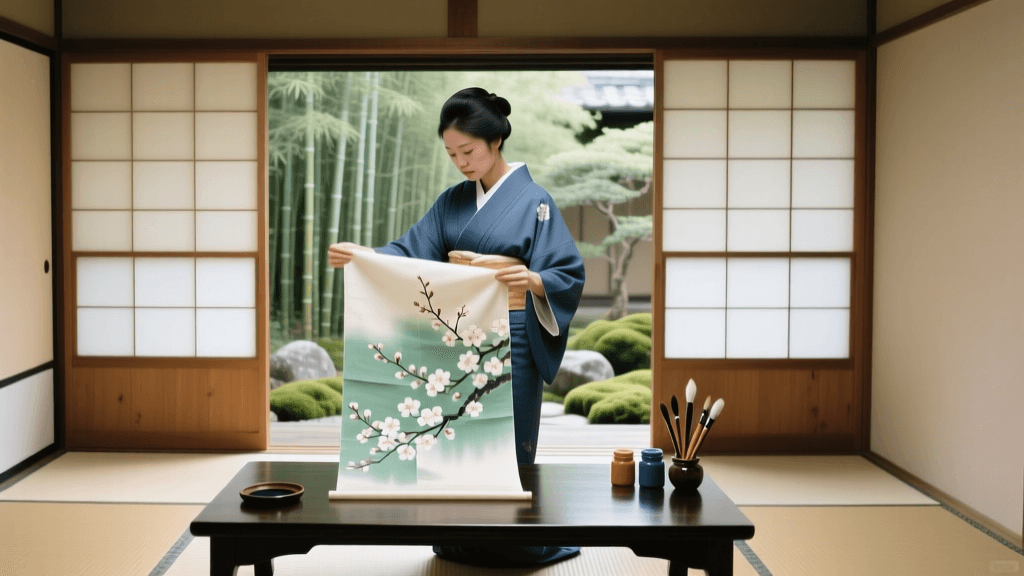
- Kari-e (Temporary Sketching): Using aobana (dayflower extract) ink, which magically disappears when washed with water, the artisan sketches the intricate design onto the white silk.
- Itome-nori (Resist Paste Application): A thick, rice-bran-based resist paste is carefully piped along the sketched lines. This creates a barrier that prevents dyes from bleeding into adjacent areas, resulting in the crisp, white outlines characteristic of Yuzen.
- Irosashi (Coloring): Using specialized deer-hair brushes, the artisan hand-paints the motifs. In 2026, many masters blend traditional botanical dyes with highly stable, light-fast mineral pigments to ensure the garments withstand modern washing methods.
- Jizome (Background Dyeing): Once the motifs are set and steamed, the entire background is dyed using wide, sweeping brush strokes that require years of muscle-memory training to achieve an even gradient.
- Mizumoto (Washing): Historically done in the freezing waters of the Kamogawa River, modern apprentices now use specialized, temperature-controlled pure water filtration systems to wash away the resist paste and excess dye, revealing the breathtaking final design.
"The true essence of Yuzen is not just in the colors you apply, but in the negative space you protect. The resist paste is the soul of the kimono." — Master Dyer Hiroshi Tanaka, Kyoto Yuzen Cooperative, 2026.
Comparison: Formal Schooling vs. Traditional Apprenticeship
Choosing between a Tokyo fashion academy and a Kyoto artisan workshop depends entirely on your career goals, financial situation, and tolerance for rigorous traditional hierarchies. Below is a comprehensive comparison of the two pathways as of 2026.
| Feature | Bunka Fashion College (Tokyo) | Kyoto Yuzen Apprenticeship |
|---|---|---|
| Program Type | Formal Degree / Diploma | Traditional Master-Apprentice (Deshi) |
| Duration | 2 to 4 Years | 3 to 5 Years (Minimum) |
| 2026 Annual Cost | ¥1,450,000 (Tuition & Materials) | Free (Tuition waived by Master) |
| Financial Support | Merit Scholarships & Student Loans | ¥160,000 - ¥180,000 / month stipend |
| Primary Focus | Design, Pattern-making, Global Innovation | Dyeing, Weaving, Heritage Preservation |
| Visa Pathway | Student Visa | Trainee / Designated Activities Visa |
| Career Outcome | Fashion Brand Director, Textile Engineer | Independent Artisan, Heritage Restorer |
Essential Tools for the Modern Kimono Artisan
Whether you are studying in a classroom or a traditional workshop, you will need to invest in specialized tools. While schools provide basic equipment, serious students in 2026 are expected to curate their own professional kits. Here are the essential items and their current market prices:
- Jizome-fude (Dyeing Brushes): Crafted from premium deer hair and bamboo, these brushes hold immense amounts of liquid while maintaining a razor-sharp tip. Expect to pay between ¥15,000 and ¥45,000 per brush depending on the width.
- Shinshi (Stretching Poles): Bamboo poles equipped with tiny, adjustable needles used to keep the silk taut during the dyeing process. A standard set of 10 poles costs approximately ¥12,000.
- Yuzen-nori (Resist Paste): Traditional rice-bran paste is still favored by masters, but modern students often practice with synthetic, water-soluble variants that cost around ¥3,500 per kilogram.
- Mensui (Water Bowls): Heavy, weighted ceramic or brass bowls used to hold water for brush cleaning. Vintage brass bowls from Kyoto antique markets are highly prized and can cost upwards of ¥25,000.
Funding, Visas, and Application Timelines for 2026
For international applicants, navigating the Japanese immigration system requires careful planning. The April 2026 intake for formal schools like Bunka requires applications to be submitted by November 2025. You will need to secure a Certificate of Eligibility (COE) for a Student Visa, which requires proof of financial backing (typically ¥2,000,000 in a bank account) to cover your first year of living expenses.
For the Kyoto apprenticeship route, the visa process is more complex. In 2026, the Japanese government continues to utilize the 'Designated Activities' visa category for foreign nationals engaged in the preservation of traditional crafts. This requires the master artisan's workshop to be officially registered with the Ministry of Economy, Trade and Industry (METI) as a recognized heritage enterprise. The stipend provided by the cooperative (¥160,000 to ¥180,000 monthly) is generally sufficient to cover modest living expenses in Kyoto's suburban wards, but upfront costs for relocation and housing deposits must be self-funded.
Conclusion
The pursuit of Japanese fashion education in 2026 is a profound commitment to both the past and the future. Whether you choose the structured, innovative halls of Bunka Fashion College to redefine the kimono for the global stage, or you dedicate your hands to the freezing water and vibrant dyes of a Kyoto Yuzen workshop, you are participating in a vital cultural continuum. The Asian traditions of garment making are not static museum pieces; they are living, breathing practices that rely on the passion, discipline, and vision of the next generation of artisans. Prepare your portfolio, polish your Japanese language skills, and take the first step toward mastering one of the world's most exquisite textile traditions.