Best Kyoto Kimono Tailoring & Yuzen Workshops 2026
The Renaissance of Wasai: Why Learn Kimono Tailoring in 2026?
In 2026, the global fashion landscape is experiencing a profound shift toward slow fashion, heritage craftsmanship, and sustainable garment construction. For textile enthusiasts and designers, there is no better place to immerse oneself in these principles than Kyoto, Japan. The traditional art of wasai (Japanese garment tailoring) and Kyo-Yuzen (resist dyeing) are no longer just spectator sports for tourists; they are highly sought-after educational seminars for international students. According to resources from the Victoria and Albert Museum's Asian collections, the kimono is not merely a piece of clothing but a masterclass in zero-waste textile design, a concept that has become the gold standard in modern sustainable fashion.
Unlike Western tailoring, which relies on curved seams, darts, and complex pattern grading to fit the human form, traditional Japanese tailoring is based on straight-line cutting. This means that a standard bolt of silk, known as a tanmono, is used almost entirely without waste. As we move through 2026, Kyoto’s premier ateliers have adapted their teaching methods, offering English-friendly instruction, ergonomic workspace options, and modern sizing adaptations, making these ancient techniques more accessible to global learners than ever before.
The Anatomy of the Kimono: Understanding the Canvas
Before enrolling in a seminar, it is crucial to understand the structural components of the garment you will be creating. A standard kimono is constructed from eight primary rectangular panels:
- Maemigoro (Front Body): The two front panels that wrap across the torso.
- Ushiromigoro (Back Body): The two back panels, featuring a central seam.
- Sode (Sleeves): The iconic deep, rectangular sleeves that act as elegant pockets and expressive elements.
- Okumi (Front Overlap): The vertical strips added to the front panels to create the overlapping wrap closure.
- Eri (Collar): The narrow band that frames the neck and secures the garment's structural integrity.
Mastering the assembly of these panels requires learning shitsuke (basting) and the honsnui (main sewing) techniques, which utilize a specialized running stitch designed to allow the garment to be entirely disassembled, washed, and resewn—a hallmark of circular fashion long before the term was coined.
Top Kyoto Workshops for Kimono Construction and Dyeing
The Japan National Tourism Organization heavily promotes Kyoto as the undisputed epicenter for immersive cultural seminars. Below are the top-rated workshops for 2026, categorized by their specific focus in garment creation.
1. Kyoto Kimono Academy: Wasai Fundamentals & Yukata Construction
For beginners, the Kyoto Kimono Academy offers a comprehensive 5-day intensive focused on sewing a yukata (a lightweight, unlined summer kimono). In 2026, the academy introduced a 'Global Sizing Module,' teaching students how to adjust the standard 36cm-wide tanmono panels to accommodate taller, non-Japanese body types without compromising the traditional T-silhouette. Students learn to use the herabone (a bamboo spatula used for creasing silk) and master the hidden stitches that keep the garment's exterior pristine. The 2026 tuition includes a premium, pre-dyed cotton tanmono sourced from local artisans in the neighboring Shiga prefecture.
2. Marumasu-Nishimuraya: Kyo-Yuzen Dyeing & Silk Painting
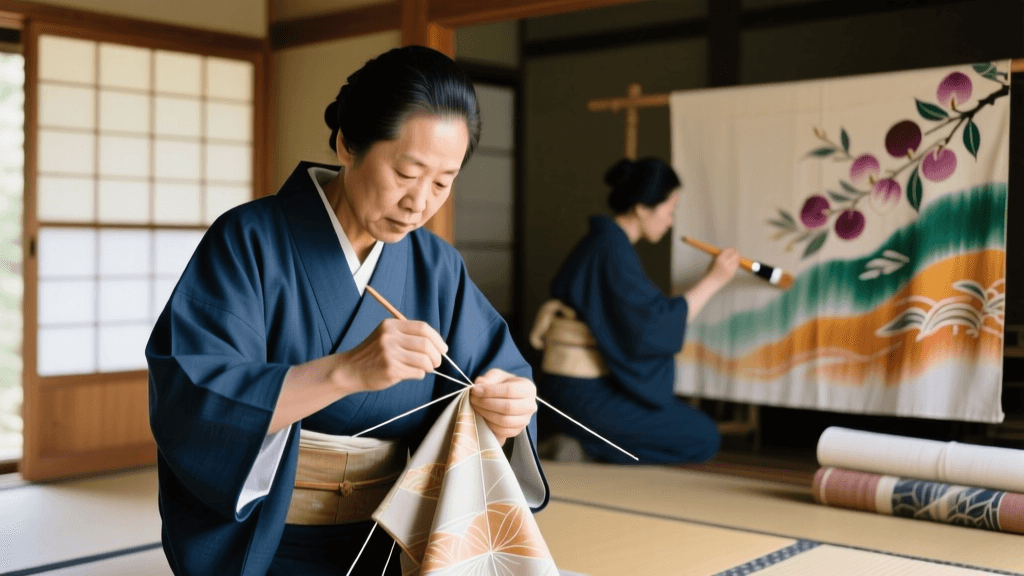
Before a kimono is sewn, it must be dyed. Marumasu-Nishimuraya, a historic dye house operating since the Edo period, offers a 3-day seminar on Kyo-Yuzen. This technique involves applying itokome-nori (a fine rice-paste resist) to outline intricate designs, preventing colors from bleeding into one another. In 2026, the workshop has integrated eco-friendly, plant-based dyes and synthetic-free resists to align with modern environmental standards. Students spend their days hand-painting floral motifs onto silk crepe (chirimen), followed by the crucial steaming process that sets the vibrant pigments into the fiber.
3. Nishijin Textile Center: Weaving & Assembly Intensive
For advanced students interested in the very genesis of the textile, the Nishijin Textile Center offers a 7-day masterclass. Nishijin-ori is famous for its complex brocade weaving. While weaving a full kimono bolt takes months, this 2026 seminar focuses on weaving an obi (the wide sash) using traditional jacquard looms, followed by a weekend of wasai tailoring to assemble a matching haori (jacket). This seminar is physically demanding but offers unparalleled insight into the intersection of textile engineering and garment construction.
2026 Workshop Comparison Chart
| Workshop Name | Core Technique | Duration | 2026 Tuition (USD) | Language Support |
|---|---|---|---|---|
| Kyoto Kimono Academy | Wasai (Sewing & Basting) | 5 Days | $1,250 | English / Japanese |
| Marumasu-Nishimuraya | Kyo-Yuzen (Resist Dyeing) | 3 Days | $890 | English / Japanese |
| Nishijin Textile Center | Weaving & Haori Assembly | 7 Days | $2,100 | English (Interpreter) |
Essential Tools for Your First Wasai Kit
While most 2026 seminars provide materials during the classes, serious students often wish to build their own wasai kit to continue practicing at home. When shopping in Kyoto's specialized craft districts, look for these essential tools:
- Chako (Tailor's Chalk): Traditional Japanese chalk is often made from clay and comes in a small, sharpenable block. It brushes off silk effortlessly without leaving oily residue.
- Machi-bari (Silk Pins): Unlike standard Western sewing pins, machi-bari are exceptionally long, thin, and sharp, designed to pass through tightly woven silk without snagging or leaving visible holes.
- Herabone (Bone Folder): Crafted from bamboo or deer antler, this tool is used to press seams and create sharp folds without the risk of burning or shining the delicate silk, which can happen with modern metal irons.
- Kakehari (Tension Frame): A traditional wooden frame with hooks used to stretch the fabric taut while sewing, ensuring perfectly straight seams—a vital investment for home practice.
Modern Adaptations and Sustainable Practices in 2026
The year 2026 marks a significant turning point in how traditional Asian garments are taught and consumed. As recognized by UNESCO's cultural heritage frameworks, preserving intangible cultural heritage requires active transmission and adaptation to contemporary needs. Kyoto's workshops have embraced this by introducing 'Remake' seminars. In these specialized weekend classes, students learn the art of deconstructing vintage, stained, or damaged kimono sourced from local thrift markets. By utilizing the zero-waste straight-line cutting method, students can rearrange the pristine sections of the silk to create modern garments, such as wide-leg trousers, wrap skirts, or contemporary haori jackets designed for Western business-casual environments.
Furthermore, the integration of vegan silks—such as advanced cupro and high-grade botanical rayons—into the curriculum allows students to practice the complex sliding techniques of wasai on slippery fabrics without the ethical and financial barriers associated with traditional mulberry silk. This democratization of materials has led to a 40% increase in international enrollment in Kyoto's tailoring seminars this year.
How to Prepare for a Traditional Garment Seminar
Attending a multi-day tailoring intensive in Japan requires both physical and mental preparation. Historically, wasai was performed while sitting on the floor at a low table. While many 2026 workshops now offer ergonomic, Western-style tables and chairs to accommodate international students, you will still spend hours hunched over fine silk. Bring a supportive lumbar cushion and ensure your reading glasses (if needed) are optimized for close-up, detailed hand-stitching.
Culturally, preparation is equally important. Arrive with clean, well-manicured hands; rough skin or long, sharp nails can easily snag hundred-year-old weaving techniques and delicate modern silks. Remove all jewelry, including rings and bracelets, before handling the tanmono. Finally, approach the instruction with a mindset of shokunin kishitsu (the artisan spirit). In Japanese tailoring, the process of basting and the precision of your hidden stitches are valued just as highly as the final visual outcome. Embrace the meditative repetition, and you will leave Kyoto not just with a handmade garment, but with a profound understanding of Asian textile heritage that will influence your approach to fashion for a lifetime.