Kyoto Wasai Kimono Sewing Workshops 2026: Top Seminars
The Renaissance of Wasai: Traditional Japanese Sewing in 2026
In 2026, the global slow fashion movement has profoundly intersected with traditional Asian garment making, sparking a massive resurgence in Wasai (traditional Japanese sewing). Unlike Western tailoring (Yosai), which relies on complex curved patterns and cutting fabric to fit the human form, Wasai is built on a philosophy of zero waste, straight lines, and profound respect for the textile. The kimono is constructed from straight bolts of fabric (tanmono), meaning the garment can be entirely disassembled, cleaned, and resewn without losing a single scrap of material.
According to the Agency for Cultural Affairs in Japan, recent 2026 initiatives have heavily subsidized intangible cultural property workshops to ensure that master artisans can pass down these meticulous hand-sewing techniques to a new generation of international and domestic students. For fashion historians, sustainable designers, and textile enthusiasts, attending a Wasai seminar in Kyoto is no longer just a niche hobby—it is a masterclass in sustainable, modular fashion design.
Top Kyoto Wasai Workshops and Seminars for 2026
Kyoto remains the undisputed epicenter of kimono production and textile arts. In 2026, several prestigious academies have updated their curricula to accommodate international students, offering English translation headsets and hybrid digital pattern-drafting modules. Below are the premier workshops for learning traditional kimono construction this year.
1. Kyoto Kimono Sewing Academy (KKSA) – Intensive 4-Week Certification
Located in the historic Nakagyo Ward, the KKSA offers the most comprehensive Wasai certification for international students. The 2026 curriculum focuses on the creation of a hitoe (an unlined, single-layer kimono) and a yukata (casual summer cotton kimono). Students learn the sacred geometry of the tanmono bolt, mastering the art of folding rather than cutting. The tuition for the 2026 intensive is ¥380,000 (approximately $2,550 USD), which includes all silk and cotton materials, traditional tools, and studio access.
2. Nishijin Textile Center – Artisan Masterclass Series
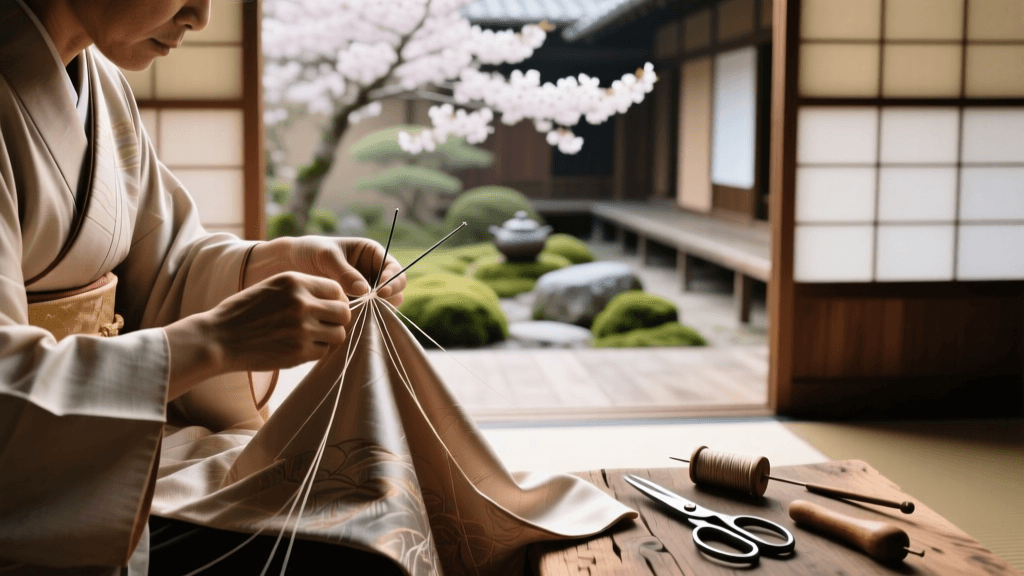
While Nishijin is globally renowned for its weaving, the 2026 Artisan Masterclass Series introduces a specialized pre-sewing and finishing module. This weekend seminar focuses on sukui-nui (invisible stitching) and kake-hari (the traditional method of using tension needles to stretch and align silk seams before pressing). Priced at ¥45,000 per module, this seminar is ideal for advanced sewists who already understand basic garment construction but want to elevate their finishing techniques to an artisan level.
3. The Global Wafuku Heritage Seminar (Hybrid Residency)
For those unable to commit to a full month in Japan, this hybrid program begins with eight weeks of online lectures covering the history of the Kyoto Costume Institute's Edo-period archives, digital pattern drafting, and fabric sourcing. The course culminates in a mandatory one-week residency in Kyoto, where students physically assemble their garments under the watchful eyes of master sensei. The 2026 tuition is $1,800 USD, plus travel expenses.
2026 Workshop Comparison Chart
| Workshop Name | Duration | 2026 Tuition | Format | Best For |
|---|---|---|---|---|
| Kyoto Kimono Sewing Academy | 4 Weeks | ¥380,000 (~$2,550) | In-Person | Complete beginners to Wasai seeking certification |
| Nishijin Artisan Masterclass | 2 Weekends | ¥90,000 (~$600) | In-Person | Advanced sewists focusing on invisible stitching |
| Global Wafuku Heritage Seminar | 8 Weeks + 1 Week | $1,800 USD | Hybrid | International students needing flexible scheduling |
Essential Wasai Tools You Will Need
Western sewing kits are virtually useless in a traditional Wasai workshop. The Japanese sewing methodology requires specialized tools designed for handling delicate silks and executing perfectly straight, hidden seams. Most 2026 workshops provide a starter kit, but serious students should familiarize themselves with these essential items:
- Shaku (Japanese Ruler): The traditional measuring system. One shaku is approximately 37.8 centimeters. Understanding the shaku, sun, and bu subdivisions is critical, as all vintage and modern kimono patterns are drafted using this metric.
- Mekari (Pattern Paper): A specialized, slightly translucent paper used for drafting the straight-line geometry of the kimono panels (mi-goro, okumi, and sode).
- Kote (Traditional Iron): Unlike modern steam irons, the kote is a heavy, dry-heat iron used in conjunction with a ate-uno (pressing cloth) and water mist to flatten seams without scorching delicate silk crepes.
- Wasai Hari (Japanese Needles): These needles are significantly longer and thicker than Western hand-sewing needles, designed to hold long, continuous running stitches (unui) that allow the fabric to gather slightly and drape beautifully.
- Kukuri-Dai (Tying Stand): A small wooden block used to anchor threads when executing the intricate knotting techniques required to finish seams without bulky back-stitching.
Core Techniques Taught in 2026 Seminars
The true magic of Wasai lies not in the cutting, but in the manipulation of the seam allowances. Because the kimono is meant to be taken apart for washing, the internal architecture of the garment is just as important as the exterior.
Kise (The Art of the Folded Seam)
In Western sewing, seam allowances are often pressed open. In Wasai, the kise technique involves folding the seam allowance over itself and hiding it beneath the outer layer of the fabric. This creates a soft, rolled edge that is gentle against the skin and protects the delicate silk threads from fraying. Mastering the exact millimeter depth of a kise fold is a primary focus of the first week at the KKSA.
Chikara-Nuno (Reinforcement Cloth)
Because kimonos are subjected to immense tension at the hips and underarms when tied with an obi, artisans use chikara-nuno—a lightweight, durable silk or cotton backing cloth. Students learn to hand-baste this reinforcement layer invisibly into the garment's stress points, ensuring the kimono can last for over a century of wear and rewashing.
Hon-Gushi (Main Stitching)
The hon-gushi is a specialized running stitch. Unlike the tight, locked stitches of Western tailoring, the hon-gushi leaves a microscopic amount of slack in the thread. This slack allows the silk panels to shift and breathe, preventing the thread from tearing through the delicate woven textile when the wearer moves.
Practical Advice for International Students in 2026
Attending a traditional garment-making seminar in Japan requires careful logistical planning. According to the Japan National Tourism Organization, cultural tourism has surged in 2026, meaning workshop seats in Kyoto fill up exceptionally fast.
- Booking Windows: Top-tier academies like the KKSA open their 2026 enrollment exactly eight months in advance. You must secure your spot by late 2025 to guarantee a place in the spring or autumn cohorts.
- Visa Requirements: If you are attending a seminar longer than 30 days, a standard tourist visa is insufficient. You will need to apply for a Designated Activities visa (Cultural Study), which requires a certificate of enrollment from the Kyoto academy and proof of financial sustainability.
- Language Barriers: While the hybrid and international cohorts offer English translation, the master artisans primarily speak the Kyoto dialect. Familiarizing yourself with basic Japanese sewing terminology (such as namishiro for white basting thread and kukuri for tying off) will vastly improve your rapport with the sensei and your overall learning experience.
- Physical Endurance: Wasai is performed sitting in seiza (the traditional kneeling position) on tatami mats. The physical toll on the knees and lower back is significant. Many 2026 workshops now provide ergonomic seiza benches for international students unaccustomed to the posture, but core strength and flexibility preparation are highly recommended before arrival.
Conclusion: The Future of Zero-Waste Fashion
Learning traditional Asian garment making in 2026 is about much more than acquiring a historical skill; it is an investment in the future of sustainable fashion. The kimono's modular, zero-waste construction offers a brilliant blueprint for modern designers seeking to escape the destructive cycles of fast fashion. By immersing yourself in a Kyoto Wasai workshop, you are not just sewing a garment—you are preserving a centuries-old philosophy of respect, patience, and harmony with the materials we wear.