Best 2026 Kyoto Kimono Shitate Workshops for Tailors
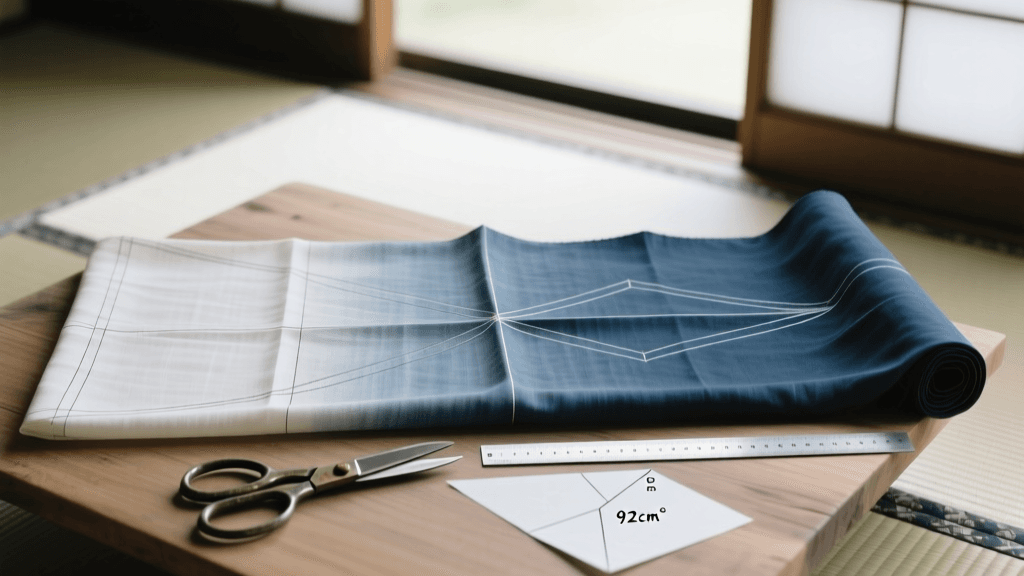
The art of Wafuku Shitate (traditional Japanese garment tailoring) is experiencing a monumental renaissance in 2026. As the global fashion industry pivots towards sustainability, zero-waste patterns, and slow fashion, the centuries-old techniques used to construct the kimono and haori have become highly sought after by international designers, tailors, and textile enthusiasts. Unlike Western tailoring, which relies heavily on curved seams, bias cutting, and darts to contour the body, traditional Asian garment making—particularly the Japanese Shitate and Korean Hanbok construction—utilizes straight-line cutting from a single bolt of fabric known as a Tanmono. This results in a garment that is entirely deconstructable, washable, and recyclable, embodying the ultimate zero-waste philosophy that modern eco-conscious brands are desperately trying to replicate.
For those looking to master these intricate techniques, 2026 offers an unprecedented array of workshops and seminars, particularly in Kyoto, Japan. Supported by recent cultural heritage preservation grants from the Agency for Cultural Affairs, Government of Japan, local artisan guilds have opened their doors to international students. These intensive masterclasses bridge the gap between ancient craftsmanship and modern textile design, offering hands-on experience that cannot be replicated through textbooks alone.
Premier In-Person Seminars in Kyoto for 2026
Kyoto remains the undisputed epicenter of traditional textile arts. In 2026, several prestigious institutions have launched specialized seminars tailored for both beginners and advanced tailors looking to refine their hand-stitching and fabric manipulation skills.
Kyoto Nishijin Textile Center: The Hon-Date Intensive
The Nishijin Textile Center's 2026 "Hon-Date" (Standard Tailoring) Intensive is a rigorous four-week seminar designed specifically for intermediate sewists and professional tailors. Priced at ¥280,000 (approximately $1,900 USD), this workshop immerses students in the exact measurements, seam allowances, and basting techniques required for authentic kimono construction. Students spend days mastering the Kuke (blind stitching) technique, ensuring that no threads are visible on the exterior of the silk garment. The seminar also covers the Ji-nuki process, a traditional method of stretching and setting the fabric using steam and bamboo, which is absolutely critical when working with delicate, metallic-threaded Nishijin-ori brocades.
The Dye & Weave Artisan Exchange: Cross-Cultural Tailoring
A groundbreaking addition to the 2026 seminar calendar is the Cross-Cultural Tailoring Exchange, which juxtaposes Japanese Shitate with Korean Hanbok construction. Hosted in a collaborative studio in Kyoto’s Higashiyama district, this two-week seminar explores the shared straight-line cutting philosophies of East Asia. While the kimono relies on the narrow Tanmono bolt (usually 38cm wide), the Hanbok utilizes wider loom widths, requiring entirely different folding and seaming techniques, particularly in the voluminous construction of the Chima (skirt) and the structured Jeogori (jacket). Students will draft, cut, and sew both a Haori (Japanese jacket) and a Saenghwal Hanbok (everyday Korean jacket), learning how the subtle introduction of curved elements like the Baerae (curved sleeve line in Hanbok) contrasts with the strictly rectangular geometry of the kimono. For a deeper historical context on the evolution of these garments, the Metropolitan Museum of Art's Heilbrunn Timeline of Art History provides an excellent foundational overview of East Asian garment evolution.
Essential 2026 Toolkit for Traditional Tailoring
Entering a traditional tailoring seminar requires a specific set of tools. While many traditionalists insist on purely analog equipment, 2026 has seen the introduction of ergonomic and temperature-controlled tools that respect the traditional methodology while reducing artisan fatigue. Below is a comparison of the traditional toolkit versus the modern 2026 artisan upgrades permitted in contemporary Kyoto seminars.
| Tool | Traditional Version | 2026 Artisan Upgrade | Seminar Application |
|---|---|---|---|
| Shaku (Ruler) | Solid bamboo, hand-calibrated | Carbon-fiber core with bamboo casing and laser-edge guide | Ensures perfectly straight Mitsugiri cuts without warping over time. |
| Kote (Iron) | Cast iron, charcoal-heated base | Cordless, temperature-controlled ceramic soleplate with micro-steam | Allows precise heat regulation for delicate Nishijin-ori brocades. |
| Hari (Needles) | Hand-forged carbon steel | Titanium-coated micro-needles with anti-friction threading | Reduces silk snagging during high-tension Kuke blind stitching. |
| Kuke-Dai (Stand) | Wooden lap desk with cotton strap | Ergonomic memory-foam angled stand with adjustable tension clips | Prevents artisan back strain during long hours of hemming. |
Selecting Your Tanmono: Fabric Considerations for 2026
Before you make your first cut, understanding the textile is paramount. In 2026 seminars, students are introduced to a wider variety of Tanmono than ever before. While traditional Chirimen (silk crepe) and Tsumugi (slubbed pongee silk) remain the gold standard for formal wear, modern workshops now incorporate ethically sourced, lab-grown peace silk alternatives for vegan students. This is a major trend in 2026 traditional crafting, allowing artisans to practice the exact same tension and pressing techniques without the environmental and ethical concerns associated with conventional sericulture. Instructors emphasize that the weight and drape of the fabric will dictate the width of your seam allowances and the tightness of your basting stitches.
The Curriculum: Decoding the Shitate Process
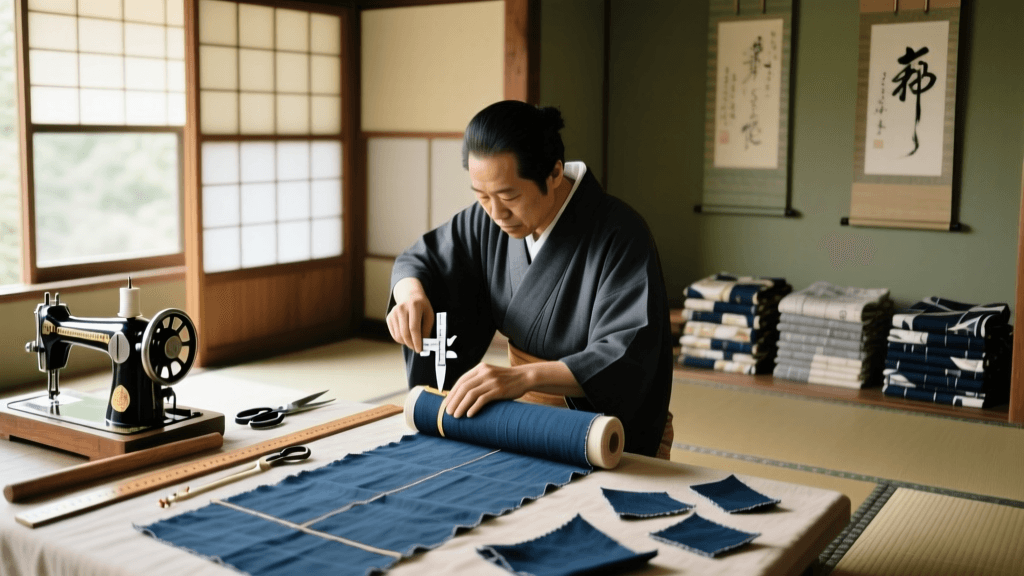
Whether you are attending an in-person seminar in Kyoto or a virtual hybrid course, the curriculum for Wafuku Shitate follows a strict, time-honored sequence. Understanding these phases will prepare you for the rigors of the workshop.
- Tanmono Inspection and Preparation: The process begins with inspecting the 12-meter bolt of fabric. Students learn to identify weaving irregularities and prepare the fabric through Yu-noshi, a meticulous steam-stretching process using damp cotton cloths to pre-shrink and align the silk fibers.
- Mitsugiri (Cutting): Unlike Western pattern making, there is no chalk marking or curved cutting. The fabric is measured using a Shaku and cut in straight lines. Precision here is paramount; a millimeter of deviation can ruin the alignment of the E-moyo (picture pattern) across the back seams.
- Kuke (Blind Stitching): The hallmark of a master tailor. Students spend days practicing the Kuke stitch, a microscopic slip stitch used to secure the hems and collars. The goal is to make the stitching entirely invisible from the right side of the fabric, allowing the textile's pattern to remain uninterrupted.
- Eri-tome (Collar Setting): The collar (Eri) is the structural and visual anchor of the kimono. Seminars dedicate extensive hours to the Eri-tome process, teaching students how to manipulate the thick, multi-layered silk so that it curves naturally around the neck without buckling, seamlessly integrating the Tomo-eri (decorative collar) with the Kake-eri (under collar).
- Finishing and Pressing: The final stage involves meticulous pressing using the Kote. Students learn the exact temperature and moisture levels required for different silk weaves, ensuring the seams lay perfectly flat while maintaining the fabric's natural luster and structural integrity.
Virtual and Hybrid Seminars for Global Students
For those unable to travel to Japan, 2026 offers robust virtual alternatives. The Tokyo Kimono Academy has launched a fully remote "Digital Shitate Certification." This 12-week hybrid program ships a physical Tanmono and traditional tool kit directly to the student's home, paired with weekly 4K-resolution live streams from master tailors in Tokyo. The virtual seminars utilize overhead and macro-lens cameras, allowing remote students to see the exact tension and needle angle required for Kuke stitching. Furthermore, students submit their physical garments via international courier at the end of each module for grading by the masters in Japan. This hybrid model has been recognized by international textile guilds and aligns with the global push to preserve intangible cultural heritage, a mission heavily supported by organizations like UNESCO's Intangible Cultural Heritage program.
Career and Artisan Opportunities Post-Certification
Completing a Shitate seminar in 2026 opens doors to a niche but highly lucrative market. High-end fashion houses in Paris, Milan, and New York are increasingly hiring artisans trained in zero-waste, straight-line cutting to consult on sustainable couture collections and capsule wardrobes. Additionally, certified tailors can find highly profitable employment in the thriving vintage kimono restoration market, where the ability to meticulously deconstruct, clean, and re-sew antique garments commands premium prices. By investing time in these intensive workshops, you are not merely learning to sew; you are preserving a vital piece of Asian cultural history and mastering a sustainable tailoring philosophy that the modern fashion industry desperately needs to survive.