Hanfu On Global Runways: 2026 Fashion Week Trends
The Evolution of Hanfu on International Runways
The global fashion landscape in 2026 has unequivocally embraced the structural elegance and historical depth of traditional Chinese clothing. What began as a grassroots cultural revival movement in the early 2020s has matured into a formidable force on the world’s most prestigious runways. Today, Hanfu is no longer confined to niche streetwear or localized cultural festivals; it is a central pillar of avant-garde and haute couture collections showcased in Paris, Milan, and New York. The integration of traditional Chinese garments into high fashion represents a profound shift in how global designers approach heritage, sustainability, and silhouette manipulation.
In 2026, international fashion houses and independent Chinese designers alike are deconstructing and reimagining Hanfu elements to meet the rigorous demands of the modern runway. The focus has shifted from mere historical replication to innovative adaptation. Designers are blending ancient weaving techniques with contemporary tailoring, creating garments that honor the philosophical roots of Chinese dress while pushing the boundaries of modern fashion. This comprehensive guide explores the specific Hanfu elements dominating the 2026 global runway circuit, the logistics of showcasing these collections, and actionable advice for stylists and designers looking to merge Eastern heritage with Western fashion week standards.
Key Silhouettes Dominating the 2026 Circuit
The Mamianqun (Horse-Face Skirt) Renaissance
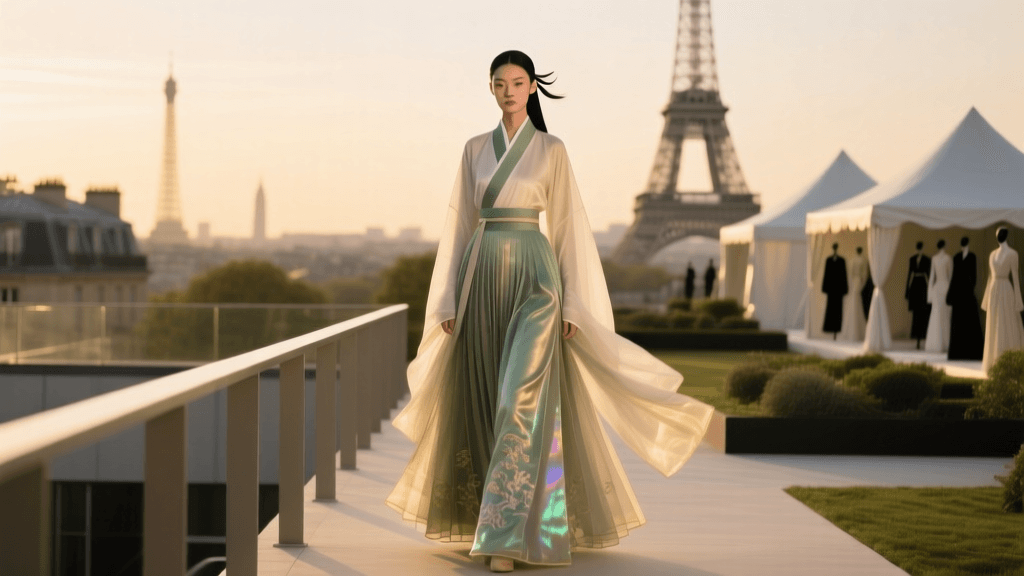
The Mamianqun, characterized by its flat front and back panels with intricate side pleats, has become the undisputed star of the 2026 runway season. Historically popular during the Ming and Qing dynasties, the horse-face skirt offers a masterclass in kinetic movement. On the runways of Milan and Paris this year, designers are utilizing the Mamianqun’s structure to create dramatic, voluminous silhouettes that respond dynamically to the model's stride. Instead of traditional heavy wools or stiff silks, 2026 collections feature Mamianqun crafted from ultra-lightweight, recycled organza and metallic jacquard, allowing the pleats to float and catch the runway lighting. Stylists are pairing these skirts with sharply tailored, minimalist bodices to create a striking contrast between historical volume and modern minimalism.
Modernizing the Cross-Collar (Jiaoling Youren)
The Jiaoling Youren, or cross-collar right-over-left closure, is a foundational element of Hanfu that carries deep cultural significance, representing the harmony of yin and yang. In 2026, global designers are adapting this neckline for high fashion by altering its proportions. While traditional Hanfu features a deep, relaxed cross-collar that exposes the inner layers, runway adaptations in 2026 often utilize a structured, reinforced lapel that sits higher on the clavicle. This modification provides the necessary support for heavy runway embellishments and aligns the garment with the structured outerwear trends currently favored by European luxury buyers. By integrating hidden corsetry beneath the cross-collar, designers maintain the garment's historical visual integrity while ensuring the rigid, flawless fit required for high-definition runway photography.
The Beizi (Long Outer Jacket) as Avant-Garde Layering
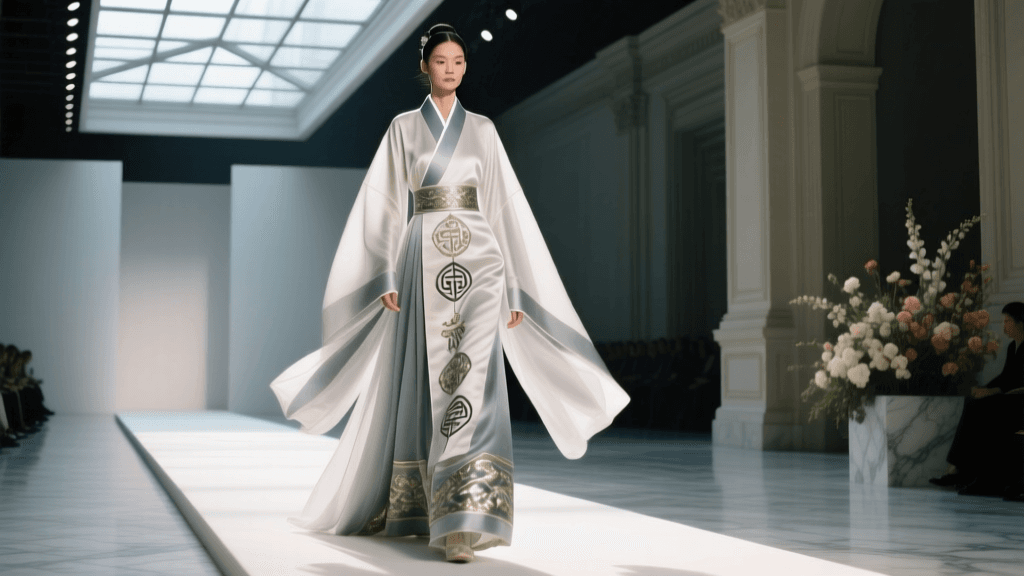
The Song Dynasty Beizi, a long, open-front outer jacket with side slits, has emerged as the ultimate layering piece for the 2026 autumn/winter collections. Its straight, unrestrictive cut provides a stark contrast to the cinched waists prevalent in Western tailoring. Runway stylists are using the Beizi to create elongated, vertical lines that command attention on the catwalk. By extending the traditional side slits all the way to the underarm and reinforcing the hems with horsehair braid, the 2026 runway Beizi flares dramatically as the model walks, creating an architectural silhouette that photographs beautifully from every angle.
2026 Global Fashion Week Showcase Budget & Logistics
For independent designers and heritage brands aiming to present a Hanfu-inspired capsule collection at a Tier-1 Fashion Week in 2026, meticulous financial and logistical planning is essential. The costs associated with international showcases have evolved, with a heavy emphasis on sustainable production and immersive presentation formats. Below is a detailed breakdown of the estimated costs and strategic considerations for presenting an off-schedule Hanfu capsule during Paris or Milan Fashion Week in 2026.
| Expense Category | Estimated Cost (USD) | 2026 Strategic Notes |
|---|---|---|
| Off-Schedule Venue / Showroom | $18,000 - $28,000 | Focus on immersive, gallery-style showroom spaces in Le Marais (Paris) or Tortona (Milan) rather than traditional catwalks to allow buyers to inspect intricate textile weaves up close. |
| Runway Textile Sourcing | $14,500 | Invest in certified sustainable Xiangyunsha (gambiered silk) and recycled Song brocade. Buyers in 2026 mandate verifiable eco-friendly supply chains. |
| Specialized Tailoring & Fitting | $9,000 | Requires artisans skilled in flat-pattern cutting who can adapt traditional 2D Hanfu patterns to 3D Western runway forms without losing historical markers. |
| Model Casting & Styling | $6,500 | Casting models who can carry the specific posture and gait required for heavy, layered Hanfu silhouettes. Includes specialized runway footwear. |
| PR & Showroom Agency Retainer | $16,000 | Retain agencies with established relationships with luxury conglomerate buyers who are actively seeking heritage-backed Asian designs in 2026. |
Adapting Historical Textiles for Modern Runways
The soul of Hanfu lies in its textiles. The historical significance of Chinese silk weaving is profound, with techniques that have influenced global trade and art for millennia. As noted by The Metropolitan Museum of Art, the evolution of Chinese silk from the Han Dynasty onward established a foundation of luxury textiles that continues to captivate the modern fashion world. However, presenting these textiles on a 2026 runway requires balancing historical authenticity with modern performance and sustainability standards.
Xiangyunsha (Gambiered Guangdong Gauze)
Xiangyunsha, a silk fabric dyed with the juice of the Shoulang yam and coated with river mud, is highly prized for its unique, leathery texture and its ability to repel water. In 2026, this heritage textile is a favorite among avant-garde designers for its sculptural qualities. Unlike soft, draping silks, Xiangyunsha holds its shape, making it ideal for structured Hanfu collars and exaggerated sleeves. To meet the 2026 sustainability mandates of European fashion councils, designers are now sourcing Xiangyunsha from certified zero-waste dyeing facilities in Guangdong, ensuring that the river mud and yam dyes are harvested and processed without disrupting local ecosystems.
Song Brocade and AI-Assisted Looming
Song Brocade, known for its intricate, multi-colored geometric patterns, has historically been reserved for ceremonial garments and high-status attire. The Victoria and Albert Museum highlights the incredible complexity of traditional Asian textile weaving, noting the mathematical precision required to achieve such detailed patterns. In 2026, designers are collaborating with tech-driven textile mills in Suzhou that utilize AI-assisted jacquard looms. These looms can replicate the complex, multi-layered structures of ancient Song Brocade using recycled metallic threads and biodegradable cellulose fibers, reducing the weight of the garment by 30% while maintaining the opulent visual depth required for the runway.
Tailoring and Proportions for the Western Runway
One of the most significant challenges in bringing Hanfu to international fashion weeks is the fundamental difference in tailoring philosophies. Traditional Hanfu is cut from flat, straight pieces of fabric, relying on the natural drape of the textile and the tying of sashes to conform to the human body. Western runway fashion, conversely, relies heavily on darts, seams, and bias cutting to sculpt the fabric to a three-dimensional form. Bridging this gap in 2026 requires innovative hybrid tailoring techniques.
- The Hidden Corset Technique: To give the voluminous Ruqun (blouse and skirt ensemble) a modern runway silhouette, stylists are integrating ultra-sheer, flexible mesh corsets underneath the garments. This provides a defined waistline that appeals to Western fashion editors while keeping the outer Hanfu layers completely unaltered and historically accurate.
- Sleeve Weighting: The traditional Pipa sleeve or wide Daxiushan (large sleeve) can look cumbersome on a fast-paced runway. Designers in 2026 are inserting micro-lead weights into the hems of the sleeves. This ensures that when the model moves, the sleeve swings with a deliberate, heavy grace, preventing the fabric from tangling or looking chaotic in the wind.
- Adjusting the Skirt Rise: Traditional Mamianqun sit high on the natural waist, often just below the bust. For the 2026 runway, designers are subtly dropping the internal waistband by 5 to 8 centimeters and utilizing wide, structured cummerbunds to bridge the gap. This adaptation elongates the torso, aligning the garment with contemporary high-fashion proportions without altering the exterior visual lines of the skirt.
Pitching Hanfu Collections to International Buyers
Securing a spot on the global stage requires more than just beautiful garments; it requires navigating the complex bureaucratic and commercial frameworks of international fashion weeks. For designers aiming to present during Paris Fashion Week, alignment with the Fédération de la Haute Couture et de la Mode (FHCM) is crucial. In 2026, the FHCM has placed a premium on collections that demonstrate a clear narrative of cultural heritage intertwined with sustainable innovation.
When pitching a Hanfu-inspired collection to international buyers and showroom directors, the narrative must extend beyond the visual. Buyers in 2026 are highly educated on cultural appropriation versus cultural appreciation. Therefore, successful pitches explicitly detail the historical lineage of the garments, the specific dynasties referenced, and the ethical sourcing of the textiles. Designers must provide comprehensive lookbooks that include translations of traditional motifs—such as the auspicious clouds, cranes, or lotus flowers—and explain their philosophical significance. Furthermore, offering modular Hanfu pieces that can be easily integrated into a Western consumer's existing wardrobe (such as a Beizi that functions as a lightweight trench coat) drastically increases the commercial viability of the collection in international department stores.
Conclusion
The presence of Hanfu on global runways in 2026 is a testament to the enduring power and adaptability of traditional Chinese garments. By respecting the historical integrity of silhouettes like the Mamianqun and Jiaoling Youren, while embracing modern tailoring, sustainable textiles, and strategic presentation, designers are successfully translating ancient heritage into contemporary high fashion. As the global fashion industry continues to seek depth, meaning, and sustainability, Hanfu stands out not merely as a trend, but as a permanent, evolving pillar of the international luxury wardrobe.