Japanese Silk Kimono vs Cotton Yukata: 2026 Buyer's Guide
The Enduring Elegance of Japanese Traditional Garments in 2026
As we navigate the fashion landscape of 2026, the global appreciation for Japanese traditional garments continues to grow, driven by a renewed interest in sustainable, artisanal, and culturally rich clothing. Whether you are attending a formal tea ceremony in Kyoto, participating in a summer matsuri (festival) in Tokyo, or simply looking to incorporate heritage textiles into your modern wardrobe, understanding the distinction between the silk kimono and the cotton yukata is essential. This comprehensive guide explores the construction, pricing, styling, and care of these iconic garments, providing you with the actionable knowledge needed to make informed purchasing decisions this year.
The Silk Kimono: Formal Elegance and Heritage
The kimono is the quintessential Japanese garment, characterized by its T-shaped, straight-lined construction, attached collars, and wide sleeves. According to The Metropolitan Museum of Art, the kimono evolved from the kosode of the Muromachi period, eventually becoming the primary garment for both men and women before the widespread adoption of Western clothing. Today, the silk kimono remains a symbol of high culture, worn primarily for formal and semi-formal occasions.
Types of Silk Kimono
- Furisode: The most formal kimono for unmarried women, instantly recognizable by its dramatically long, swinging sleeves (often 100cm or more). In 2026, vintage furisode from the Showa era are highly sought after by international collectors, while new, custom-dyed pieces remain the standard for coming-of-age ceremonies.
- Houmongi: Translating to 'visiting wear,' this semi-formal kimono features elegant patterns that flow continuously across the seams. It is appropriate for both married and unmarried women and is a popular choice for weddings and formal tea gatherings.
- Tsukesage: Slightly less formal than the Houmongi, the Tsukesage features patterns that are dyed or embroidered within the boundaries of the fabric panels, rather than flowing across the seams. It is a versatile choice for dinner parties and cultural events.
- Komon: The everyday silk kimono, featuring a repeating, all-over pattern. While historically worn as casual street wear, the high cost of silk production in 2026 has elevated the Komon to a smart-casual or semi-formal status.
2026 Market Pricing and Artisan Techniques
The cost of an authentic silk kimono varies wildly based on the dyeing and weaving techniques employed. Master-crafted garments utilizing Nishijin-ori (brocade weaving) or Kyo-Yuzen (resist dyeing) can easily exceed $5,000 USD. However, for most buyers in 2026, a high-quality, ready-to-wear silk Houmongi from a reputable Kyoto atelier will range between $800 and $2,500 USD. The second-hand market has also exploded, with certified vintage silk kimono in excellent condition selling for $150 to $400 USD, offering an accessible entry point for new enthusiasts.
The Cotton Yukata: Summer Festivals and Casual Comfort
If the kimono is the embodiment of formal Japanese heritage, the yukata is its relaxed, joyful counterpart. Originally worn as a bathing robe by the nobility during the Heian period, the yukata evolved into the quintessential summer garment for commoners. As highlighted by the Victoria and Albert Museum, the yukata's lightweight nature made it perfect for the humid Japanese summers, a tradition that continues vibrantly today.
Fabric Innovations and Styling
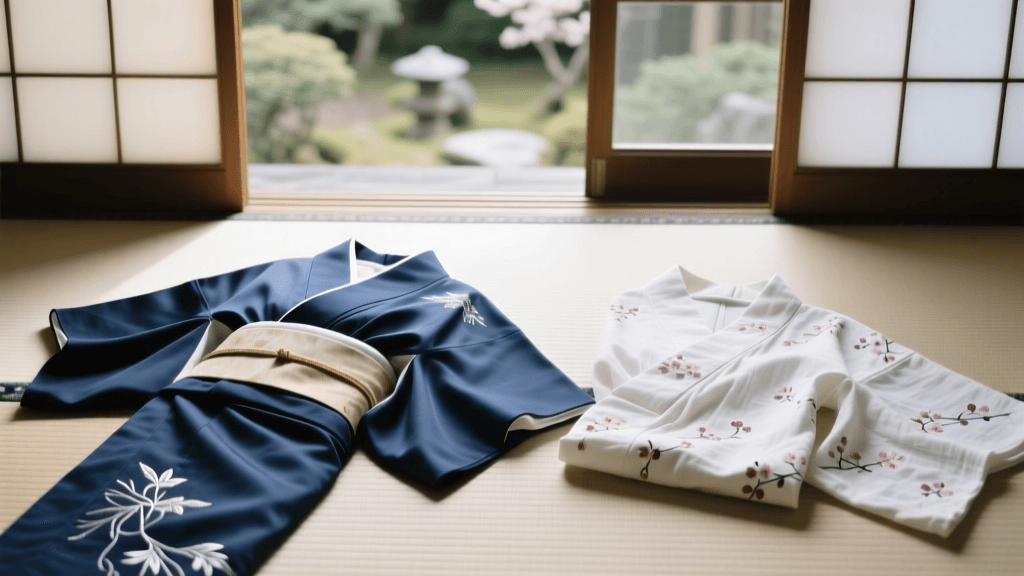
In 2026, the traditional indigo-dyed cotton yukata has been joined by a wave of modern textile innovations. While 100% organic cotton remains the gold standard for breathability, we are seeing a surge in hemp-cotton blends and 'cool-touch' woven fabrics designed to combat rising summer temperatures. Unlike the kimono, the yukata is worn directly over basic undergarments, without the need for the formal nagajuban (under-kimono), making it significantly easier to put on and much cooler to wear.
Pricing and Accessibility
The yukata is highly accessible. A standard, machine-washable cotton yukata set (which often includes the garment and a matching hanhaba obi) can be purchased from major Japanese retailers for between $40 and $120 USD. For those seeking artisanal quality, hand-dyed shibori (tie-dye) or chuugata (stencil-dyed) yukata from specialized workshops in Arimatsu or Tokyo will range from $250 to $600 USD.
2026 Comparison Chart: Kimono vs. Yukata
To help you decide which garment suits your needs, refer to the structured comparison below based on current 2026 market data and styling norms.
| Feature | Silk Kimono | Cotton Yukata |
|---|---|---|
| Primary Fabric | Silk (Chirimen, Rinzu, Tsumugi) | Cotton, Hemp, or Cotton-Blend |
| Undergarments | Hadajuban and Nagajuban required | Basic slip or camisole; no nagajuban |
| Collar Style | Thick, stiff collar (often with han-eri) | Soft, narrow, unlined collar |
| Footwear | Zori (formal sandals) with Tabi socks | Geta (wooden clogs); barefoot or tabi |
| Occasion | Weddings, tea ceremonies, formal events | Summer festivals, fireworks, casual lounging |
| 2026 Avg. Price (New) | $800 - $3,500+ USD | $40 - $150 USD (Artisan up to $600) |
| Care Method | Specialist dry cleaning or Arai-hari | Machine washable (gentle cycle) or hand wash |
Essential Accessories for the Modern Wearer
A kimono or yukata is never truly complete without its accompanying accessories. The Japan National Tourism Organization frequently highlights the intricate art of accessorizing as a core component of the traditional dress experience.
The Obi and Obijime
The obi is the sash that secures the garment. For formal kimono, the Fukuro obi (a long, heavily brocaded sash) is standard, often tied in the elegant taiko musubi (drum knot). For the casual yukata, a hanhaba obi (half-width sash) is used, allowing for playful, reversible knots like the bunko musubi (bow knot). In 2026, pre-tied obi with Velcro or hook-and-loop fasteners have become incredibly popular among international buyers and beginners, reducing the dressing time from 45 minutes to under 10 minutes.
To secure the obi, a decorative braided cord called an obijime is tied around the center. This is often adorned with an obidome, a small, intricately carved clasp made from resin, glass, or precious stones, serving as the 'jewelry' of the kimono ensemble.
Footwear: Zori and Geta
Formal kimono demand zori, flat-bottomed sandals made from woven straw, leather, or modern synthetic vinyl, always worn with split-toe tabi socks. Conversely, the yukata is paired with geta, elevated wooden clogs that produce a distinctive clicking sound when walking. In 2026, ergonomic geta with cushioned rubber soles and adjustable velcro thongs have entered the market, bridging the gap between historical authenticity and modern foot health.
Sizing, Fitting, and Global Tailoring in 2026
Historically, kimono were sold in a standard 'free size' designed to be folded and tucked to fit the wearer's height. However, as the global community of kimono wearers expands, the 2026 market has adapted. Standard vintage kimono typically fit individuals between 150cm and 165cm (4'11' to 5'5'). For taller international buyers, finding the right length can be challenging.
Today, specialized boutiques in Tokyo, Kyoto, and major online heritage retailers offer custom tailoring services. When purchasing new silk, you can order a tsuitate (custom-tailored) kimono, where the artisan cuts the fabric to your exact wingspan and height. If buying vintage, look for garments labeled as shin-pon (new fabric/unsewn bolts), which provide extra material that a skilled kitsuke (dressing) professional can let out at the shoulder and waist seams to add up to 10cm in length.
Garment Care and Preservation
Proper care is vital to maintaining the value and beauty of your garments. Silk kimono should never be washed at home. In 2026, the traditional method of arai-hari—where the garment is completely unsewn, washed as flat panels, stretched on bamboo frames, and resewn—is still practiced by master artisans, though it costs upwards of $300 USD and takes several months. For routine maintenance, specialized eco-friendly dry cleaners who understand the delicate nature of silk dyes and metallic threads are the recommended choice.
Cotton yukata, on the hand, are designed for easy care. They can be hand-washed or machine-washed on a delicate cycle using a mesh laundry bag and a neutral pH detergent. Always hang them to dry in the shade, as direct sunlight will rapidly fade the vibrant indigo and synthetic dyes.
For storage, avoid plastic garment bags, which trap moisture and cause mold. Instead, wrap your silk kimono in tatou-shi, traditional acid-free Japanese paper, and store them flat in a well-ventilated cedar drawer or a breathable cotton storage box with natural camphor or desiccant packets to protect against humidity and insects.
Conclusion: Choosing Your Path in Traditional Japanese Fashion
Whether you are drawn to the breathtaking, structured formality of a silk Houmongi or the breezy, festive charm of a cotton yukata, both garments offer a profound connection to Japanese heritage. By understanding the distinct fabrics, proper accessorizing, and modern 2026 market options, you can confidently build a traditional wardrobe that respects the past while seamlessly integrating into your contemporary life. Invest in quality, prioritize proper care, and embrace the timeless art of Japanese dress.