Historic Kimono Trade Textiles: 2026 Collector Guide
The Global Threads of the Kimono: Beyond the Archipelago
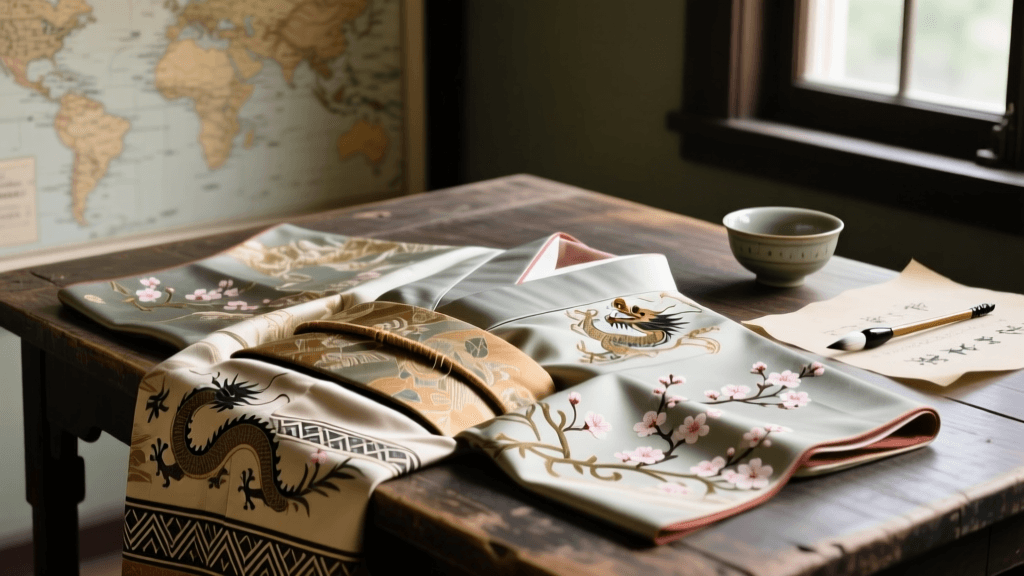
When collectors, historians, and fashion enthusiasts examine the traditional Japanese kimono, it is often romanticized as a purely insular garment, born entirely from the isolated cultural evolution of the Japanese archipelago. However, as we navigate the antique textile market in 2026, a more nuanced and globally connected narrative has taken center stage. The kimono and its predecessor, the kosode, are actually profound canvases of global trade. From the overland Silk Road caravans bringing Persian motifs to Nara, to the maritime galleons carrying Indian chintz to Edo-period ports, historical imports have fundamentally shaped Japanese textile arts. For modern collectors and museum curators, understanding these historic trade routes is no longer just an academic exercise; it is a critical skill for authentication, valuation, and preservation in today's highly competitive antique garment market.
Major Historical Trade Routes Influencing Japanese Textiles
The Silk Road and Persian Motifs
Long before the Edo period's maritime expansions, the overland Silk Road served as the primary artery for luxury textiles entering Japan. During the Nara and Heian periods (8th to 12th centuries), Chinese Tang Dynasty merchants acted as intermediaries, bringing Sassanian Persian and Central Asian textiles to the Japanese imperial court. These imported fabrics featured distinct motifs that were entirely foreign to indigenous Japanese aesthetics: pearled roundels, confronting lions, grapevines, and stylized palmettes.
The most famous repository of these early trade textiles is the Shosoin treasure house in Nara. The textiles preserved there showcase how Japanese weavers began to meticulously copy and adapt these imported designs, creating early versions of nishiki (brocade). Today, the interconnected nature of these ancient motifs is actively mapped by initiatives like the UNESCO Silk Roads Programme, which highlights the profound cross-cultural exchanges that defined early Asian textile production. For a deeper understanding of early Japanese textile evolution and the absorption of continental styles, the Metropolitan Museum of Art's Heilbrunn Timeline of Art History provides extensive documentation on how these foreign threads were woven into the fabric of Japanese aristocratic dress.
Maritime Routes and Indian Sarasa
By the 16th and 17th centuries, the focus of textile trade shifted from the dusty overland routes to the bustling maritime networks of the Indian Ocean and the South China Sea. Indian textiles, particularly the vibrant cotton chintz and calico from the Coromandel Coast, became highly coveted luxury items in Japan. Known in Japan as sarasa, these fabrics were characterized by their brilliant madder-red dyes, intricate floral vines, and geometric patterns, achieved through complex mordant-dyeing techniques that Japanese artisans had not yet mastered.
Initially imported by Portuguese and later Dutch East India Company (VOC) merchants, sarasa was so expensive that it was rarely used for full garments. Instead, it was cut into small, precious pieces to be used for obi (sashes), tea ceremony accessories (shifuku), and the collars of high-ranking courtesans and samurai. The intense demand for sarasa directly stimulated the Japanese domestic dyeing industry, eventually leading to the development of indigenous resist-dyeing techniques and the flourishing of yuzen dyeing, which sought to replicate the vibrant, color-fast qualities of Indian imports on native silk.
Ming Dynasty China and Nishijin-ori Brocades
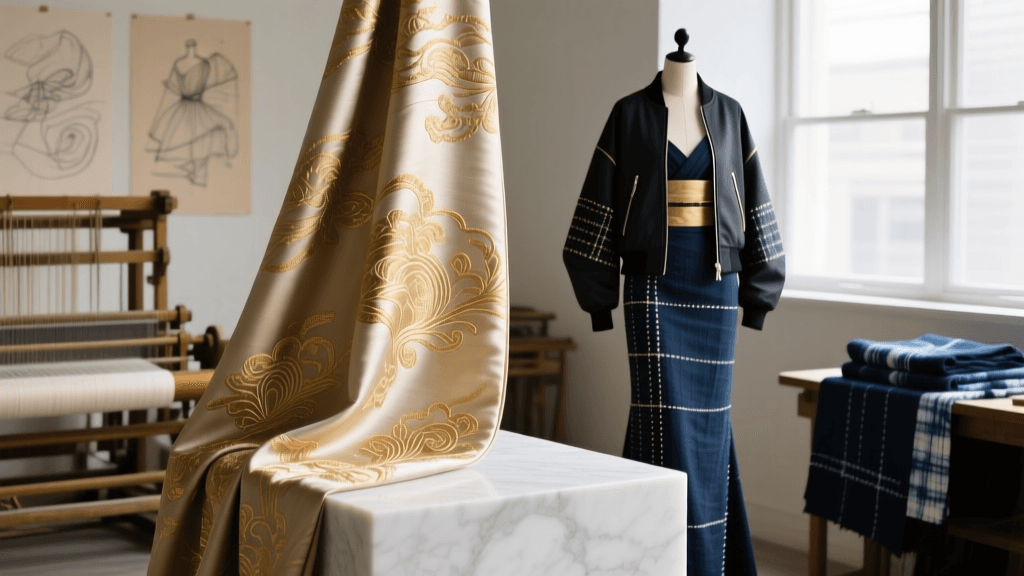
The foundation of Kyoto's world-renowned Nishijin weaving district is inextricably linked to the influx of Chinese textile artisans and trade goods. Following the Onin War in the late 15th century, Japanese weavers who had fled Kyoto returned and began integrating advanced Ming Dynasty weaving techniques, heavily influenced by imported Chinese brocades (kara-ori). These imports featured complex floating wefts, gold and silver metallic threads, and auspicious motifs like phoenixes, dragons, and peonies. The synthesis of Chinese structural complexity with Japanese aesthetic sensibilities gave birth to the opulent Nishijin-ori brocades that remain the pinnacle of formal kimono and obi production to this day.
2026 Market Trends: Collecting Trade-Influenced Kimono
In 2026, the antique textile market has seen a massive surge in interest regarding 'cross-cultural' garments. Collectors are moving away from standard, domestically produced Edo-period kosode and are actively hunting for pieces that exhibit clear foreign trade influences. Institutions like the Victoria and Albert Museum (V&A) have recently expanded their digital archives and exhibition focuses to highlight these global intersections, driving up private collector demand and auction prices for verifiable trade-route textiles.
Below is a breakdown of the current 2026 market landscape for trade-influenced antique Japanese textiles:
| Textile Style | Historical Trade Origin | Key Identifying Motifs | 2026 Auction Estimate (USD) | Rarity Level |
|---|---|---|---|---|
| Sarasa (Chintz/Calico) | India (Coromandel Coast) | Madder-red floral vines, Indo-European geometric borders | $1,500 - $6,500 | High |
| Kara-ori (Chinese-style Brocade) | Ming Dynasty China | Floating weft phoenixes, peonies, stylized clouds | $3,500 - $14,000 | Very High |
| Ryoshi (Persian Roundels) | Silk Road / Persia | Pearled borders, confronting beasts, grape arbors | $8,000 - $30,000+ | Museum Grade |
| Early Meisen (Imported Aniline Dyes) | Europe (Late 19th C. Chemical Trade) | Art Deco, Western botanical, bold ikat kasuri | $200 - $850 | Low/Medium |
Authenticating Historical Imports in 2026
As prices for trade-influenced kimono and obi have skyrocketed in 2026, so too has the sophistication of the authentication process. Relying solely on visual motif identification is no longer sufficient, as 19th and 20th-century domestic weavers frequently copied foreign designs. Today, top-tier auction houses and serious collectors utilize advanced, non-invasive scientific methods to verify the origins of antique textiles.
- X-Ray Fluorescence (XRF) Spectroscopy: This technique is now standard for analyzing the elemental composition of historical dyes. For instance, verifying a true Indian sarasa requires identifying the specific mordants (like iron and alum) combined with authentic Rubia tinctorum (madder) root, distinguishing it from later Japanese synthetic imitations or domestic safflower (benibana) substitutes.
- AI-Assisted Loom Mapping: In 2026, proprietary AI software is used to scan the micro-structure of brocade weaves. By analyzing the tension, thread count, and specific interlacing patterns of metallic threads, the software can accurately differentiate between authentic Ming-dynasty imported kara-ori and later Nishijin domestic revivals.
- Fiber Provenance Testing: Isotope analysis of silk threads can now trace the geographic origin of the silkworm diet, helping experts confirm whether a Nara-period brocade was woven from imported Chinese silk or early domestic Japanese sericulture.
Preservation and Care for Antique Imported Textiles
Garments that have survived centuries of global transit and subsequent use require meticulous, modern preservation techniques. The intersection of different material types—such as Indian cotton woven with imported metallic threads, or silk dyed with highly acidic early synthetic aniline dyes—presents unique conservation challenges in 2026. If you are acquiring trade-route kimono or obi for a private collection, adherence to the following archival standards is mandatory:
- Climate Control: Maintain a strict environment of 50-55% Relative Humidity (RH) and a stable temperature of 65°F (18°C). Fluctuations in humidity are particularly devastating to sarasa, as the cotton and silk components expand and contract at different rates, leading to micro-tears.
- Archival Wrapping: Never use standard tissue paper. Wrap garments in unbuffered, acid-free, lignin-free archival tissue. For textiles featuring early metallic threads or heavy madder dyes, use an additional barrier of inert polyester film (Mylar) to prevent dye migration and metallic oxidation.
- Light Exposure Limits: When displaying these pieces, use advanced 2026 OLED lighting systems that emit zero ultraviolet (UV) radiation. Limit lux exposure to a maximum of 50 lux, and rotate displayed garments every three months to prevent irreversible photodegradation of historical dyes.
- Structural Support: Do not hang antique trade textiles on standard hangers. The weight of heavy imported brocades will destroy the shoulder seams. Store them flat in custom-built, acid-free corrugated polypropylene boxes, using rolled, padded supports for the sleeves to prevent hard creases.
Where to View and Source in 2026
For collectors looking to study or acquire these remarkable pieces of global fashion history, the landscape in 2026 offers unprecedented access. Major institutions are actively digitizing and exhibiting their trade-textile archives. The Kyoto National Museum frequently rotates its textile storage exhibitions, offering rare glimpses of early kara-ori and imported Ming silks. Meanwhile, specialized antique textile fairs in Tokyo, London, and Paris have dedicated 'Cross-Cultural Threads' pavilions, vetted by international textile historians, ensuring that the pieces on the market are not only authentic but ethically sourced and properly documented. By understanding the vast, interconnected trade routes that brought these fabrics to Japan, collectors can appreciate the kimono not just as a symbol of Japanese tradition, but as a masterclass in global cultural exchange.