Kyoto Wafuku Hand-Sewing Workshops 2026: Complete Guide
The 2026 Revival of Wafuku: Why Hand-Sewing Matters Now
As the global slow-fashion movement reaches its zenith in 2026, the art of wafuku (traditional Japanese garment) construction has experienced an unprecedented renaissance. Unlike Western tailoring, which relies on complex, curved pattern cutting and permanent seams, traditional kimono sewing—known as tenui—is an exercise in geometric precision, zero-waste philosophy, and reversible craftsmanship. For textile enthusiasts, fashion historians, and sustainable designers, attending a wafuku hand-sewing workshop in Kyoto is no longer just a niche hobby; it is a vital immersion into one of the world's most sophisticated sartorial systems.
Institutions worldwide are recognizing the importance of these techniques. The preservation of historical Asian garments, as championed by the Victoria and Albert Museum's Asian Collections, highlights how the straight-seam construction of kimonos allows them to be entirely disassembled, cleaned, and resewn, effectively granting the garment an infinite lifespan. In 2026, Kyoto remains the undisputed epicenter for learning these techniques, offering a blend of centuries-old apprenticeship models and modern, accessible masterclasses designed for international and domestic students alike.
The Zero-Waste Philosophy: Understanding the Tanmono
Before enrolling in a 2026 seminar, it is crucial to understand the foundational constraint of wafuku: the tanmono. Unlike Western fabrics that are cut from wide bolts and shaped with curved darts, wafuku is constructed from a single, narrow bolt of fabric typically measuring exactly 36 centimeters (about 14 inches) in width and 11 to 12 meters in length.
In a traditional Kyoto workshop, you will learn that not a single scrap of this fabric is wasted. The sleeves (sode), body panels (migoro), and collar (eri) are all cut in straight lines. The selvedge edges, known as mimi, are intentionally left intact and incorporated into the seams to prevent fraying without the need for modern sergers or overlock machines. This 2026 curriculum emphasis on zero-waste pattern drafting is a major draw for contemporary sustainable fashion designers seeking historical alternatives to modern textile waste.
Top Kyoto Wafuku Workshop Formats for 2026
Kyoto's artisan districts, particularly Nishijin and Higashiyama, offer several distinct workshop structures in 2026, catering to everyone from absolute beginners to advanced tailors.
1. The Nishijin Heritage Cohort (5-Day Intensive)
Designed for serious students, this immersive 40-hour seminar focuses on constructing a complete haori (traditional jacket) from raw silk crepe. Held in a restored machiya (wooden townhouse), the 2026 spring and autumn cohorts are limited to eight students to ensure one-on-one guidance from certified kitsuke and sewing masters.
- Curriculum: Fabric marking with bamboo spatulas, straight-seam joining, sleeve attachment, and the complex kise (hidden seam folding) technique.
- 2026 Pricing: ¥185,000 (approx. $1,250 USD), which includes all materials, a premium Tango chirimen silk bolt, and a personalized tool kit.
- Prerequisites: Basic hand-sewing proficiency and familiarity with thimble use.
2. The Higashiyama Weekend Juban Masterclass
For those unable to commit to a full week, this weekend seminar focuses on the nagajuban (the under-kimono). Because the juban is often made from cotton, linen, or washable silk blends, it is the perfect entry point for learning wafuku proportions and collar alignment (eri positioning) without the pressure of handling expensive outer silk.
- Curriculum: Measuring the body for custom panel adjustments, basting (shitsuke), and hemming with the traditional blind stitch.
- 2026 Pricing: ¥65,000 (approx. $440 USD).
- Prerequisites: None; ideal for beginners.
3. Virtual 2026 Kitsune-gao Sleeve Workshop
For international students who cannot travel to Japan, several Kyoto-based artisan guilds now offer hybrid virtual seminars. The 'Kitsune-gao' (Fox Face) sleeve workshop focuses specifically on the intricate folding and sewing of the sleeve pouch, which historically held small items like tissues or coins. Students receive a pre-cut, marked fabric kit shipped globally, followed by three live, high-definition streaming sessions with a Kyoto master.
Essential Tools for Your 2026 Wafuku Sewing Kit
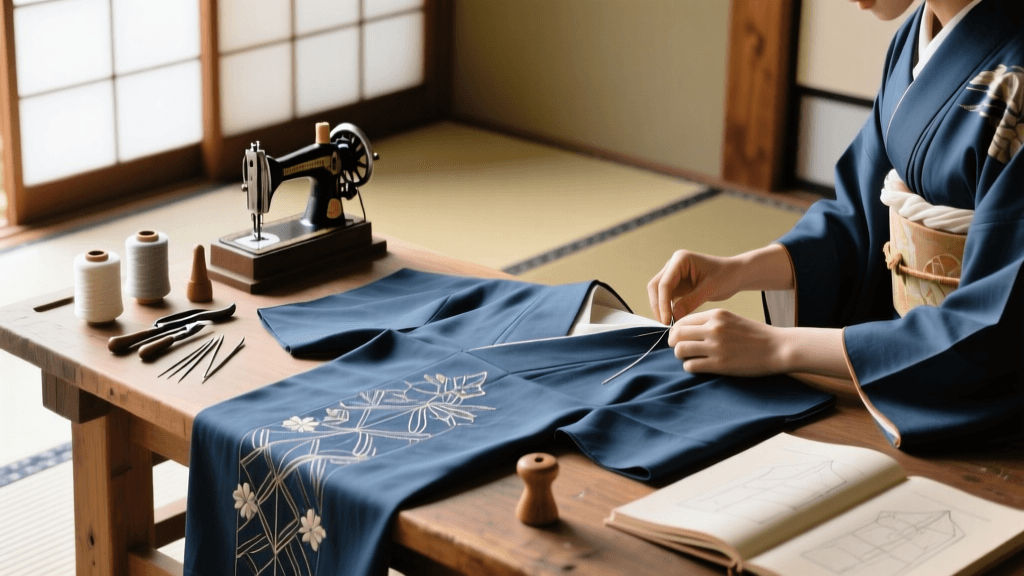
Western sewing kits are inadequate for wafuku. Traditional Japanese sewing relies on specialized tools designed to handle delicate silks without piercing or scorching them. Below is the standard toolkit provided or required for 2026 Kyoto seminars.
| Tool Name | Japanese Term | Function in Wafuku | 2026 Average Cost |
|---|---|---|---|
| Bamboo Spatula | Hera | Used to mark fabric by creating temporary, visible creases instead of using chalk or ink, which could stain silk. | ¥1,500 ($10) |
| Tension Board | Kakehari | A wooden frame with hooks used to stretch the fabric taut while sewing long seams, ensuring perfectly straight stitching. | ¥12,000 ($80) |
| Traditional Iron | Kote | A specialized, narrow iron used to press seams open and set the kise folds without flattening the silk's natural texture. | ¥25,000 ($170) |
| Basting Thread | Shitsuke-ito | Soft, loosely spun cotton thread that breaks easily, allowing for safe removal without tearing delicate warp and weft yarns. | ¥800 ($5) |
| Thimble Ring | Yubinuki | A leather and paper ring worn on the middle finger to push the needle, offering more control than a traditional cap thimble. | ¥3,500 ($24) |
Core Techniques: The Secret of the 'Kise'
The most challenging and revered technique taught in any Kyoto seminar is the kise. In Western sewing, a seam allowance is pressed flat open. In wafuku, the seam allowance is folded back upon itself, hiding the raw edges and the actual thread line inside a tiny, soft ridge. This serves two purposes: it protects the silk thread from abrasion against the body, and it gives the garment a soft, rounded drape rather than a stiff, structured edge. Mastering the kise requires hours of guided practice in a seminar setting, as the fold must be exactly 1 to 2 millimeters wide and maintained consistently over meters of fabric.
Another vital stitch is the chidori-gake (cross-knot stitch), used for hemming. This catch-stitch allows the hem to stretch and move with the wearer, preventing the silk from tearing under tension. Learning to execute this stitch at a rhythm of one stitch per second is a common milestone in advanced 2026 masterclasses.
Sourcing Authentic Materials in Kyoto
A major component of the workshop experience is the guided sourcing tour. In 2026, the Nishijin-ori weaving district remains the premier destination for acquiring high-quality silk. Seminar instructors often take students to multi-generational fabric wholesalers in the Murocho area, where you can purchase vintage, deadstock tanmono bolts. These vintage silks, often featuring subtle rinzu (satin damask) patterns, are highly prized for their softened drape and historical significance. Furthermore, the preservation of these regional weaving and sewing techniques is closely aligned with the global efforts documented by UNESCO's Intangible Cultural Heritage frameworks, which emphasize the transmission of artisan skills across generations.
Enrollment Tips and Cultural Etiquette for 2026
When applying for a Kyoto wafuku workshop, cultural etiquette is just as important as technical skill. Seminars are often held in traditional spaces where shoes are strictly prohibited, and the handling of silk is treated with a level of reverence akin to handling historical artifacts. Students are expected to wash and dry their hands thoroughly before touching the tanmono, and to maintain a quiet, focused environment during sewing hours.
Furthermore, institutions like the Metropolitan Museum of Art's Asian Art Department frequently collaborate with Kyoto artisans to study historical garment construction, proving that the skills learned in these local workshops have global academic and conservation relevance. Whether you are a costume conservator, a sustainable fashion designer, or a dedicated hobbyist, the 2026 Kyoto wafuku workshops offer an unparalleled, tactile connection to one of Asia's most enduring and elegant sartorial traditions.
Conclusion
Learning to sew a traditional kimono by hand is a profound departure from the instantaneous gratification of modern garment production. It is a meditation on patience, geometry, and respect for materials. As 2026 continues to see a surge in makers seeking meaningful, sustainable, and historically rooted crafts, the wafuku workshops of Kyoto stand as a beacon of living history. By mastering the bamboo hera, the tension of the kakehari, and the hidden grace of the kise fold, students do not just make a garment; they become active participants in a centuries-old dialogue between the human body and the woven thread.