Kyoto Textile Workshops: Nishijin Weaving & Yuzen Dyeing Guide
The Living Heritage of Kyoto’s Garment Artisans
Kyoto is universally recognized as the cultural heart of Japan, but beyond its serene temples and manicured gardens lies a vibrant, centuries-old ecosystem of textile artisans. For enthusiasts of Asian traditions and traditional garments, the city offers an unparalleled opportunity to witness and participate in the creation of the world’s most intricate fabrics. The creation of a single kimono is rarely the work of one individual; rather, it is a symphony of specialized craftspeople, each mastering a specific technique passed down through generations.
For travelers and textile scholars looking to move beyond museum displays, participating in a traditional artisan workshop provides a tactile understanding of Japanese garment construction. According to the Ministry of Economy, Trade and Industry (METI), Japan officially designates and protects over 230 Traditional Craft Products, with Kyoto prefecture boasting the highest concentration of these recognized textile arts. This guide explores the two most foundational pillars of Kyoto’s garment industry—Nishijin-ori weaving and Kyo-Yuzen dyeing—and provides actionable advice for experiencing these artisan workshops firsthand.
Nishijin-ori: The Architectural Weaving of Silk
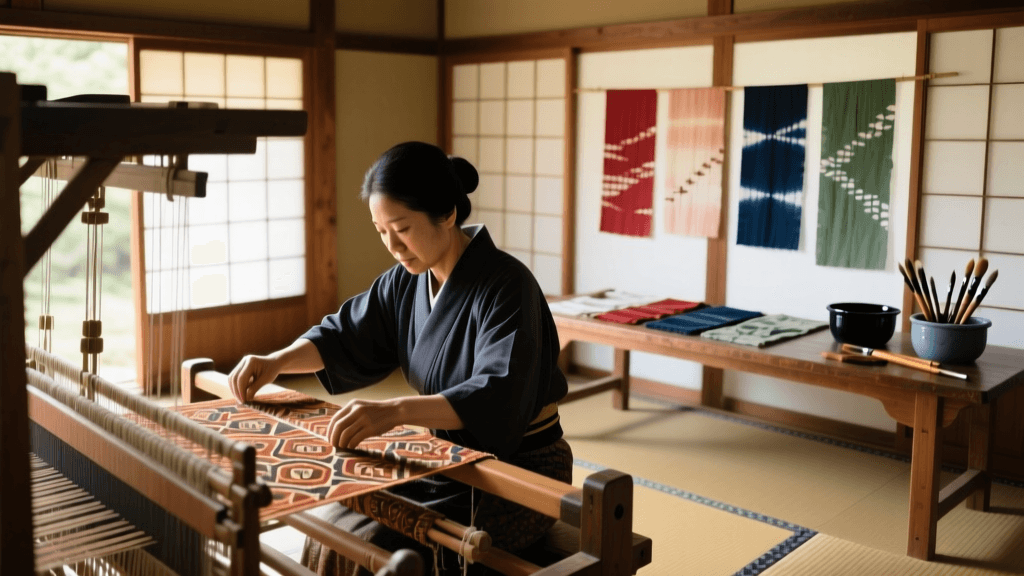
Nishijin-ori is not merely a fabric; it is an architectural approach to silk weaving. Originating in the Nishijin district of Kyoto, this technique relies on saki-zome (pre-dyed threads), where the silk is dyed before it is ever placed on the loom. This allows for incredibly complex, reversible patterns and the integration of metallic threads, creating the stiff, luxurious brocades typically used for high-end kimono obi (sashes).
The production of a single Nishijin obi involves over twenty distinct, highly specialized steps, from the initial design drafting and itoyu (thread preparation) to the final weaving on a jacquard or traditional sorabata (draw loom). As highlighted by the Victoria and Albert Museum's extensive research on kimono, the structural integrity and visual depth of Nishijin textiles made them the ultimate status symbol for the samurai and aristocratic classes, a legacy that continues in modern formal Japanese attire.
Experiencing Nishijin: Workshop Details
While mastering the loom takes decades, several heritage studios and cultural centers in Kyoto offer abbreviated weaving experiences designed for visitors. These workshops allow you to understand the physical rhythm and tension required to operate the loom.
- Recommended Venue: The Nishijin Textile Center or specialized private studios like Hosoo (which requires advance booking through their flagship store).
- Activity: Weaving a small coaster, table runner, or decorative pouch using pre-warped silk or cotton threads on a traditional hand-operated wooden loom.
- Timing: Sessions typically last 60 to 90 minutes. The actual weaving takes about 45 minutes, with the remainder dedicated to instruction and finishing the edges.
- Cost: Ranges from 2,500 JPY to 5,500 JPY (approx. $17 to $37 USD) depending on the size of the item and the inclusion of metallic threads.
- Practical Tip: The physical motion of throwing the shuttle and beating the weft requires a rhythmic, full-body movement. Wear comfortable clothing that allows for unrestricted shoulder and arm movement.
Kyo-Yuzen: Painting with Resist and Steam
While Nishijin relies on the mathematical precision of the loom, Kyo-Yuzen is the art of painting directly onto silk. Developed in the late 17th century by Miyazaki Yuzensai, this technique revolutionized Japanese fashion. It allowed artisans to create sweeping, pictorial designs—such as flowing rivers, autumn maples, and cranes—that were impossible to achieve through weaving alone.
The Kyo-Yuzen process is a masterclass in chemical and artistic patience. It utilizes tsutsugaki, a technique where a thick rice-paste resist is extruded from a small metal cone to outline the design. This paste acts as a dam, preventing dyes from bleeding into one another when the silk is hand-painted with delicate brushes. After dyeing, the fabric is steamed to set the colors, and the rice paste is washed away in the cold waters of Kyoto’s rivers (a practice historically known as yuzen-nagashi, though largely simulated in modern studios for environmental reasons).
Experiencing Kyo-Yuzen: Workshop Details
Yuzen workshops are highly interactive and focus on the application of color and resist paste. Because the steaming and washing processes take hours and require specialized equipment, the studio artisans will finish the final steps after you leave, shipping the completed item to your hotel or home.
- Recommended Venue: Marumasu-Nishimuraya or the Chiso Gallery (both offer excellent English-language support and historical context).
- Activity: Painting a tanzaku (a narrow strip of silk measuring roughly 15cm x 50cm), a silk fan, or a tenugui (hand towel). You will trace a pre-drawn outline using the rice-paste cone and apply dyes using specialized flat brushes.
- Timing: 2 to 3 hours. The rice paste application requires a steady hand and immense concentration, often taking up the first hour of the session.
- Cost: 4,500 JPY to 12,000 JPY (approx. $30 to $80 USD). Higher costs apply if you choose to dye a full-length silk scarf or a custom furoshiki.
- Practical Tip: The dyes used are highly concentrated and can permanently stain skin and clothing. Always wear the protective apron provided by the studio, and avoid wearing expensive or light-colored garments to the workshop.
Workshop Comparison: Weaving vs. Dyeing
Choosing between a weaving and a dyeing workshop depends on your personal interests, physical preferences, and schedule. The table below provides a structured comparison to help you decide which artisan experience aligns best with your itinerary.
| Feature | Nishijin-ori (Weaving) | Kyo-Yuzen (Dyeing) |
|---|---|---|
| Primary Technique | Interlacing pre-dyed warp and weft threads on a loom. | Applying rice-paste resist and hand-painting dyes onto white silk. |
| Skill Focus | Rhythm, physical coordination, and tension management. | Steady hand, color theory, and fine motor control. |
| Typical Duration | 1 to 1.5 hours. | 2 to 3 hours. |
| Take-Home Item | Finished immediately (coaster, small pouch). | Requires studio finishing; shipped later (scarf, fan, towel). |
| Average Cost | 2,500 - 5,500 JPY | 4,500 - 12,000 JPY |
| Best For | Those interested in structural textiles, mathematics, and immediate gratification. | Those interested in fine art, painting, and Japanese nature motifs. |
Practical Logistics and Artisan Etiquette
Booking a workshop in Kyoto requires foresight. The Japan National Tourism Organization (JNTO) strongly recommends reserving traditional craft experiences at least one to two months in advance, particularly during peak tourist seasons like the spring cherry blossom season (late March to early April) and the autumn foliage season (November). Many smaller, family-run studios do not maintain English-language websites, so utilizing hotel concierge services or specialized booking platforms like Klook or Japanican is often necessary to secure a spot.
Etiquette within the artisan studio is paramount. These are working production environments, not just tourist attractions. When entering a studio, always remove your shoes if instructed and use the provided slippers. Do not touch finished, high-value garments (especially antique or gold-leafed Nishijin obi) with bare hands, as the oils from your skin can tarnish the metallic threads or stain the silk. Always ask for permission before taking photographs, as some master artisans consider their drafting patterns and proprietary dye mixtures to be closely guarded trade secrets.
Investing in Authentic Craftsmanship
Beyond the workshop experience, visiting these districts offers the chance to purchase authentic, artisan-made garments and accessories directly from the source. While a fully bespoke, hand-woven Nishijin silk obi can cost anywhere from 300,000 JPY to over 1,500,000 JPY ($2,000 to $10,000 USD) and take six months to complete, studios offer a wide array of accessible goods. Look for furoshiki (traditional wrapping cloths) featuring Yuzen-dyed seasonal motifs, which typically range from 5,000 to 15,000 JPY. Neckties, pocket squares, and small coin purses woven on Nishijin looms make excellent, durable souvenirs that support the continuation of these vital Asian traditions.
Preserving the Threads of Time
Participating in a Kyoto textile workshop is an exercise in mindfulness and historical appreciation. Whether you are throwing the wooden shuttle of a Nishijin loom or carefully guiding a cone of rice paste across a canvas of white silk, you are engaging in a tactile dialogue with centuries of Japanese garment history. These artisan workshops not only demystify the complex construction of traditional Asian clothing but also provide crucial financial and cultural support to the master craftspeople dedicated to keeping these endangered traditions alive in the modern era.