Best Japanese Fashion Schools & Kimono Apprenticeships 2026
The Renaissance of Japanese Garment Education in 2026
The landscape of traditional Japanese fashion education has reached a critical and exciting inflection point in 2026. With the artisan population aging, the transmission of heritage techniques like Nishijin-ori (weaving) and Kyo-Yuzen (dyeing) has shifted from a closed, familial secret to a globally accessible educational pursuit. Today, aspiring designers and preservationists face a dual pathway: the immersive, centuries-old deshi (apprenticeship) system and the structured, innovation-driven environment of modern fashion institutes. Whether you are drawn to the rhythmic clack of the wooden loom in a Kyoto workshop or the digital-textile labs of Tokyo, understanding the 2026 educational ecosystem is vital for anyone serious about Asian garment traditions.
The Traditional Deshi: Apprenticeships in the Modern Era
The deshi system remains the most authentic route to mastering the sensory and technical complexities of traditional Japanese garments. In 2026, the Japanese government, alongside local guilds, has heavily subsidized these apprenticeships to combat the severe shortage of master artisans. According to the Association for the Promotion of Traditional Craft Industries, initiatives aimed at recruiting young successors now offer enhanced stipends and housing support, making the once-grueling financial burden of an apprenticeship far more manageable.
Nishijin-ori Weaving in Kyoto
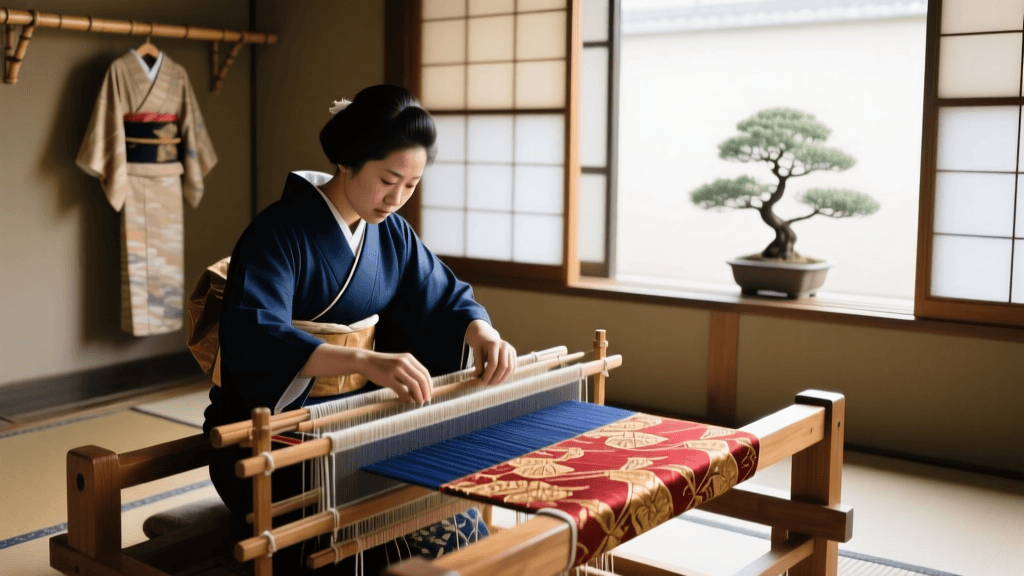
Nishijin weaving is renowned for its intricate, multi-layered brocades. Entering a Nishijin workshop in 2026 means engaging with both the ancient sorabiki (hand-pulled) looms and the computerized Jacquard systems. An apprentice’s first year is largely dedicated to minarai (learning by observation) and preparing materials. You will spend months twisting silk threads, dyeing raw yarns using natural indigo and safflower, and memorizing the complex tension requirements of the warp. By year three, apprentices are permitted to operate the looms, developing the physical stamina and auditory rhythm required to identify a misaligned thread purely by the sound of the shuttle.
Kyo-Yuzen Dyeing Techniques
For those drawn to color and surface design, a Kyo-Yuzen apprenticeship offers a deeply chemical and artistic education. Yuzen masters in 2026 are increasingly integrating digital archiving to preserve historic stencil patterns, yet the actual application remains fiercely manual. Apprentices learn to apply itome-nori (resist paste) using specialized brass cones, a skill that requires years of muscle memory to ensure the lines are perfectly uniform. The washing process, traditionally done in Kyoto’s Kamogawa River, is now conducted in specialized, temperature-controlled studio water tanks to maintain ecological compliance while achieving the same crisp, vibrant results.
Leading Fashion Schools Bridging Heritage and Innovation
For students seeking a broader design education that incorporates traditional Japanese garments alongside contemporary global fashion, specialized university programs are the ideal route. These institutions provide a sandbox where heritage techniques meet 2026’s cutting-edge sustainable technologies.
Bunka Fashion College (Tokyo)
Bunka Fashion College remains the premier institution for fashion in Japan. In 2026, their specialized modules within the Department of Fashion Technology offer deep dives into traditional Japanese pattern drafting. Unlike Western draping, which relies on the three-dimensional form, kimono construction is fundamentally based on geometric, flat-pattern cutting from standard-width bolts of fabric (tanmono). Bunka’s 2026 curriculum teaches students how to map these zero-waste, modular patterns using advanced 3D body-scanning software, allowing for custom-fitted traditional garments that do not compromise the historical integrity of the straight-seam construction. Prospective students can explore their international programs via the Bunka Fashion College official portal.
Kyoto University of the Arts
Located in the cultural heart of Japan, this university offers a highly tactile Textile Arts program. Students in 2026 have access to both historic dyeing vats and modern bio-material labs. The curriculum heavily emphasizes the philosophy of wabi-sabi and the lifecycle of natural fibers. A standout feature is the university’s partnership with local machiya (traditional townhouse) weaving studios, allowing students to split their week between academic lectures and hands-on floor-loom weaving.
2026 Comparison: Apprenticeship vs. University Degree
Choosing between a traditional guild apprenticeship and a modern fashion school depends entirely on your career trajectory. Below is a structured comparison of the two primary pathways available in 2026.
| Pathway | Duration | 2026 Est. Financial Impact | Primary Focus | Best Suited For |
|---|---|---|---|---|
| Traditional Deshi (Guild) | 3 to 5 Years | Earns ¥120,000 - ¥150,000 / month | Deep, singular mastery of one specific craft (e.g., weaving or dyeing) | Aspiring master artisans, preservationists, and dedicated craft purists |
| Bunka Fashion College | 2 Years | ¥1,350,000 / year (Tuition) | Hybrid design, flat-pattern drafting, and global fashion integration | Contemporary designers wanting to incorporate kimono geometry into modern apparel |
| Kyoto University Textile Arts | 4 Years (BA) | ¥1,600,000 / year (Tuition) | Material science, bio-dyes, and conceptual textile arts | Academic researchers, textile innovators, and gallery-focused fiber artists |
Practical Guide: Visas, Costs, and Applications for 2026
Navigating the logistics of studying traditional garment making in Japan requires careful planning, particularly for international applicants.
- Visa Requirements: Most university students will enter on a standard Student Visa, which permits up to 28 hours of part-time work per week. However, those entering a traditional deshi apprenticeship outside of a registered academic institution must apply for a Cultural Activities Visa or a Designated Activities Visa (specifically the 2026 Traditional Craft Successor tier). This requires a formal sponsorship letter from a recognized guild master or kumiai.
- Language Proficiency:While some Tokyo-based fashion schools offer English-taught modules, traditional Kyoto and Kanazawa workshops operate strictly in Japanese. A minimum of JLPT N2 is mandatory for apprenticeships, as you must understand highly specialized, archaic terminology related to silk grades, loom mechanics, and natural mordants.
- Tool Costs: Apprentices are often expected to purchase their own hand tools by their second year. A professional set of Yuzen resist-paste cones, specialized silk-stretching bamboo rods (shinshi), and custom-forged fabric shears will cost approximately ¥150,000 to ¥250,000 in 2026.
- Housing: In Kyoto, many weaving workshops still offer uchi-deshi (live-in) arrangements, where apprentices reside in the upper floors of the workshop. For commuting students, renting a room in a shared machiya typically costs between ¥60,000 and ¥85,000 per month, providing an immersive architectural environment that complements the study of traditional garments.
Conclusion
The year 2026 represents a golden era for Japanese fashion education. The rigid boundaries between the ancient artisan’s workshop and the modern designer’s studio have dissolved, creating a vibrant ecosystem where heritage is not merely preserved in museums, but actively worn, adapted, and evolved. Whether you choose to tie your own silk warp threads on a Nishijin loom or draft zero-waste kimono patterns using 3D software, the commitment to mastering these Asian traditions ensures that the soul of Japanese garment making will endure for generations to come.