Traditional Chinese Footwear 2026: Cloud Shoes & Boots Guide
The Renaissance of Traditional Chinese Footwear in 2026
As the Xin Zhongshi (New Chinese Style) movement matures in 2026, fashion enthusiasts are looking beyond the ubiquitous Mamianqun (horse-face skirts) and Song-style pleated skirts to complete their silhouettes. The missing link in many contemporary traditional wardrobes is authentic, historically grounded footwear. Traditional Chinese footwear—ranging from the elegant, upward-curving Yuntou (cloud shoes) to the structured, equestrian-inspired Xue (boots)—is experiencing a massive resurgence. According to material culture archives at the Victoria and Albert Museum's Asian collections, historical Chinese footwear was not merely functional; it was a profound indicator of social status, ethnicity, and regional identity. Today, modern designers are translating these historical markers into wearable, ergonomic art for the 2026 consumer.
Yuntou (Cloud Shoes): From Ming Dynasty Courts to 2026 Streets
Yuntou Xie, or "cloud-head shoes," are characterized by their distinctive upturned toe caps, often embroidered or shaped like the ruyi cloud motif. Historically popular during the Ming and Qing dynasties, these shoes were favored by scholars, officials, and noblewomen. The upward curve was not just aesthetic; it helped catch the hem of long, flowing robes, preventing the wearer from tripping.
In 2026, the Yuntou has been reimagined for the modern commuter. While traditional handcrafted versions still utilize stiff, multi-layered cotton soles (known as qianceng di), contemporary Xin Zhongshi brands are integrating hidden EVA foam midsoles and memory foam insoles. This hybrid approach maintains the sleek, flat-profile silhouette of the Ming era while providing the arch support required for navigating modern concrete landscapes. Brocade and silk remain the premier materials, but 2026 has also seen a rise in sustainable vegan silks and recycled jacquard weaves, appealing to eco-conscious consumers.
Xue (Traditional Boots): Grounding the Xin Zhongshi Wardrobe
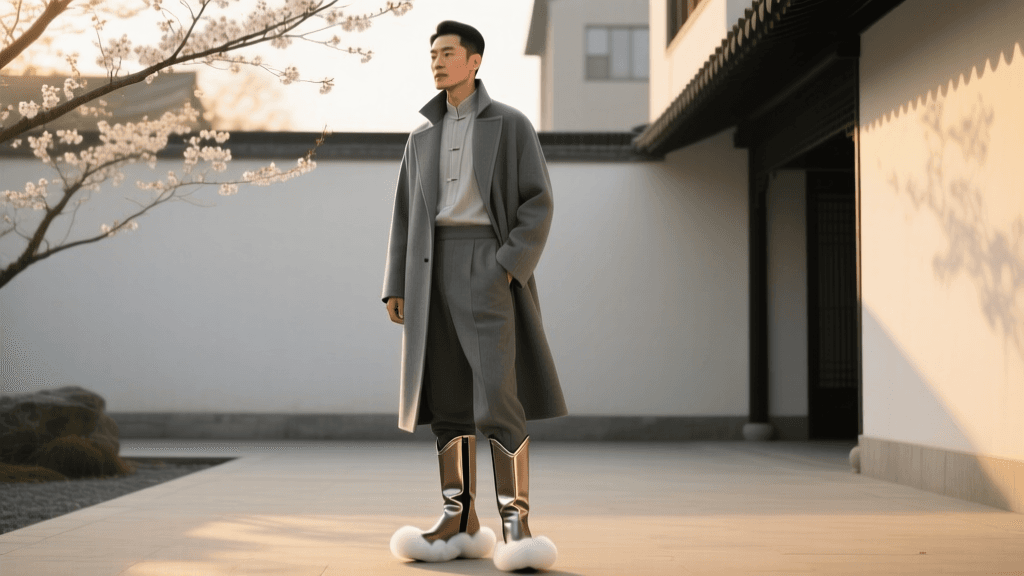
While cloud shoes represent the scholarly and feminine ideals of historical Han Chinese dress, Xue (boots) bring a structured, martial, and nomadic influence, heavily tied to Manchu and Mongol equestrian traditions. Traditional court boots featured thick, white multi-layered soles and black satin uppers. For women in the late Qing dynasty, platform boots (often associated with the Manchu elite) provided an elevated, commanding posture.
The 2026 interpretation of the Xue leans heavily into ankle-boot and Chelsea-boot silhouettes, utilizing traditional embroidered satin or matte vegan leather. Designers are incorporating subtle cloud motifs or bamboo embroidery on the vamp. These boots are the ultimate grounding piece for winter Xin Zhongshi styling, offering warmth and structural contrast to flowing, wide-leg linen trousers or heavy winter Mamianqun.
2026 Buyer’s Guide: Comparing Footwear Styles
When shopping for traditional Chinese footwear this year, it is vital to understand the difference between museum-grade reproductions and modern lifestyle adaptations. Below is a comparison of the primary styles available on the 2026 market.
| Style | Material & Construction | 2026 Price Range (USD) | Best Use Case |
|---|---|---|---|
| Traditional Handcrafted Yuntou | 100% Silk Brocade, hand-stitched cotton sole | $180 - $350 | Photoshoots, tea ceremonies, indoor events |
| Modern Xin Zhongshi Cloud Sneaker | Jacquard weave, EVA foam sole, rubber outsole | $85 - $160 | Daily commuting, travel, casual streetwear |
| Contemporary Xue Ankle Boot | Matte leather/satin blend, stacked wooden heel | $150 - $280 | Autumn/Winter styling, formal dinners |
| Qing-Style Platform Boot | Embroidered velvet, 3-inch carved wooden base | $220 - $400 | Avant-garde fashion, stage performances |
Styling Combinations for 2026
Integrating historical footwear into a modern wardrobe requires a balance of proportions. The Smithsonian's National Museum of Asian Art frequently highlights how historical garments were designed as holistic ensembles, where the hemline and the shoe interacted dynamically. Here are three proven styling formulas for 2026:
- The Scholar’s Commute: Pair modern Yuntou cloud sneakers with tailored, wide-leg Hakama-style trousers and a structured Mandarin-collar shirt. The upturned toe peeking out from the wide hem adds a subtle historical nod without looking costumey.
- Winter Elegance: Style black satin Xue ankle boots with a heavy, wool-blend Mamianqun. Ensure the skirt's front panels fall just above the boot's vamp to showcase the embroidery while keeping the silhouette streamlined.
- Summer Breeze: Wear lightweight, woven-rattan cloud shoes with a Song-dynasty inspired pleated midi-skirt and a simple linen camisole. This emphasizes breathability and effortless elegance.
Sizing, Fit, and Modern Ergonomics
One of the most common hurdles when purchasing traditional Chinese footwear is the lack of standardized Western sizing and the inherent stiffness of historical soles. Traditional qianceng di (thousand-layer soles) are made by pressing and stitching dozens of layers of cotton cloth. While incredibly durable and breathable, they lack the shock absorption of modern footwear.
Actionable Fit Advice for 2026:
- Measure in Millimeters: Most authentic Chinese artisans and high-end Xin Zhongshi brands use the Mondopoint system (foot length in mm). Measure your foot from heel to longest toe while standing, and add 5mm for the ideal traditional fit, which should be snug but not restrictive.
- The Insole Hack: If you purchase traditional handcrafted shoes for outdoor wear, invest in a pair of 3mm silicone or cork half-insoles. This preserves the historical exterior while providing necessary metatarsal support.
- Heel Slippage: Traditional cloth shoes often lack a rigid heel counter. Apply matte silicone heel grips to the interior back of the shoe to prevent friction and blisters during extended wear.
Care and Maintenance for Brocade and Silk
Silk, brocade, and satin are highly susceptible to water damage, UV fading, and humidity. To ensure your investment pieces last through the 2026 season and beyond, adhere to these maintenance protocols:
- Waterproofing: Never use standard chemical waterproofing sprays on silk brocade, as they can strip the fabric's natural luster. Instead, use a nanotechnology-based fabric protector designed specifically for delicate textiles, applying it in a well-ventilated area and allowing 24 hours to cure.
- Drying: If your cloud shoes get caught in the rain, stuff them immediately with unprinted, acid-free tissue paper to maintain the shape of the ruyi toe. Let them air dry away from direct sunlight or radiators, which can cause the silk threads to become brittle and snap.
- Storage: Store your footwear in breathable cotton dust bags. Avoid plastic bins, which trap moisture and invite mold. Place a small packet of silica gel and a natural cedar block inside each shoe to control humidity and deter pests.
- Cleaning: For surface dust, use a soft-bristled horsehair brush. For stains, do not rub. Consult a professional textile conservator or a dry cleaner specializing in historical garments and haute couture.
Conclusion
The landscape of traditional Chinese footwear in 2026 is a testament to the enduring appeal of the Xin Zhongshi movement. Whether you are drawn to the scholarly grace of the Yuntou cloud shoe or the commanding presence of the Xue boot, understanding the history, construction, and proper care of these garments elevates them from mere accessories to wearable cultural heritage. As noted in Britannica's guide to Chinese art and material culture, the brilliance of traditional Chinese design lies in its harmonious blend of profound symbolism and meticulous craftsmanship. By choosing pieces that respect this heritage while embracing modern ergonomics, you can step confidently into the future while honoring the past.