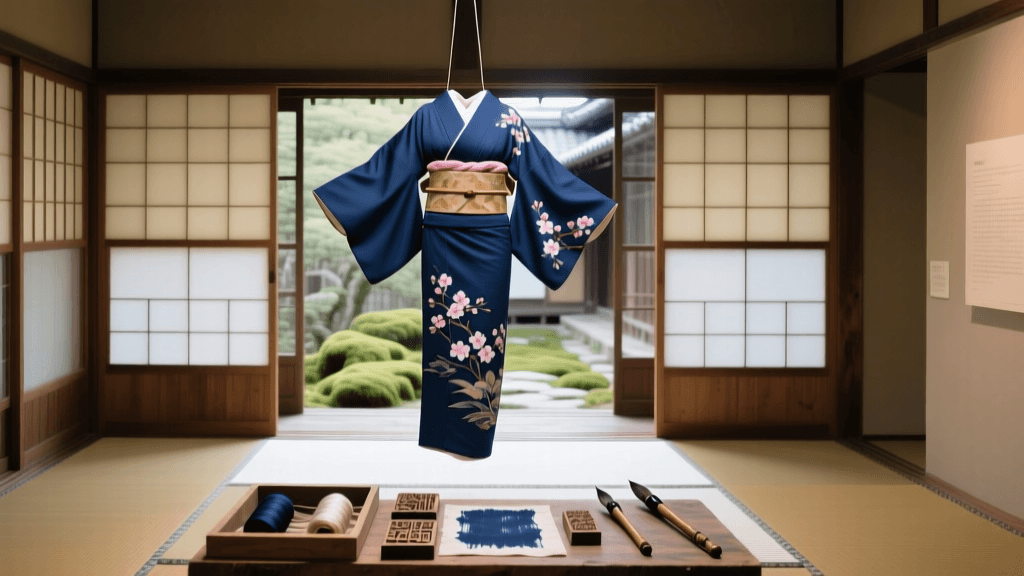
Discover Nishijin-ori: Traditional Kyoto Silk Weaving
The Legacy of Nishijin-ori: Kyoto's Crown Jewel of Textiles
The rhythmic clack of wooden looms echoing through the narrow streets of Kamigyo Ward is the heartbeat of Kyoto's textile heritage. Nishijin-ori, the pinnacle of Japanese silk weaving, is not merely a fabric; it is a profound cultural artifact that has clothed emperors, shoguns, and geisha for centuries. For enthusiasts of Asian traditions and traditional garments, participating in a Nishijin-ori artisan workshop offers an unparalleled glimpse into the meticulous craftsmanship required to create the world's most luxurious kimono and obi textiles.
Originating in the Heian period (794-1185) and heavily revitalized after the devastating Onin War in the 15th century, the Nishijin district became the epicenter of Japan's weaving industry. According to the Association for the Promotion of Traditional Craft Industries, Nishijin-ori is officially designated as a National Traditional Craft, recognized for its complex, multi-layered brocade techniques and the use of pure silk threads, often interwoven with gold and silver leaf.
The Anatomy of a Masterpiece: Understanding the Artisan Process
Before stepping up to a loom, it is crucial to understand the staggering complexity of Nishijin-ori. Unlike standard weaving where threads are dyed after the fabric is woven (piece-dyeing), Nishijin-ori relies on saki-zome (yarn-dyeing). The threads are dyed before weaving, allowing for incredibly intricate, pre-calculated patterns that emerge seamlessly as the weft crosses the warp.
The creation of a single, high-quality Nishijin obi can take months and involves over twenty distinct specialized steps, often handled by different master artisans. The Victoria and Albert Museum highlights this division of labor as a hallmark of Japanese textile mastery, noting that the collaborative nature of the craft ensures absolute precision at every stage.
Key Stages of Nishijin-ori Production
- Design (Zuan): The artisan drafts a meticulous grid pattern, calculating the exact placement of every colored thread.
- Thread Preparation (Itokuri): Raw silk is wound, twisted, and stretched to achieve the precise tension and denier required for the specific textile.
- Dyeing (Senshoku): Threads are dyed using natural or synthetic pigments. For gold brocades, threads are wrapped in ultra-thin strips of gold leaf applied to lacquered paper.
- Warping (Seikei): Thousands of warp threads are aligned and set onto the loom beam with millimeter accuracy.
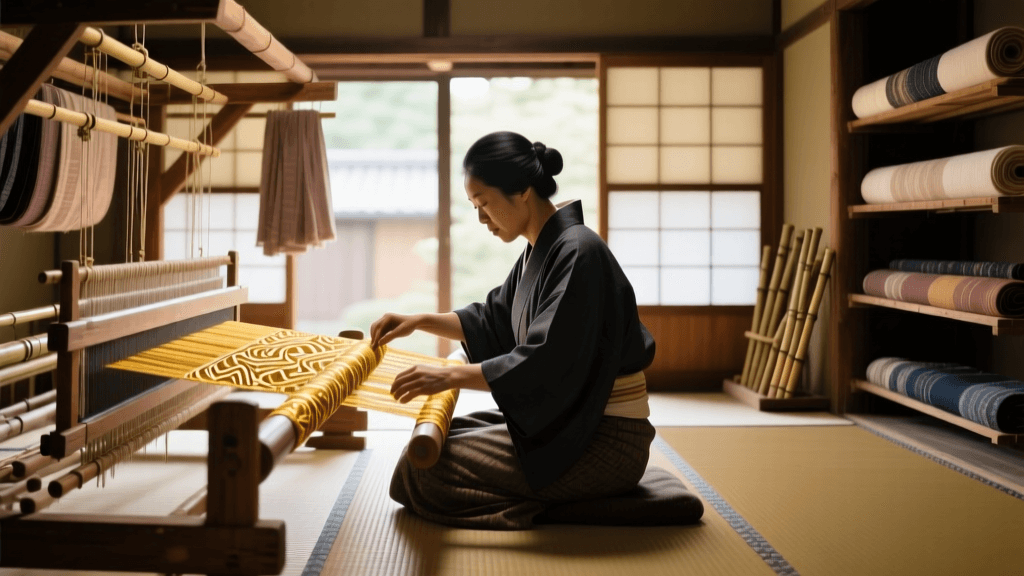
- Weaving (Hataori): Using either traditional takahata (tall handlooms) or modern Jacquard looms, the weaver interlaces the weft threads to bring the design to life.
Immersive Artisan Workshops in Kyoto
For travelers and textile students, Kyoto offers several avenues to experience this craft firsthand. While true mastery takes a lifetime of apprenticeship, specialized workshops allow visitors to engage with the foundational techniques of hand-weaving. These experiences are highly educational, bridging the gap between passive museum observation and active cultural participation.
The most prominent hub for these experiences is the Nishijin Textile Center (Nishijin Ori Kaikan), a multi-story facility dedicated to the preservation and promotion of the craft. Here, visitors can watch master weavers operate massive, century-old wooden looms, observe the intricate punching of Jacquard cards, and participate in guided weaving sessions. Smaller, private studios in the Nishijin district also offer intimate, appointment-only sessions where you can work directly with third-generation weaving families.
Workshop Comparison Chart
Choosing the right workshop depends on your schedule, budget, and desired level of hands-on involvement. Below is a structured comparison of the standard workshop tiers available in the Nishijin district.
| Workshop Type | Duration | Cost (JPY) | Skill Level | Takeaway Item |
|---|---|---|---|---|
| Loom Observation & Demonstration | 45 Minutes | Free - 1,000 | None (Visual) | None (Visual experience) |
| Basic Hand-Weaving (Table Loom) | 90 Minutes | 2,500 - 3,500 | Beginner | Silk-woven coaster or bookmark |
| Advanced Jacquard Weaving | 3 Hours | 8,000 - 12,000 | Intermediate | Brocade coin purse or small clutch |
| Private Artisan Mentorship | Half-Day (4 hrs) | 25,000+ | Advanced/Enthusiast | Custom scarf or textile panel |
Practical Guide: Booking, Costs, and Timing
To ensure a seamless experience, meticulous planning is required. The Kyoto City Official Travel Guide strongly recommends booking artisan workshops well in advance, particularly during peak tourist seasons like the spring cherry blossom season (March-April) and the autumn foliage season (November).
Actionable Booking Advice
- Lead Time: Reserve your spot at least 3 to 4 weeks in advance. Private studio sessions often require 2 months' notice due to the artisan's production schedule.
- Language Barriers: While major centers like the Nishijin Textile Center offer English audio guides and bilingual staff, smaller private studios may only speak Japanese. Consider hiring a local textile-focused interpreter or booking through an English-speaking cultural concierge service.
- Best Time to Visit: Schedule your workshop for a Tuesday, Wednesday, or Thursday morning between 10:00 AM and 11:30 AM. This avoids the weekend crowds and aligns with the artisans' peak working hours, allowing you to hear the looms operating at full capacity in the surrounding neighborhood.
- Physical Considerations: Traditional floor-level looms require sitting in seiza (kneeling). If you have back or knee issues, request a raised chair or a table-loom station when booking.
Workshop Etiquette and Cultural Respect
Visiting a working artisan studio is a privilege. The environment is a place of deep concentration and heritage. Adhering to proper etiquette ensures a respectful exchange between you and the craftspeople.
- Photography Rules: Never use flash photography, as it can distract the weaver and potentially damage delicate, light-sensitive silk dyes. Always ask for explicit permission before photographing the artisan's face or their proprietary design drafts.
- Handling Materials: Do not touch raw silk threads, gold leaf materials, or the tension mechanisms of the loom unless explicitly instructed by the master weaver. The oils and moisture from human hands can stain raw silk and alter thread tension.
- Punctuality: Arrive exactly 10 minutes before your scheduled time. Arriving too early disrupts the artisan's workflow, while arriving late cuts into your already brief instruction time.
- Expressions of Gratitude: A slight bow when entering the studio and a sincere arigatou gozaimashita (thank you very much) upon completion goes a long way in showing respect for their lifelong dedication to the craft.
The Future of Traditional Weaving in a Modern Era
While the demand for everyday kimono has declined in modern Japan, the artisans of Nishijin are actively adapting to ensure their survival. Today, the exquisite brocades produced in these workshops are increasingly being utilized in high-end Western fashion, luxury interior design, and architectural accents. By participating in these workshops, tourists and textile students do more than just learn a hobby; they provide vital economic support and international awareness that helps sustain these historic ateliers. When you sit at the loom and throw the shuttle, you are actively weaving yourself into the continuing story of Japan's most magnificent textile tradition.