Kyo-Yuzen Kimono Dyeing: Guide to Kyoto Artisan Workshops
The Legacy of Kyo-Yuzen: Kyoto's Crown Jewel of Textile Art
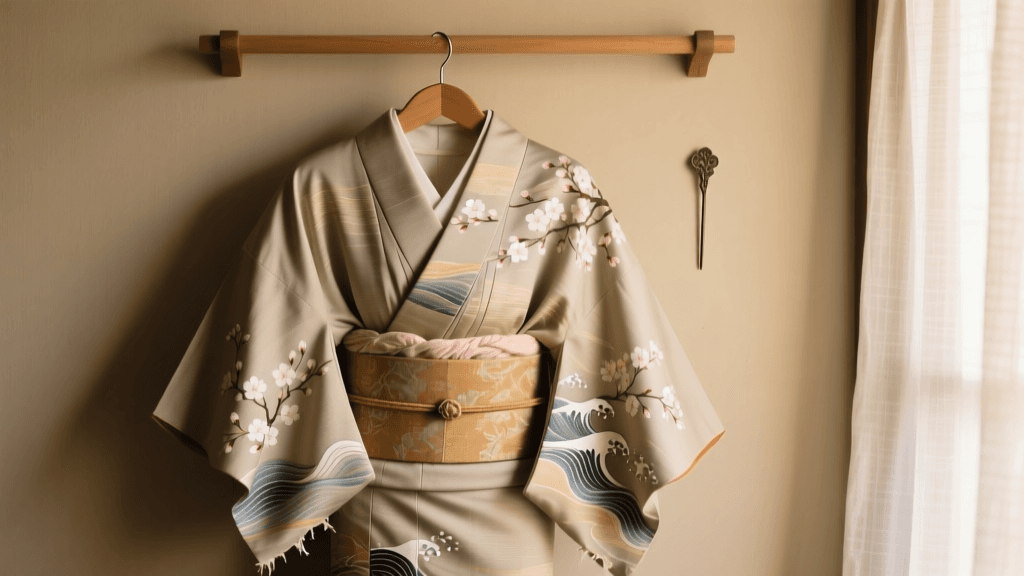
When discussing the zenith of Japanese traditional crafts, few techniques command as much reverence as Kyo-Yuzen. Originating in Kyoto during the late 17th century, this intricate resist-dyeing technique revolutionized the Japanese garment industry. Before Yuzen, kimono patterns were largely restricted to weaving, embroidery, or simple tie-dyeing. However, the Edo period's strict sumptuary laws restricted commoners from wearing ostentatious, heavily embroidered garments. In response, a visionary fan painter named Miyazaki Yuzensai developed a method to paint elaborate, multi-colored designs directly onto silk using a rice-paste resist. This innovation allowed for breathtaking pictorial motifs—from cascading cherry blossoms to flowing river currents—without violating the era's modesty laws.
Today, Kyo-Yuzen remains one of the most highly prized textile arts in Japan. Recognized officially by the Ministry of Economy, Trade and Industry (METI) as a Traditional Craft Product, the technique requires the mastery of over twenty distinct sub-processes, often handled by different specialized artisans. For textile enthusiasts and cultural travelers, participating in a Kyo-Yuzen workshop in Kyoto offers an unparalleled, hands-on understanding of the meticulous patience and artistic brilliance required to create a single kimono.
The Meticulous Artisan Process: From Blank Silk to Masterpiece
To truly appreciate the value of a Kyo-Yuzen garment, one must understand the grueling, multi-step process that brings it to life. In a traditional atelier, the creation of a single kimono can take several months and involve a dozen different master craftsmen.
1. Kari-e (Temporary Sketching)
The artisan begins by sketching the design directly onto the white silk using aobana (spiderwort) juice. This unique botanical ink is water-soluble, meaning it will completely vanish during the final washing stages, leaving no trace of the underlying guidelines.
2. Ito-me-nori (Rice Paste Resist)
Using a specialized brass-tipped cloth bag, the artisan applies a fine, thread-like line of glutinous rice paste (ito-me-nori) over the sketched outlines. This paste acts as a dam, preventing the dyes applied later from bleeding into adjacent areas. The precision required here is extraordinary; a single tremor of the hand can ruin the crispness of the design.
3. Ji-ire (Base Dyeing)
Before applying colors, the silk is treated with gojiru, a soybean extract that acts as a natural sizing agent. This prevents the dyes from spreading unpredictably and ensures the colors remain vibrant and sharp when applied.
4. Iro-sashi (Color Application)
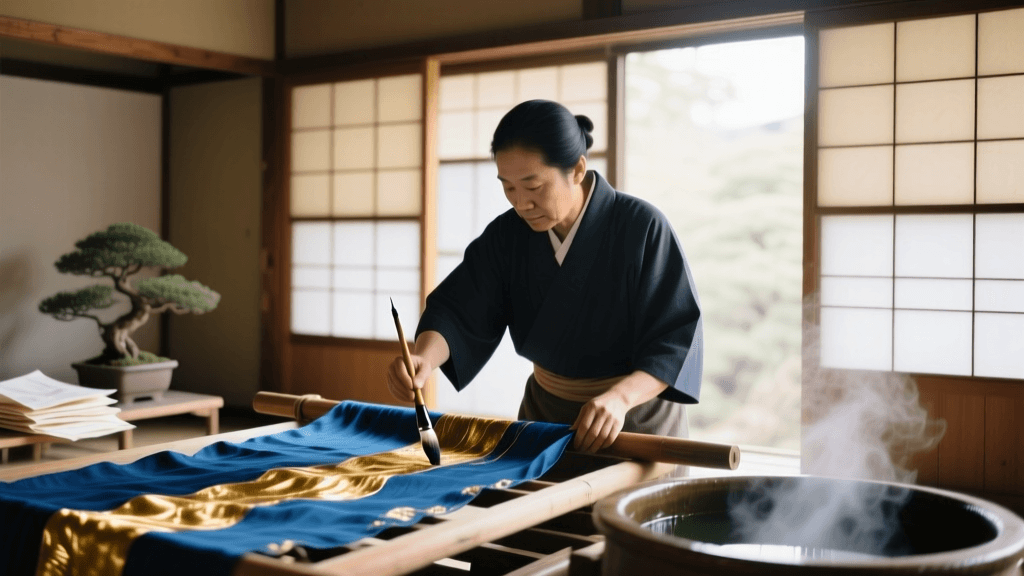
This is the most visually striking phase. Artisans use brushes made from deer hair and horsehair to meticulously paint dyes within the rice-paste borders. Kyo-Yuzen is famous for its subtle gradients (bokashi), achieved by expertly blending wet dyes on the fabric to create a soft, three-dimensional effect, particularly in floral petals and autumn leaves.
5. Mushi (Steaming)
Once the colors are applied, the fabric is steamed at high temperatures. The steam opens the silk fibers, allowing the dye molecules to penetrate deeply and bond permanently with the fabric.
6. Mizu-moto (Water Washing)
Historically, artisans would wash the dyed silk in the freezing, fast-flowing waters of the Kamo River during winter to remove the rice paste and excess dye. While modern studios now use specialized washing machines and temperature-controlled water, the term mizu-moto remains synonymous with the dramatic reveal of the crisp, white outlines against the vibrant dyed background.
Experiencing a Kyo-Yuzen Workshop in Kyoto
While mastering the full twenty-step process takes a lifetime of apprenticeship, visitors to Kyoto can participate in condensed, guided workshops. These experiences are highly recommended by the Kyoto City Official Travel Guide as a premier way to engage with local heritage. In these tourist-friendly sessions, the kari-e (sketching) and ito-me-nori (resist application) are often pre-completed by master artisans, allowing participants to focus on the highly rewarding iro-sashi (color application) stage.
Practical Advice for Workshop Participants
- What to Wear: Always wear dark, comfortable clothing that you do not mind getting stained. While the studios provide aprons, textile dyes are highly pigmented and can easily splash onto your sleeves or lap.
- Language and Instruction: Most established workshops in central Kyoto offer English-language instruction sheets and bilingual staff. However, the visual nature of the craft transcends language barriers; watching the artisan's brush pressure and water-to-dye ratio is the best teacher.
- Timing and Booking: Workshops typically require 1.5 to 3 hours. Because studio space and artisan time are limited, it is imperative to book at least two to three weeks in advance, especially during the peak spring (cherry blossom) and autumn (maple leaf) tourist seasons.
- Item Selection: Full kimono dyeing is not feasible for a short workshop. Instead, participants usually dye smaller, highly practical items such as furoshiki (wrapping cloths), tenugui (cotton hand towels), silk scarves, or kinchaku (drawstring pouches).
Workshop Comparison Chart: Where to Dye in Kyoto
Choosing the right workshop depends on your budget, the time you have available, and the type of garment you wish to create. Below is a comparison of typical workshop structures available in Kyoto's primary textile districts.
| Studio Type | Location / District | Item Produced | Duration | Approx. Cost (JPY) | Booking Requirement |
|---|---|---|---|---|---|
| Museum Workshop | Kyoto Museum of Traditional Crafts (Higashiyama) | Silk Scarf or Handkerchief | 1.5 - 2 Hours | ¥3,500 - ¥5,000 | Walk-ins often accepted; advance booking recommended. |
| Private Artisan Studio | Nishijin Weaving District | Large Furoshiki or Wall Hanging | 3 - 4 Hours | ¥8,000 - ¥15,000 | Strictly by reservation (1-2 months ahead). |
| Boutique Experience | Gion / Higashiyama | Kinchaku Bag or Tenugui | 1 - 1.5 Hours | ¥2,500 - ¥4,000 | Same-day or next-day booking usually available. |
For those seeking a deeply authentic, quiet environment, the private studios in the Nishijin district offer unparalleled access to working artisans. Conversely, museum-affiliated workshops provide a more structured, educational overview that is excellent for families and beginners. Institutions like the Japan Folk Crafts Museum (Mingeikan) and its regional affiliates frequently advocate for these hands-on experiences as vital to sustaining the economic viability of rural and urban craft communities alike.
Post-Workshop Care: Preserving Your Yuzen-Dyed Garments
Once you have completed your workshop and your item has been professionally steamed and washed by the studio, proper care is essential to ensure the longevity of the natural dyes and silk fibers.
Washing and Drying
Never machine-wash a Yuzen-dyed silk item. If cleaning is necessary, use a specialized silk detergent and gently hand-wash in cold water. Do not wring or twist the fabric; instead, press it gently between two clean, dry towels to absorb excess moisture. Always air-dry the garment in a shaded, well-ventilated area. Direct sunlight will rapidly degrade natural dyes, causing the vibrant reds and purples to fade into dull browns.
Storage Best Practices
When storing your Yuzen textiles, avoid plastic bags, which trap moisture and encourage mildew. Instead, wrap the garment in tato paper (traditional Japanese acid-free tissue paper) or unbleached cotton. To protect against insects, use natural shikimushi (cedar wood blocks) or dried lavender sachets. Avoid chemical mothballs, as the harsh fumes can react with the metallic threads and natural dyes often used in Kyo-Yuzen, leading to irreversible discoloration.
Preserving the Future of Japanese Textiles
The artisans practicing Kyo-Yuzen today face significant challenges, including an aging workforce, the high cost of raw silk, and a declining domestic market for formal kimono. By participating in a traditional craft workshop, you are doing more than simply creating a unique souvenir; you are directly injecting capital into the local artisan economy and demonstrating global demand for heritage craftsmanship. The patience required to guide a brush across a taut piece of silk fosters a profound respect for the garments that define Japanese cultural identity. Whether you are a seasoned textile collector or a curious traveler, stepping into a Kyoto dyeing studio bridges the gap between the Edo period's artistic triumphs and the enduring beauty of Asian traditions today.