Authentic Xiangyunsha Silk: China's Intangible Heritage
The Legacy of Xiangyunsha: The Soft Gold of the Pearl River
In the rich tapestry of Asian traditional garments, few textiles command the reverence, mystery, and luxury of Xiangyunsha (香云纱), also known as Gambiered Canton Gauze. Originating in the Shunde district of Foshan in Guangdong Province, this extraordinary silk is celebrated not merely as a fabric, but as a living testament to Chinese traditional crafts and intangible heritage. Often referred to as "soft gold" or "black pearl" of the silk world, Xiangyunsha represents the pinnacle of ancestral textile engineering, combining the delicate art of silk weaving with the raw, elemental forces of earth, flora, and sun.
Historically reserved for the elite and wealthy merchants of the Lingnan region due to its complex and labor-intensive production, Xiangyunsha has experienced a massive renaissance in the modern Hanfu movement and contemporary sustainable fashion. Understanding this fabric requires a deep dive into the lives of the artisans who preserve this intangible cultural heritage, the meticulous processes they employ, and the practical knowledge required for modern collectors and enthusiasts to identify, purchase, and care for genuine pieces.
The Alchemy of Earth and Flora: The Artisan's Process
The creation of authentic Xiangyunsha is a masterclass in natural chemistry and environmental harmony. It cannot be manufactured in a climate-controlled factory; it is entirely dependent on the specific weather, soil, and water of the Pearl River Delta. The process is strictly seasonal, occurring only between May and October when the sunlight is intense and the southern winds are strong enough to dry the silk rapidly.
The Raw Materials
Artisans begin with high-grade, undyed white silk gauze. The two primary dyeing agents are entirely natural: the juice of the Dioscorea cirrhosa (Shulang) yam, which is rich in tannins, and the iron-rich, unpolluted river mud harvested from specific waterways in Shunde. The magic of Xiangyunsha lies in the chemical reaction between the tannins in the yam juice and the iron ions in the river mud, which ultimately produces the fabric's signature deep, lustrous black-brown hue.
The Dyeing and Drying Cycle
The dyeing process is a test of endurance and precision. The silk is dipped into vats of Shulang juice, squeezed by hand, and laid out on the grass to dry in the blazing sun. This dipping and drying cycle is repeated up to 30 times. With each cycle, the silk absorbs more tannins, shifting from a pale yellow to a rich, reddish-brown. According to historical records and modern analyses of Chinese silk craftsmanship, this repetitive manual labor ensures the dye penetrates the very core of the silk fibers, granting the fabric its renowned colorfastness and durability.
The Mud-Coating Ritual
The most critical and closely guarded step occurs at dawn. Artisans spread the brown silk flat and evenly apply a thick layer of iron-rich river mud to one side of the fabric. The mud is left to react with the tannin-soaked silk for about an hour. As the chemical reaction peaks, the mud-coated side turns a profound, metallic black. The silk is then immediately rushed to the river to be washed clean of mud, revealing the stunning dual-tone finish: black on the front, and a warm, earthy brown on the reverse. Finally, the fabric is boiled, softened, and left to rest in a dark warehouse for months to allow the colors to mature and stabilize.
Preserving the Craft: The Inheritor System
During the mid-20th century, the advent of synthetic dyes and mechanized weaving nearly drove Xiangyunsha to extinction. The grueling nature of the work, combined with lower profit margins compared to mass-produced textiles, led to a severe shortage of skilled dyers. Recognizing the threat to this ancestral art, the Chinese government designated the traditional dyeing and weaving techniques of Xiangyunsha as a National Intangible Cultural Heritage.
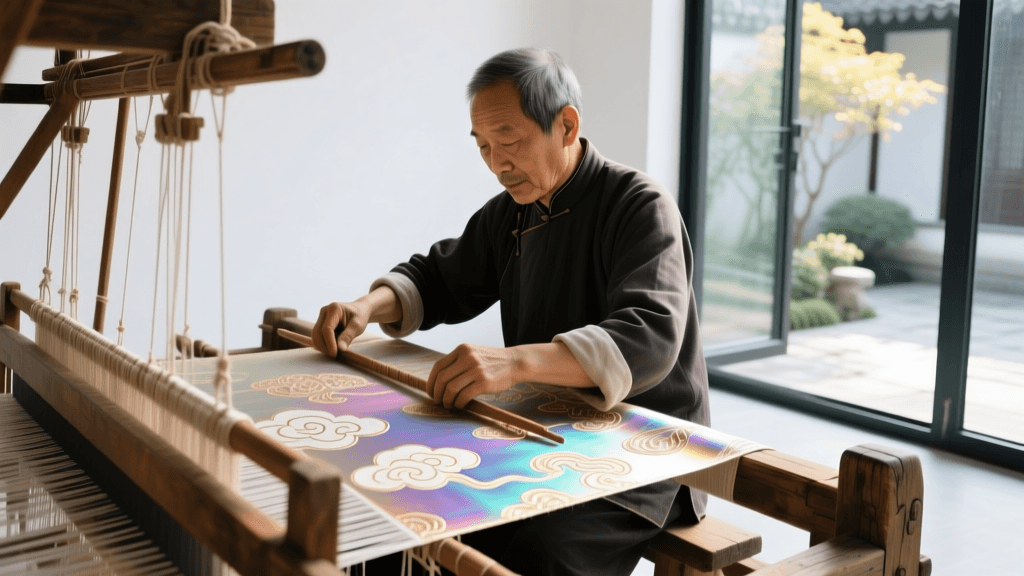
Today, the preservation of this craft relies heavily on the "Inheritor" (传承人) system. Master artisans who have dedicated decades to the craft are officially recognized and provided with government stipends to train the next generation. These masters do not just teach the physical steps; they pass down the intuitive knowledge of reading the weather, judging the viscosity of the yam juice, and sensing the exact moment the mud reaction is complete. As highlighted by UNESCO's documentation on China's intangible heritage, safeguarding such traditional craftsmanship is vital for maintaining cultural diversity and promoting sustainable, community-based economic development in regions like Shunde.
Identifying Authentic Intangible Heritage Silk
As the global demand for premium Hanfu and sustainable luxury fashion grows, the market has been flooded with commercial imitations. These fakes are often machine-printed with synthetic chemical dyes to mimic the look of Xiangyunsha at a fraction of the cost. For collectors, Hanfu enthusiasts, and textile historians, knowing how to distinguish authentic heritage silk from an imitation is crucial.
Comparison Chart: Authentic Xiangyunsha vs. Commercial Imitations
| Feature | Authentic Xiangyunsha (Hand-Dyed) | Commercial Imitation (Machine-Dyed) |
|---|---|---|
| Dye Source | Natural Shulang Yam Juice & River Mud | Synthetic Chemical Dyes & Pigments |
| Color Tone | Dual-sided (Black/Brown front, Yellow/Brown back) | Uniform single color on both sides |
| Patina & Aging | Develops beautiful "turtle shell" crackles over time | Remains flat; cracks unnaturally and peels |
| Scent | Faint, earthy scent of herbs and river clay | Chemical odor or heavily masked with perfumes |
| Price per Meter | $120 - $250+ USD | $15 - $40 USD |
| Production Time | 15-30 days (strictly seasonal, May-Oct) | 1-2 days (mass-produced year-round) |
"True Xiangyunsha is alive. It breathes with the wearer. The more you wear it, the softer it becomes, and the crackle patterns that form on the black surface are like the fingerprints of your own life journey." — Master Dyer from the Shunde Xiangyunsha Heritage Protection Center.
Practical Buying Guide for Hanfu Enthusiasts
If you are planning to invest in an authentic Xiangyunsha Hanfu set, you must approach the purchase with specific requirements and realistic budget expectations. Because the fabric is woven and dyed by hand, it often features minor, natural irregularities which are hallmarks of its authenticity rather than defects.
Measurements and Fabric Requirements
Traditional Xiangyunsha is typically sold in bolts with a narrow width of about 70 to 90 centimeters (approx. 27 to 35 inches), unlike modern wide-width silks. Therefore, pattern cutting requires more fabric and strategic seam placements.
- Mamianqun (Horse-Face Skirt): Due to the deep, structured pleats of this iconic Ming-dynasty skirt, you will need between 4.5 to 6 meters of fabric, depending on your waist measurement and desired pleat depth.
- Ruqun Top or Ao (Jacket): A standard cross-collar top or traditional jacket requires approximately 2.5 to 3.5 meters of fabric.
- Full Set Cost: Expect to pay between $800 and $2,000+ USD for a fully tailored, authentic Xiangyunsha Hanfu set, factoring in the raw material cost and the specialized tailoring required for narrow-width heritage silk.
Verification and Sourcing
When purchasing from high-end Hanfu merchants or textile dealers, always request the "Origin Certificate" or authentication tag from the Shunde Xiangyunsha Heritage Protection Center. Reputable vendors will provide a serial number that traces the fabric back to the specific artisan workshop and the season it was dyed. For a broader understanding of how traditional sericulture and silk craftsmanship are protected on a global scale, reviewing UNESCO's heritage registries can help you understand the stringent standards these workshops must maintain.
Caring for Intangible Heritage Garments
Owning a piece of intangible cultural heritage comes with the responsibility of proper preservation. Xiangyunsha is incredibly durable and naturally resistant to mold, insects, and moisture due to the tannin and iron coating. However, improper care can ruin the delicate silk fibers underneath the coating.
Washing Protocols
- Water Temperature: Always use cold water (below 30°C / 86°F). Hot water will break down the natural tannin bonds and cause the color to bleed.
- Detergent: Use a specialized, pH-neutral silk wash or a mild baby shampoo. Never use alkaline detergents, bleach, or standard laundry soaps, as they will strip the natural oils and dull the lustrous black finish.
- Technique: Do not soak the garment for more than 3 minutes. Gently agitate the water with your hands. Never wring, twist, or scrub the fabric, as this will cause permanent creases and damage the "turtle shell" patina.
- Drying: Hang the garment to dry in a shaded, well-ventilated area. Direct sunlight during the drying process of a finished garment can cause the black side to fade into a rusty brown.
Storage and Maintenance
Store your Xiangyunsha garments in breathable cotton or linen garment bags. Avoid plastic covers, which trap moisture and can lead to mildew. While the fabric is naturally insect-repellent, you can place natural cedar blocks or dried lavender sachets in your wardrobe for added freshness. If the garment becomes wrinkled, use a steamer on a low, gentle setting, holding the steamer at least 10 centimeters away from the fabric surface. Never press a hot iron directly onto the black side of the silk.
The Future of Chinese Textile Heritage
The revival of Xiangyunsha is more than just a fashion trend; it is a vital cultural lifeline. By choosing to invest in authentic, ethically sourced heritage textiles, consumers directly support the rural artisan communities of the Pearl River Delta and ensure that the master dyers can pass their knowledge to the next generation. As the Hanfu movement continues to bridge the gap between ancient traditions and modern wardrobes, garments crafted from Xiangyunsha serve as wearable museums—carrying the scent of the earth, the warmth of the southern sun, and the enduring spirit of Chinese intangible heritage into the future.