A Guide to Kyoto's Kimono Textile Artisan Workshops
The Heartbeat of Japanese Textile Heritage
Kyoto has long been the undisputed cultural capital of Japan, serving as the imperial seat for over a millennium. Beyond its breathtaking temples and serene zen gardens, the city is the living epicenter of Japanese textile arts. The creation of the kimono is not merely a manufacturing process; it is a profound cultural expression that requires the collaboration of master artisans, each specializing in highly specific, centuries-old techniques. For textile enthusiasts, fashion historians, and cultural travelers, participating in a traditional craft workshop in Kyoto offers an unparalleled glimpse into the meticulous world of kimono production.
While the modern fashion industry relies on mass production and synthetic dyes, Kyoto’s artisan workshops preserve the delicate balance of nature, chemistry, and artistry. Two of the most significant and accessible textile traditions for visitors to explore are Kyo-Yuzen (hand-painted resist dyeing) and Nishijin-ori (brocade weaving). Understanding these crafts, and knowing how to respectfully engage with the artisans who keep them alive, is essential for anyone looking to deeply appreciate Asian garment traditions.
Kyo-Yuzen: The Art of Resist Dyeing
Originating in the late 17th century, Kyo-Yuzen is named after Miyazaki Yuzensai, a fan painter who revolutionized kimono decoration. Before Yuzensai, kimono patterns were largely limited to simple embroidery or tie-dyeing. Yuzensai introduced a method of applying a rice-paste resist to silk, allowing for intricate, multi-colored, pictorial designs that flowed seamlessly across the garment's seams.
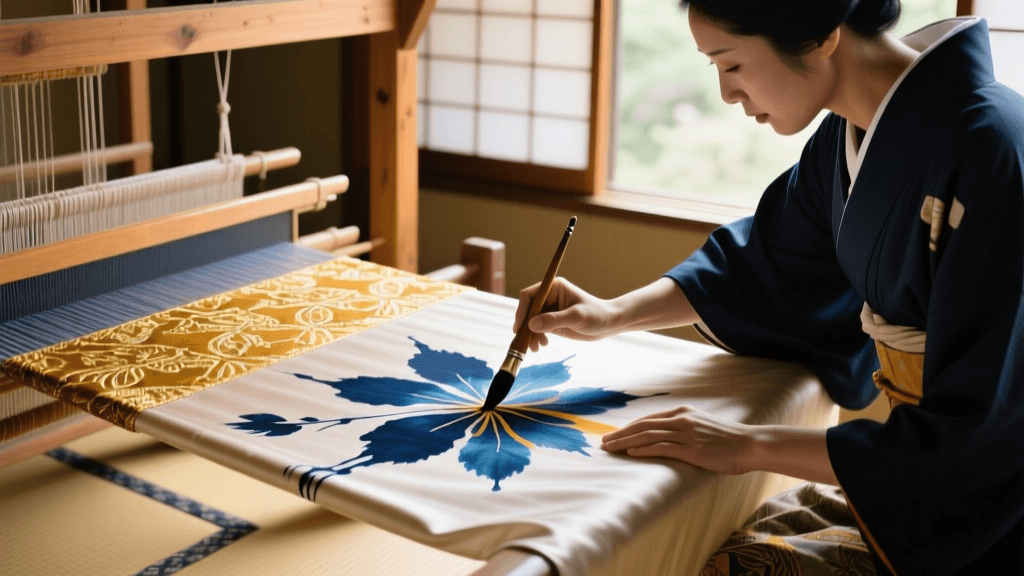
The process is astonishingly complex. A single kimono can involve over twenty distinct steps, requiring the hands of multiple master craftsmen. The design is first sketched onto the silk using aobana (dayflower) juice, which washes away later. Artisans then apply itome-nori (a fine line of resist paste) along the sketches using a specialized conical tube called a tsutsu. Once the paste dries, the fabric is dyed, steamed, and washed in the cold waters of the Kamo River—a practice that, while mostly modernized today, remains a powerful symbol of Kyoto’s textile heritage.
What to Expect in a Yuzen Workshop
Several historic dye houses in Kyoto, such as the renowned Marumasu Nishimuraya, open their doors to the public. These workshops are designed to give participants a hands-on understanding of the dyeing process without requiring years of apprenticeship.
- The Activity: Participants typically work on smaller items like silk fans, handkerchiefs, or furoshiki (wrapping cloths). You will use pre-applied resist outlines and apply vibrant dyes using fine brushes.
- Time Commitment: Most sessions last between 1.5 to 2.5 hours, allowing ample time for the dye to set and the fabric to be steamed.
- Cost: Expect to pay between 3,000 JPY and 6,000 JPY (approximately $20 to $40 USD), which includes all materials, instruction, and the finished piece to take home.
Nishijin-Ori: Centuries of Brocade Mastery
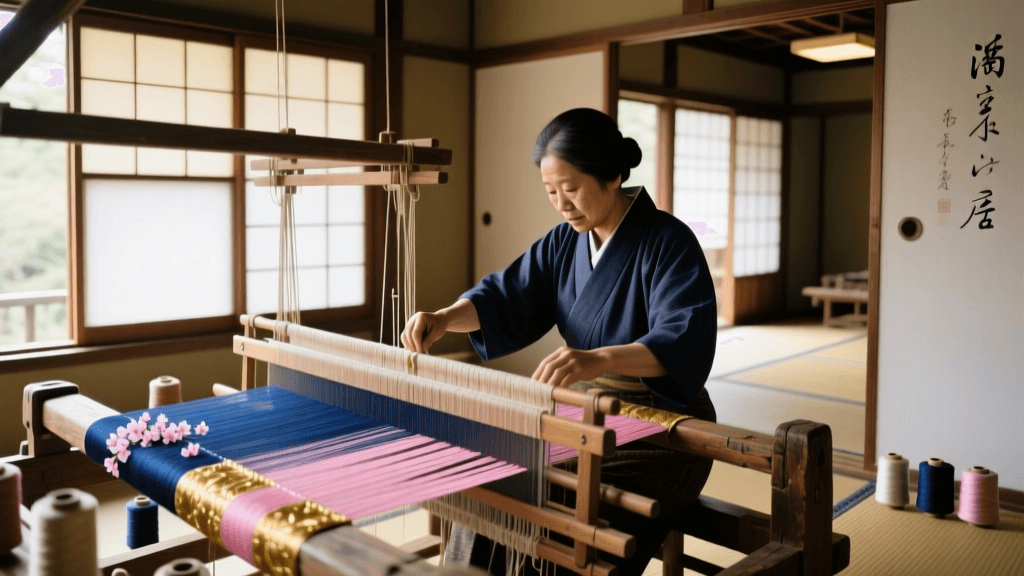
While Yuzen focuses on painting and dyeing, Nishijin weaving (Nishijin-ori) is the pinnacle of Japanese textile structural engineering. The tradition dates back to the 5th and 6th centuries, but it truly flourished after the devastating Onin War (1467–1477). When displaced weavers returned to the Nishijin district of Kyoto, they brought with them advanced weaving techniques from the Asian mainland, eventually integrating the French Jacquard loom in the late 19th century to create breathtakingly complex brocades.
Nishijin textiles are famous for their use of luxurious materials, including raw silk, metallic threads, and even strips of gold and silver leaf applied to paper. The resulting fabrics are incredibly dense, heavy, and feature raised, intricate patterns that are woven directly into the cloth rather than dyed on top. This makes Nishijin-ori the premier choice for high-end kimono and, most notably, the luxurious obi (sashes) that secure the garment.
Experiencing the Nishijin Textile Center
According to Japan Guide, the Nishijin Textile Center is the premier destination for understanding this craft. It operates as both a museum and a working factory, offering daily kimono fashion shows and interactive weaving experiences.
- The Activity: Visitors can sit at traditional handlooms or modern tabletop looms to weave their own small tapestries, bookmarks, or coasters. Instructors guide you through the rhythmic process of throwing the shuttle and beating the weft threads into place.
- Time Commitment: Weaving experiences generally take 1 to 2 hours, depending on the complexity of the chosen pattern.
- Cost: Entry to the center and the fashion shows is free. Hands-on weaving experiences range from 1,500 JPY to 3,500 JPY.
Workshop Comparison Chart
Choosing between a dyeing and a weaving workshop depends on your artistic preferences, schedule, and budget. The following table outlines the core differences to help you plan your Kyoto textile itinerary.
| Feature | Kyo-Yuzen Dyeing | Nishijin-Ori Weaving |
|---|---|---|
| Primary Technique | Hand-painting and resist dyeing | Complex brocade weaving on looms |
| Material Focus | Silk crepe (chirimen) or satin | Silk threads, gold/silver leaf paper |
| Workshop Duration | 1.5 to 2.5 hours | 1.0 to 2.0 hours |
| Average Cost | 3,000 - 6,000 JPY | 1,500 - 3,500 JPY |
| Take-home Item | Dyed fan, scarf, or handkerchief | Woven coaster, bookmark, or small purse |
| Skill Requirement | Steady hand for brushwork | Rhythmic coordination for loom operation |
Practical Advice: Booking, Etiquette, and Logistics
Engaging with traditional artisans requires a level of respect and preparation that goes beyond standard tourist activities. The Japan Kogei Association, which works tirelessly to preserve and promote these traditional crafts, emphasizes the importance of understanding the cultural weight of these practices.
Booking Your Experience
Many authentic, small-scale artisan studios do not have English-language websites or dedicated booking platforms. To secure a spot in a genuine Yuzen studio, it is highly recommended to utilize your hotel’s concierge service or book through established cultural tourism platforms like Klook or Japanican. For larger institutions like the Nishijin Textile Center, walk-ins are often accommodated for basic weaving, but guided English tours and advanced loom sessions should be reserved weeks in advance.
Studio Etiquette
When entering an artisan’s workspace, you are stepping into a sacred environment where mastery is cultivated over decades. Adhere to the following etiquette rules:
- Punctuality: Arrive exactly on time. Artisans operate on strict schedules, and delaying a session disrupts the workflow of the entire studio.
- Photography: Always ask for explicit permission before taking photos. Flash photography is strictly prohibited, as it can be distracting and, in some cases, detrimental to light-sensitive dyes.
- Cleanliness: Ensure your hands are clean and free of lotions or oils before touching raw silk. Oils from human skin can permanently stain untreated silk fibers and ruin months of preparatory work.
- Communication: Speak in hushed tones. The concentration required for applying microscopic lines of resist paste or threading a Jacquard loom is immense.
Investing in Authentic Artisan Crafts
For those moved by the workshops and wishing to support the continuation of these arts, purchasing authentic textiles is a profound way to contribute to the local economy. However, the market is flooded with mass-produced, machine-printed imitations.
To ensure you are purchasing a genuine artisan-crafted piece, look for the official designation seal provided by the Ministry of Economy, Trade and Industry (METI). The METI strictly regulates the "Traditional Craft Product" designation, ensuring that the item was made using traditional techniques, traditional materials, and largely by hand within the specified regional hub.
Understanding the Investment
Authentic Kyoto textiles are luxury investments. A fully hand-painted Kyo-Yuzen kimono, crafted by a certified master, will typically start around 300,000 JPY ($2,000 USD) and can easily exceed 1,000,000 JPY for bespoke, exhibition-grade pieces. Similarly, a hand-woven Nishijin obi featuring real gold leaf and complex brocade patterns generally ranges from 200,000 JPY to 500,000 JPY. While these prices are substantial, they reflect the hundreds of hours of specialized labor, the cost of premium natural silk, and the preservation of a living cultural heritage.
Conclusion
Participating in a Kyoto textile workshop is more than a mere souvenir-making activity; it is an education in patience, precision, and cultural reverence. Whether you are carefully guiding a brush filled with indigo dye across a silk fan or rhythmically throwing a shuttle through a wooden loom, you are physically connecting with the lineage of Asian garment traditions. By supporting these artisan workshops and investing in authentic crafts, travelers play a vital role in ensuring that the breathtaking artistry of the Japanese kimono continues to thrive for generations to come.