Top Kyoto Kimono Tailoring & Yuzen Workshops 2026 Guide
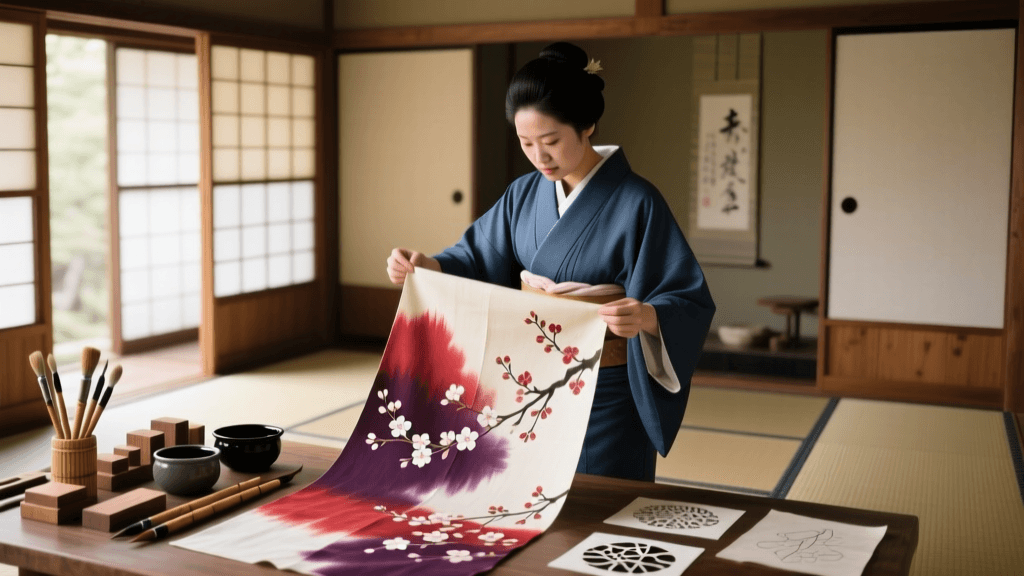
The Renaissance of Slow Fashion and Traditional Garment Making
In 2026, the global appetite for sustainable, zero-waste clothing has driven a massive surge in interest toward traditional Asian garment making. Discerning fashion students, textile artists, and sustainable designers are increasingly traveling to Japan to study the intricate arts of kimono tailoring and Yuzen dyeing. Unlike modern fast fashion, which relies on curved pattern cutting that leaves up to 20% of fabric on the cutting room floor, traditional Japanese garment construction is a masterclass in sustainability and mathematical precision. For those looking to immerse themselves in these time-honored techniques, Kyoto remains the undisputed epicenter of learning. This comprehensive guide explores the most prestigious workshops, seminars, and hands-on training programs available in 2026 for mastering the art of the kimono.
The Zero-Waste Philosophy of Chokusen-Dachi
Before selecting a workshop, it is vital to understand the foundational philosophy you will be learning: chokusen-dachi, or straight-line cutting. According to the Metropolitan Museum of Art's Heilbrunn Timeline of Art History, the fundamental T-shape and straight-line construction of the kimono has remained remarkably consistent for centuries. A traditional kimono is constructed from a single bolt of fabric known as a tanmono, which measures approximately 36 centimeters in width and 12 meters in length.
In the best 2026 seminars, instructors emphasize that every single centimeter of the tanmono is utilized. The garment is cut into straight rectangular panels for the body, sleeves, and collar. Because there are no curved armholes or tapered side seams, the kimono can be entirely disassembled back into its original rectangular panels for washing, re-dyeing, or passing down to the next generation. This modular approach to clothing is a major draw for modern designers attending these seminars, as they seek to apply zero-waste pattern drafting to contemporary fashion.
Top In-Person Kimono Tailoring Workshops in 2026
Kyoto and Tokyo offer a variety of immersive seminars ranging from single-day introductions to multi-week intensive certifications. Here are the top-rated programs for 2026:
1. Wak Japan: Artisan-Led Tailoring and Dyeing (Kyoto)
Located in the heart of Kyoto, Wak Japan bridges the gap between master artisans and international students. Their 2026 curriculum features a highly sought-after 5-day intensive kimono tailoring seminar. Students work directly with licensed wasai (kimono tailors) to draft patterns based on their own measurements, cut silk tanmono, and execute the hidden stitching techniques (kake-jaku) that give the kimono its seamless exterior appearance. The intimate class sizes (capped at six students) ensure personalized instruction on handling slippery silk crepes and heavy brocades.
2. Kyoto Traditional Arts and Crafts Center: Textile Seminars
For those who want a more academic and historical approach, the extension seminars at the Kyoto Traditional Arts and Crafts Center are unparalleled. Their 2026 spring and autumn cohorts focus heavily on the intersection of textile weaving and garment construction. Students learn how the tension of the loom dictates the drape of the final garment, and how to properly align woven motifs across the back seam (se-iro)—a critical skill that distinguishes a master tailor from an amateur.
3. Tokyo Kimono Academy: Modern Proportions (Tokyo)
While Kyoto focuses on strict tradition, the Tokyo Kimono Academy in Shinjuku offers a 2026 seminar dedicated to adapting traditional kimono tailoring for modern, diverse body types. Historically, kimono were tailored to standard Japanese proportions of the Edo and Meiji periods. This academy teaches students how to mathematically adjust the width of the okumi (front overlap panel) and the depth of the eri (collar) to flatter taller or broader figures while strictly maintaining the traditional straight-line cutting rules.
Mastering Yuzen-Zome: Resist Dyeing Seminars
You cannot fully understand kimono construction without understanding the canvas it is built upon. Yuzen-zome is a highly complex resist-dyeing technique used to create the elaborate, pictorial designs seen on formal kimono. The preservation of these methods is vital, which is why many of these techniques are now recognized and protected under UNESCO's Traditional Craftsmanship registry.
In 2026, the most popular Yuzen workshops take place in the Kanazawa and Kyoto districts. Students learn to apply itome-nori (a fine rice-paste resist) using specialized brass-tipped cones to outline designs. Once the resist dries, students hand-paint the enclosed areas with vibrant pigments. The 2026 seminars have introduced eco-friendly, bio-synthetic steam-setting methods that reduce the massive water consumption traditionally required to wash out the rice paste, making the craft more accessible and environmentally sustainable for modern studio practice.
Essential Tools: Traditional vs. 2026 Innovations
When attending a garment-making seminar, you will be introduced to a specialized toolkit. While the core philosophy remains unchanged, the 2026 classroom features a blend of heritage tools and modern material science innovations designed to protect delicate antique and modern silks.
| Tool Name | Traditional Version | 2026 Seminar Equivalent | Primary Purpose |
|---|---|---|---|
| Hera (Spatula) | Bamboo or Whalebone | Carbon-fiber reinforced polymer | Creasing silk seams and applying paste without snagging fibers |
| Shaku (Ruler) | Wood (Hinoki) | Laser-guided digital shaku | Measuring tanmono with sub-millimeter accuracy for motif alignment |
| Nori (Resist Paste) | Rice bran and salt | Synthetic bio-paste (allergy-free) | Yuzen dye blocking; newer formulas resist humidity changes |
| Hari (Needle) | Hand-forged steel | Titanium-coated micro-needles | Stitching heavy brocade and multiple silk layers with reduced friction |
| Kote (Iron) | Charcoal-heated metal | Variable-steam digital silk press | Pressing seams flat without scorching delicate protein fibers |
Standard 5-Day Intensive Curriculum Breakdown
If you are booking a comprehensive tailoring seminar in 2026, expect a rigorous, hands-on schedule. Here is a typical curriculum breakdown for a premium Kyoto workshop:
- Day 1: Measurement and Mathematics. Learning the ki-jaku (body measurement) system, which differs vastly from Western tailoring. Calculating the mi-goro (body panel) width and sleeve drop based on the wearer's height and stride.
- Day 2: Marking and Cutting. Using the hera to mark the silk tanmono. Executing the straight-line cuts and understanding the grainline integrity of the silk crepe.
- Day 3: Basting and Assembly. Learning shitsuke (basting) techniques. Because kimono are sewn with minimal pins to avoid damaging the silk, master-level basting is required before any permanent stitching begins.
- Day 4: The Art of the Seam. Practicing the hon-buse (main seam) and mimi (selvedge) finishing. Students learn how to hide the thread entirely within the fold of the fabric.
- Day 5: Collar Construction and Finishing. Attaching the eri (collar) and the tomoe-ri (neckband). This is considered the most difficult step, as the collar must sit perfectly flush against the nape of the neck without buckling.
Virtual and Hybrid Learning Options for Global Students
Not everyone can travel to Japan for a month-long immersion. In 2026, hybrid seminars have become highly sophisticated. Institutions now ship physical tanmono starter kits—including pre-marked cotton practice fabric, a carbon-fiber hera, and traditional basting threads—directly to international students. These kits are paired with live, multi-camera Zoom seminars where instructors can zoom in on microscopic stitch tensions and correct the student's hand posture in real-time. Furthermore, digital pattern drafting using 2026 CAD software now includes specific modules for Asian traditional garments, allowing students to simulate the drape of a 12-meter silk bolt in a 3D environment before making their first physical cut.
Pricing, Logistics, and Final Thoughts
Investing in a traditional garment-making seminar is a commitment to preserving cultural heritage. As of 2026, a single-day introductory Yuzen dyeing workshop in Kyoto typically costs between ¥25,000 and ¥35,000. Comprehensive 5-day tailoring intensives range from ¥120,000 to ¥180,000, which generally includes all materials, the use of heritage tools, and a professional photoshoot of your finished garment.
When selecting a workshop, ensure that the institution provides English translation or bilingual assistants, as the terminology of Japanese tailoring is highly specific and deeply poetic. Learning to draft, cut, and sew a kimono is not merely about acquiring a sewing skill; it is an exercise in patience, geometry, and deep respect for the materials. Whether you are a fashion designer seeking zero-waste inspiration or a cultural enthusiast wanting to connect with Asian heritage, the 2026 workshop circuit offers an unparalleled gateway into the soul of traditional garment making.