Top Kimono & Hanbok Tailoring Workshops 2026: Kyoto vs Seoul
The 2026 Renaissance of Heritage Garment Making
As we move through 2026, the global slow fashion movement has evolved beyond mere consumption into active creation. For textile enthusiasts, cultural historians, and fashion design students, the ultimate educational pilgrimage now involves learning traditional Asian garment making directly from master artisans. Two cities stand at the forefront of this immersive craft tourism: Kyoto, Japan, and Seoul, South Korea. Both cities offer unparalleled, hands-on workshops where international students can learn the meticulous art of wasai (Japanese traditional sewing) and hanbokjang (Korean traditional garment construction).
Choosing between a Kyoto kimono tailoring intensive and a Seoul hanbok sewing retreat depends heavily on your learning style, physical preferences, and design goals. This comprehensive guide breaks down the top workshop experiences available in 2026, comparing techniques, costs, fabric sourcing, and cultural immersion to help you plan your ultimate sartorial education.
Kyoto: The Art of Wasai and Kimono Construction
The traditional Japanese kimono is a marvel of sustainable design and geometric precision. As noted by cultural historians, the kimono is constructed from straight pieces of fabric with virtually no cutting waste, allowing the garment to be entirely disassembled, cleaned, and resewn over generations. Learning this technique, known as wasai, requires a fundamental shift in how Western-trained sewists approach fabric.
The Nishijin Weaving Guild Immersion Program
In 2026, the most sought-after program for international students is the Nishijin Weaving Guild's 10-Day Wasai Immersion. Located in Kyoto's historic textile district, this seminar moves beyond basic yukata sewing into the complex construction of formal silk kimono and haori jackets.
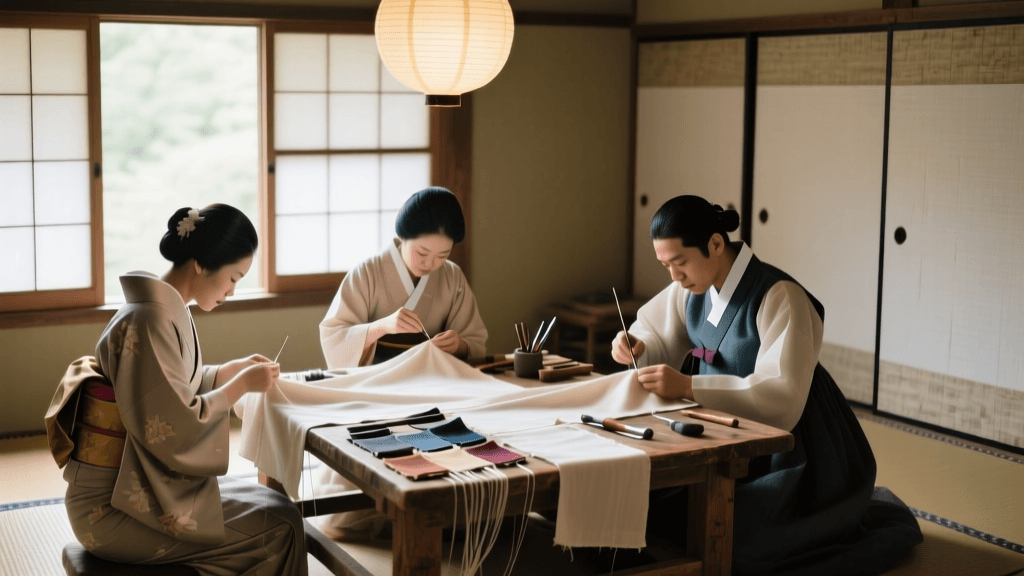
- Curriculum Focus: Students learn the shaku (traditional ruler) measuring system, basting techniques using silk threads, and the creation of the eri (collar) and sode (sleeves) with precise tension control.
- Tools Provided: The workshop supplies traditional bamboo shaku, hera (marking spatulas), and kakehari (tension pegs and clips) essential for floor-level sewing.
- Physical Environment: Authentic wasai is traditionally performed while seated on tatami mats. The 2026 curriculum now offers ergonomic low-table alternatives for international students unaccustomed to prolonged floor sitting, without compromising the traditional tension techniques.
According to the Victoria and Albert Museum's extensive archive on kimono construction, the lack of curved seams and the reliance on intricate folding and layering is what gives the kimono its distinct, elegant drape. Mastering the hidden stitches that keep the silk layers perfectly aligned is the hallmark of a Kyoto-trained artisan.
Seoul: Curves, Color, and Hanbok Architecture
While Japanese tailoring relies on straight lines and flat geometry, traditional Korean hanbok construction is defined by its elegant curves, vibrant color theory, and three-dimensional volume. The hanbok is deeply rooted in the philosophy of Obangsaek (the five traditional colors) and requires an understanding of how garments interact with the body in motion.
Bukchon Heritage Hanbok Atelier Retreat
Nestled in Seoul's Bukchon Hanok Village, the Bukchon Heritage Hanbok Atelier offers a rigorous 14-day seminar focusing on the chimajeogori (skirt and jacket) and the intricate art of goreum (ribbon tying). The 2026 syllabus has been updated to include modern sustainable silk alternatives alongside traditional sa (gauze) and dan (satin).
- Curriculum Focus: Students master the baerae (the curved underarm line of the sleeve), the precise gathering of the chima (skirt) waistband, and the structural padding required to give the jeogori its distinct silhouette.
- The Goreum Masterclass: A full two days are dedicated solely to tying and constructing the goreum. The length, width, and knotting technique of the ribbon dictate the formality and aesthetic balance of the entire garment.
- Physical Environment: Unlike the floor-centric Kyoto workshops, Seoul ateliers primarily utilize elevated cutting tables and industrial sewing stations, blending traditional hand-finishing with modern ergonomic workflows.
The structural differences are profound. As detailed in Britannica's comprehensive guide to the hanbok, the garment's design is meant to conceal the body's natural lines while creating a flowing, bell-like silhouette that moves gracefully with the wearer. Achieving this requires mastering the subtle curves of the neckline and the precise distribution of skirt pleats.
2026 Workshop Comparison: Kyoto vs. Seoul
To help you decide which immersive experience aligns with your 2026 travel and educational goals, we have compiled a direct comparison of the premier workshops in both cities.
| Feature | Kyoto Wasai Immersion (Nishijin) | Seoul Hanbok Retreat (Bukchon) |
|---|---|---|
| Duration | 10 Days (Intensive) | 14 Days (Comprehensive) |
| 2026 Tuition Cost | ¥240,000 (approx. $1,600 USD) | ₩1,850,000 (approx. $1,350 USD) |
| Primary Language | Japanese (Live English Translation) | Korean (Live English Translation) |
| Core Technique | Straight-line geometry, hidden basting | Curved seams, structural gathering |
| Sewing Posture | Traditional floor / Low-table hybrid | Ergonomic standing tables |
| Final Project | Lined Silk Haori Jacket | Everyday Chimajeogori Set |
Fabric Sourcing: Nishijin vs. Gwangjang
A critical component of any 2026 garment-making seminar is learning to navigate the local textile markets. Both Kyoto and Seoul offer legendary fabric districts, but the shopping experiences and material specialties are vastly different.
Kyoto: The Nishijin Textile Center and Local Silk Merchants
In Kyoto, students are guided through the Nishijin district to source tsumugi (pongee silk) and intricate jacquard weaves. The 2026 market has seen a surge in upcycled vintage silk bolts (tanmono), which are highly prized for their historical patterns and sustainable footprint. Students learn how to inspect the selvedge for weaver marks and negotiate for small-cut remnants that are typically reserved for local artisans.
Seoul: Gwangjang Market Silk Alleys
Seoul's fabric sourcing centers around the sprawling Gwangjang Market, specifically the dedicated silk and ramie alleys. Here, students learn to identify high-quality mosi (ramie) for summer garments and heavily embroidered dan for ceremonial wear. The Bukchon workshop includes a guided 'market survival' day, teaching students the Korean terminology for fabric weight, drape, and the essential art of bargaining with multi-generational textile merchants.
Essential Packing List for the 2026 Craft Tourist
While both workshops provide the specialized traditional tools required for construction, international students should arrive prepared with specific personal items to maximize their learning experience.
- High-Quality Fabric Shears: Bring a trusted pair of 10-inch dressmaker shears. While Japanese and Korean cutting techniques differ, having a familiar, well-balanced shear reduces hand fatigue during long cutting sessions.
- Thimble Variety Pack: Traditional Asian sewing often utilizes different thimble styles (such as the Japanese coin thimble or ring thimbles). Bring a variety pack to adapt to the master's recommendations.
- Digital Fabric Scale: A small, portable digital scale is invaluable when purchasing vintage silk bolts in Nishijin, where weight often dictates the age and quality of the tsumugi.
- Ergonomic Cushions: For the Kyoto workshop, a high-density memory foam zabuton (floor cushion) will save your knees and back during the floor-level basting modules.
Certification and Continuing Education
Completing either the Kyoto or Seoul workshop in 2026 does more than just improve your sewing skills; it integrates you into a global network of heritage craft preservationists. Graduates of the Nishijin program receive a certificate of completion recognized by the Kyoto Traditional Arts Foundation, which can be instrumental for fashion historians and museum textile conservators.
Similarly, the Bukchon Atelier offers alumni access to an exclusive online portal featuring monthly masterclasses on advanced embroidery (jasu) and natural dyeing techniques, ensuring your education continues long after you return home.
Final Thoughts for the Aspiring Artisan
Whether you are drawn to the meditative, zero-waste geometry of the Japanese kimono or the vibrant, sweeping curves of the Korean hanbok, the 2026 workshop season offers unprecedented access to master artisans. These immersive seminars are not merely sewing classes; they are profound cultural exchanges that challenge our modern perceptions of fashion, sustainability, and craftsmanship. By investing the time to learn these ancient techniques, you become an active participant in preserving the sartorial heritage of Asia for the next generation.