Chinese Natural Dye Plants: Eco-Friendly Hanfu Dyeing in 2026
The Resurgence of Cao Mu Ran in 2026
As the global Hanfu movement matures in 2026, enthusiasts and designers are looking beyond historical silhouettes to embrace the ecological roots of traditional Chinese dress. The ancient art of Cao Mu Ran (grass and wood dyeing) has experienced a massive renaissance, driven by a demand for sustainable fashion and a rejection of the toxic runoff associated with synthetic azo dyes. Today, cultivating and utilizing native Chinese dye plants is not just a nod to antiquity; it is a cutting-edge, eco-friendly practice that aligns with modern zero-waste and closed-loop textile standards.
According to sustainability metrics tracked by Textile Exchange, the shift toward botanically derived colorants has significantly reduced the water toxicity footprint of artisanal garment production. For modern Hanfu makers, mastering the extraction and application of native flora offers a way to create vibrant, colorfast garments that honor both heritage and the planet.
The Big Three: Essential Chinese Dye Plants
While the Chinese botanical pharmacopeia contains hundreds of dye-bearing species, three plants form the foundational triad of traditional textile coloration: Indigo, Madder, and the Pagoda Tree. Understanding their unique chemical properties is crucial for any eco-conscious dyer in 2026.
1. Persicaria tinctoria (Chinese Indigo / Liao Lan)
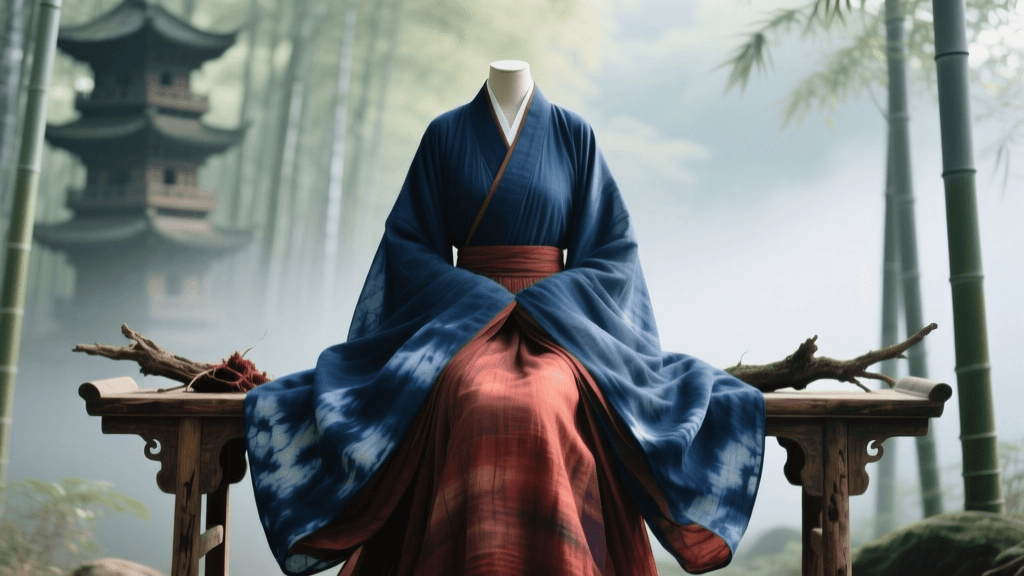
Unlike the tropical Indigofera tinctoria, Chinese indigo is derived from Persicaria tinctoria, a hardy knotweed that thrives in the temperate climates of northern and central China. The leaves contain indican, a precursor that, through enzymatic hydrolysis and oxidation, transforms into the insoluble blue pigment indigotin. As noted by Encyclopedia Britannica, the cultivation of indigo-bearing plants has shaped agricultural and trade histories for millennia. In 2026, boutique Hanfu studios utilize solar-heated fermentation vats to maintain the alkaline, oxygen-deprived environments necessary to reduce indigotin into its water-soluble leuco form, eliminating the need for synthetic reducing agents like sodium dithionite.
2. Rubia cordifolia (Chinese Madder / Qian Cao)
For centuries, the roots of Rubia cordifolia have been the premier source of deep reds, terracottas, and soft pinks in Chinese textiles. The primary colorant, alizarin, requires a metallic mordant to bind effectively to protein fibers like silk. The Royal Botanic Gardens, Kew documents the extensive historical use of Rubia species across Asia and Europe. In modern eco-dyeing, artisans pair Qian Cao with alum (potassium aluminum sulfate) or symplocos (a bio-accumulator plant rich in natural aluminum) to achieve brilliant crimson hues on silk Hanfu without introducing heavy metal pollutants into the local watershed.
3. Sophora japonica (Pagoda Tree / Huai Hua)
The unopened flower buds of the Pagoda Tree, known as Huai Hua, yield a stunning, luminous yellow due to high concentrations of the flavonoid rutin. Historically reserved for high-status garments and imperial accents, Huai Hua is remarkably straightforward to use. It acts as a substantive dye on silk, meaning it can bind to the fiber without a mordant, though the addition of alum shifts the color to a brighter, more lightfast lemon yellow. Its cultivation supports urban and peri-urban agroforestry, as the Pagoda Tree is highly resistant to urban pollution and drought.
2026 Eco-Friendly Dyeing Techniques & Water Conservation
Sustainability in 2026 goes beyond the raw materials; it encompasses the entire dyeing process. Modern Cao Mu Ran practitioners have adopted several innovative techniques to minimize environmental impact:
- Closed-Loop Water Systems: Small-batch Hanfu ateliers now use multi-stage bio-filtration systems. Water from the mordanting bath is neutralized and reused for scouring raw silk, reducing freshwater consumption by up to 60%.
- Solar Thermal Extraction: Instead of relying on gas or electric stoves to simmer dye baths, eco-studios utilize parabolic solar cookers and evacuated tube solar water heaters to maintain the 80°C (176°F) extraction temperatures required for plants like Huai Hua and Qian Cao.
- Composting Spent Botanicals: After extraction, the exhausted plant matter is rich in nitrogen and organic compounds. It is immediately composted or used as mulch in the dye garden, completing the nutrient cycle.
Step-by-Step Guide: Dyeing Silk Hanfu with Pagoda Tree (Huai Hua)
Creating a vibrant, eco-friendly yellow Hanfu accessory or under-layer using Huai Hua is an excellent project for both beginners and seasoned dyers. Below is a precise, actionable guide based on 2026 best practices for protein fibers.
Materials and Measurements
- Fiber: 500g of 100% silk fabric (pre-scoured and degummed).
- Dye Stuff: 100g of dried Sophora japonica buds (20% Weight of Fabric - WOF).
- Mordant: 75g of Potassium Aluminum Sulfate (Alum) (15% WOF).
- Equipment: Stainless steel or enamel pot, thermometer, pH strips, wooden stirring spoon.
The Dyeing Process
- Extraction: Place the 100g of dried Huai Hua buds in a pot with 10 liters of water. Slowly bring the temperature to 80°C (176°F) and hold it there for 60 minutes. Do not boil, as high heat can dull the flavonoid pigments. Strain the liquid through a fine mesh cloth, reserving the botanicals for compost.
- Mordanting: Dissolve the 75g of alum in a separate pot of warm water. Add the wet, pre-scoured silk Hanfu fabric. Heat to 60°C (140°F) for 45 minutes. This opens the silk's molecular structure and deposits the aluminum ions necessary for a permanent chemical bond with the rutin.
- Dyeing: Transfer the mordanted silk directly into the Huai Hua dye bath. Maintain a temperature of 60°C to 70°C for 45 minutes, stirring gently every 10 minutes to ensure an even, unblemished yellow.
- Oxidation and Washing: Remove the silk and allow it to cool and oxidize in the air for 30 minutes. Rinse in cool, pH-neutral water until the runoff is clear. Hang to dry out of direct sunlight.
Comparison Chart: Chinese Dye Plants for 2026
When planning your sustainable Hanfu wardrobe, consider the following data regarding the performance and current market economics of these traditional plants.
| Plant Name | Botanical Name | Color Yield | Mordant Required | 2026 Avg Cost (USD/kg) | Lightfastness |
|---|---|---|---|---|---|
| Chinese Indigo | Persicaria tinctoria | Deep Blue / Navy | None (Vat reduction) | $38.00 | Excellent |
| Chinese Madder | Rubia cordifolia | Crimson / Terracotta | Alum or Symplocos | $52.00 | Good to Excellent |
| Pagoda Tree | Sophora japonica | Luminous Yellow | Optional (Alum brightens) | $45.00 | Moderate to Good |
Sourcing and Cultivating Your Own Dye Garden
For the ultimate expression of sustainability, many Hanfu enthusiasts in 2026 are growing their own dye plants. Persicaria tinctoria is an annual that grows rapidly from seed, requiring rich soil and consistent moisture. Harvesting occurs just before the plant flowers in late summer. Rubia cordifolia is a perennial climber that requires deep, sandy loam to allow its long taproots to develop; roots are typically harvested after three years of growth for maximum alizarin concentration.
If cultivation is not feasible, sourcing from certified organic cooperatives is highly recommended. Look for suppliers who practice regenerative agriculture, ensuring that the soil health of the dye farm is maintained without synthetic fertilizers. By choosing botanically dyed Hanfu, you are participating in a vital cultural and ecological preservation effort, proving that the most advanced sustainable fashion solutions of 2026 can be found rooted deeply in the soils of ancient traditions.