Kimono Extreme Weather Guide 2026: Rain, Snow & Heat
Introduction: Adapting Tradition to a Changing Climate
As global climate patterns continue to shift, 2026 has brought unprecedented weather extremes to Japan and the rest of the world. For kimono enthusiasts and practitioners of traditional Japanese arts, navigating torrential summer downpours, deep winter snows, and sweltering urban heatwaves requires more than just an aesthetic appreciation of the garment; it demands highly practical adaptation. According to the Japan Meteorological Agency, the increasing frequency of extreme precipitation events and record-breaking heat days has necessitated a thorough reevaluation of how we approach traditional dress in the modern era.
Fortunately, the intersection of Edo-period sartorial wisdom and 2026 textile innovation offers brilliant, actionable solutions. Whether you are attending a summer matsuri, participating in a winter tea ceremony, or simply commuting through a sudden spring squall, understanding how to protect both yourself and your valuable garments is essential. This comprehensive guide explores the most effective traditional methods and cutting-edge modern gear for wearing kimono in extreme weather conditions.
Beating the 2026 Summer Heat: Ro, Sha, and Cooling Tech
Summer in a kimono can be notoriously unforgiving, especially during the humid Japanese rainy season and the subsequent August heatwaves. The traditional approach to summer dressing relies heavily on the seasonal transition from unlined silk (hitoe) to highly breathable gauze weaves. The two primary summer fabrics are ro and sha. Ro features a leno weave structure, creating distinct horizontal lines of open space that allow air to circulate while maintaining a relatively formal, opaque appearance. Sha, on the other hand, uses a plain weave with widely spaced threads, offering maximum breathability and a sheer, delicate aesthetic perfect for the peak of summer. The Victoria and Albert Museum notes that these intricate weaving techniques have been perfected over centuries to balance structural integrity with cooling ventilation.
Modern Contact-Cooling Hadajuban
However, in 2026, relying solely on silk gauze is often not enough to combat 35°C (95°F) urban heat islands. The modern solution lies in the hadajuban (the innermost undershirt). Leading Japanese garment manufacturers have introduced contact-cooling hadajuban woven with xylitol-processed fibers and advanced polyethylene blends. These garments actively pull heat away from the skin, dropping the surface temperature by up to 2 degrees Celsius upon contact. When paired with a lightweight ro kimono and a porous koshihimo (tying sash) made from bamboo-derived rayon, the modern kimono wearer can traverse a scorching Kyoto afternoon in relative comfort.
Additionally, traditional igusa (rush grass) accessories remain highly relevant. Wearing igusa-woven zori (sandals) naturally wicks moisture from the feet and stays cool to the touch, providing a natural, sustainable alternative to synthetic summer footwear.
Navigating Heavy Rain: Amagappa and Nano-Waterproofing
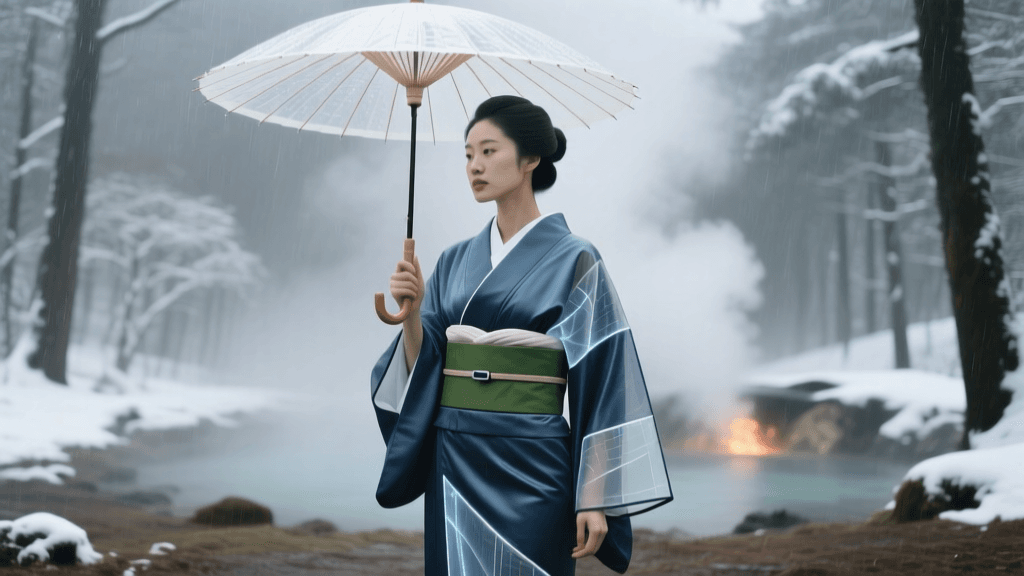
Rain is the natural enemy of silk. A sudden downpour can ruin a vintage yuzen-dyed kimono in minutes, causing dyes to bleed and delicate fibers to warp. Historically, the amagappa (rain cape) was the primary defense. Made from treated paper, oiled silk, or later, rubberized cotton, the amagappa is designed to be worn over the kimono, featuring a high collar and a deep front overlap to shield the precious obi (sash) and the vulnerable lower hem.
The Evolution of the Amagappa and Obi Protection
In 2026, the amagappa has been reimagined using ultra-lightweight, breathable Gore-Tex membranes that mimic the elegant drape of traditional silk while offering impenetrable water resistance. Furthermore, protecting the obi is paramount, as it is often the most expensive component of the ensemble. Modern kimono dressers now utilize waterproof polymer obi-ita (stiffener boards) instead of traditional cardboard or bamboo, preventing the warping and mold growth that historically plagued rain-soaked sashes.
Hydrophobic Sprays and Footwear Covers
For the kimono itself, modern nano-coating sprays have become an essential part of the 2026 wardrobe preparation. Unlike the heavy silicone sprays of the past decade that stiffened the fabric and trapped moisture, the latest fluorine-free hydrophobic sprays create a microscopic barrier. This causes water to bead and roll off silk and wool without altering the garment's hand or breathability. Footwear requires equal attention. Traditional geta (wooden clogs) can become slippery and splash mud onto the kimono hem. Today, kimono wearers utilize silicone zori rain covers. These stretchable, textured caps slip over the thong and sole of the zori, providing instant grip on wet pavement and completely sealing the fabric straps from moisture.
Braving the Snow: Layering and Insulation
Winter presents the unique challenge of maintaining the kimono's elegant, cylindrical silhouette while preventing hypothermia. The traditional concept of kasane (layering) is both an aesthetic and a survival tool. In 2026, the base layer begins with a thermal juban (under-kimono) crafted from merino wool blends. Merino provides exceptional warmth-to-weight ratios and natural odor resistance, ensuring the wearer stays warm without adding the bulk that disrupts the kimono's drape.
Modern Michiyuki and Thermal Tabi
Over the kimono, the hanten or michiyuki (overcoat) serves as the primary windbreaker. Modern michiyuki coats are increasingly lined with ultra-thin aerogel insulation—a technology originally developed for space exploration that is now being integrated into high-end traditional garments to provide maximum warmth with zero added weight. The extremities are the most vulnerable in freezing weather. Traditional tabi (split-toe socks) are typically made of cotton, which offers little insulation against snow. The 2026 market offers fleece-lined, quilted tabi with Thinsulate microfibers. For footwear, the historical yuki-gutsu (snow boots made of woven straw) have been replaced by waterproof, insulated zori with vulcanized rubber soles and deep treads, ensuring safe passage across icy shrine paths.
Comparison: Traditional vs. 2026 Modern Adaptations
To help you prepare your wardrobe, here is a structured comparison of historical methods versus the modern innovations available in 2026.
| Weather Condition | Traditional Method | 2026 Modern Solution | Primary Benefit |
|---|---|---|---|
| Extreme Heat | Ro and Sha silk gauze weaves | Xylitol contact-cooling hadajuban | Active skin temperature reduction |
| Heavy Rain | Oiled paper amagappa capes | Breathable Gore-Tex capes & nano-sprays | Lightweight, non-stifling water resistance |
| Rain Footwear | Ashinaka (short-tooth geta) | Textured silicone zori rain covers | Prevents slipping and protects fabric thongs |
| Deep Snow | Multiple heavy silk layers (kasane) | Merino wool base layers & aerogel coats | Maximum warmth without silhouette bulk |
| Snow Footwear | Yuki-gutsu (straw snow boots) | Insulated zori with vulcanized rubber treads | Ice grip and waterproof thermal retention |
Conclusion: Embracing the Elements with Confidence
Wearing traditional Japanese clothing in the modern era does not mean you must suffer at the mercy of the elements. By respecting the foundational principles of seasonal dressing and strategically incorporating 2026's advanced textile technologies, you can preserve the beauty of your garments and ensure your own physical comfort. Whether you are planning a cultural tour through the snowy streets of Kanazawa or attending a vibrant summer festival in Tokyo, the Japan National Tourism Organization highly recommends preparing for local weather variations to fully enjoy your experience. Equip yourself with the right cooling undershirts, hydrophobic sprays, and thermal layers, and step out into any weather with elegance and confidence.