Hanfu for Life Milestones: 2026 Rites & Ceremony Guide
The Resurgence of Rites in 2026
As we navigate through 2026, the global appreciation for traditional Asian garments has evolved from mere aesthetic admiration to profound cultural participation. The Hanfu movement, which has steadily grown over the past decade, has now firmly integrated itself into major life milestones. No longer confined to historical reenactments or casual streetwear, Hanfu is increasingly the garment of choice for coming-of-age ceremonies, traditional weddings, and even academic graduations. This shift reflects a broader societal desire to anchor modern achievements in ancient cultural continuity.
For those looking to honor their heritage or embrace the profound symbolism of traditional Chinese dress, understanding the specific garments, rites, and modern 2026 tailoring innovations is essential. This comprehensive guide explores how to select, source, and wear Hanfu for life's most pivotal moments.
The Philosophy of Milestones in Traditional Dress
In traditional Chinese culture, clothing is never merely functional; it is a visual language that communicates social status, moral cultivation, and life stage. The ancient texts dictate that changes in one's life path must be mirrored by changes in one's attire. According to the Book of Rites (Liji), the transition from childhood to adulthood, and from single life to marriage, requires specific ceremonial garments that signify new responsibilities and societal roles. In 2026, modern practitioners are reviving these philosophies, adapting ancient silhouettes to contemporary bodies while strictly adhering to the symbolic rules of color, fabric, and layering.
Coming of Age: Guan Li and Ji Li
The coming-of-age ceremony is one of the most significant milestones in a young person's life. For men, this is the Guan Li (Capping Ceremony), traditionally held at age 20. For women, it is the Ji Li (Hair-Pinning Ceremony), traditionally held at age 15, though modern practitioners often align both ceremonies with high school or university graduation ages (18-22).
The Three Additions (San Jia)
The core of both the Guan Li and Ji Li is the 'Three Additions' ritual, where the celebrant changes into three progressively more formal outfits, each accompanied by a specific headpiece.
- First Addition: Represents the abandonment of childhood. The celebrant wears a simple, unlined cotton or linen robe (often a Shenyi or deep garment) in subdued colors like pale blue or white. The hair is tied up, and a simple cloth cap or wooden hairpin is added.
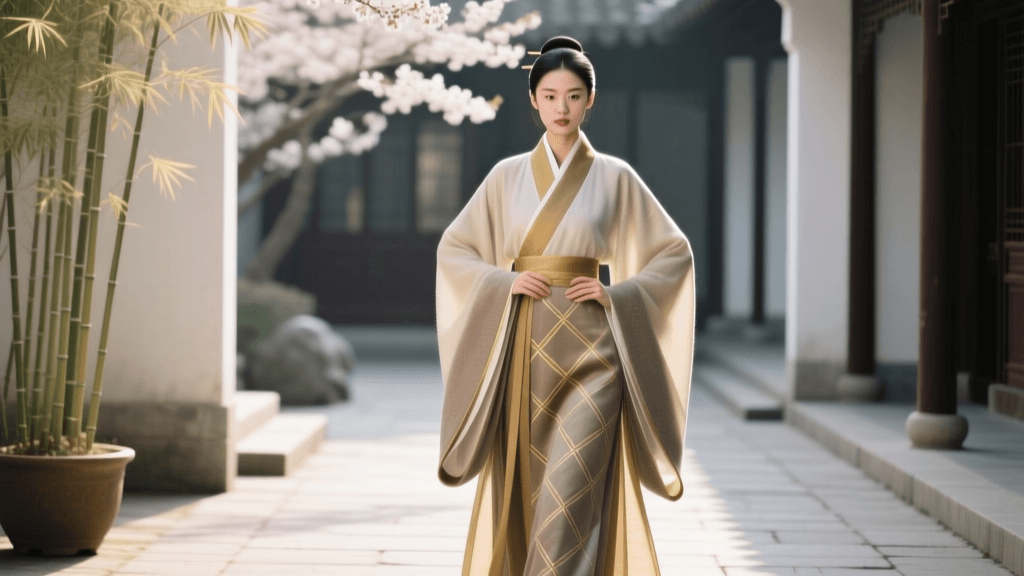
- Second Addition: Symbolizes readiness to take on societal duties. The garment is upgraded to a formal silk robe, such as a Daopao for men or an Aoqun (jacket and skirt) for women. The headpiece becomes more ornate, utilizing jade or metal.
- Third Addition: The pinnacle of the ceremony, representing full adult status and the right to participate in ancestral rites. Men don a formal court-style robe with a structured Futou hat. Women wear a magnificent Ming Dynasty-style Diji (crown) adorned with pearl and gold Buyao (step-shake hairpins), paired with a richly embroidered Pifeng (cloak).
2026 Styling Tip: For modern Ji Li ceremonies, the Ming Dynasty Mamianqun (horse-face skirt) remains the undisputed favorite for the third addition. In 2026, weavers in Nanjing are utilizing new tension-controlled looms to produce Song Brocade (Song Jin) Mamianqun that are significantly lighter than previous years, allowing for greater mobility during the lengthy kneeling and bowing rituals.
Hanfu Wedding Attire: The Pinnacle of Ming Elegance
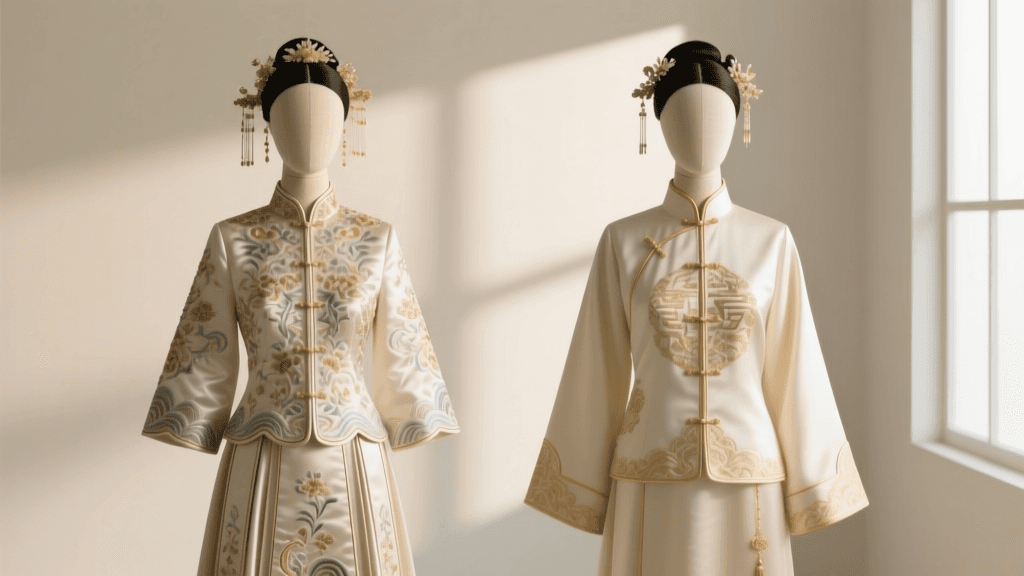
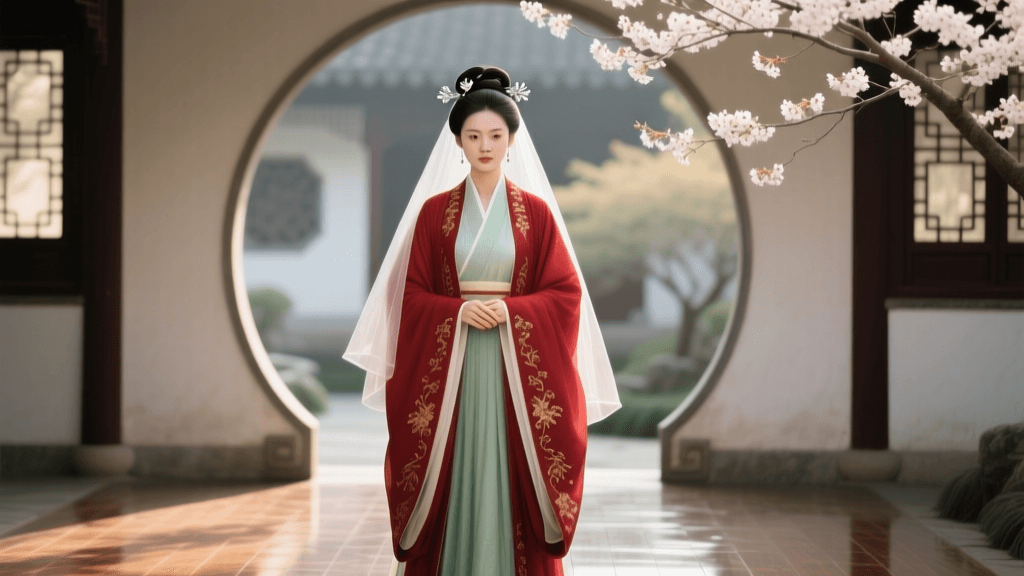
While the red Qungua and Xiuhefu have dominated Chinese weddings for the last century, 2026 has seen a massive surge in couples opting for historically accurate Hanfu wedding attire, specifically drawing from the Ming Dynasty's sumptuous court styles. The ultimate bridal ensemble is the Fengguan Xiapei (Phoenix Crown and Rosy Cape).
Anatomy of the Fengguan Xiapei
The Fengguan (Phoenix Crown) is an intricate headdress featuring kingfisher feather inlay (now ethically replicated using dyed silk and velvet in 2026 to protect wildlife), gold dragons, and pearl-draped phoenixes. The Xiapei is a heavy, embroidered stole that drapes over the shoulders and down the front of the bride's Mang Ao (python-embroidered jacket), weighted at the bottom by a jade or gold pendant to ensure perfect fabric drape.
Historical accuracy in these garments is paramount. As noted by the Victoria and Albert Museum's Asian textile archives, the structural integrity of Ming dynasty formalwear relied heavily on the interplay between stiff, heavily embroidered outer layers and soft, flowing inner linings. Modern 2026 bespoke tailors are reviving this technique, using temperature-regulating silk-cupro linings to keep brides comfortable under the heavy brocades during long tea ceremonies.
Groom's Attire: The Wushamao and Mangpao
The groom traditionally wears a Mangpao (python robe) in deep crimson or navy, featuring four-clawed dragon embroidery (the five-clawed dragon being strictly reserved for the emperor). This is paired with a Wushamao (black gauze hat) with wing-like extensions. In 2026, many grooms are opting for custom-fitted structural interfacing in the shoulders of the Mangpao to create a commanding, broad-shouldered silhouette that photographs beautifully alongside the bride's voluminous skirts.
Academic Graduations: A New Xin Zhongshi Tradition
One of the most exciting developments in 2026 is the integration of Hanfu into university graduation ceremonies. Moving away from strict historical replication, students are embracing the Xin Zhongshi (New Chinese Style) movement to create hybrid academic regalia. It is now common to see graduates wearing a modified, streamlined Shenyi beneath their standard academic gowns, or replacing the traditional Western graduation stole with a silk, embroidered Yunjian (cloud shoulder) featuring their university's crest woven in traditional gold thread.
This fusion honors the academic achievement while rooting the scholar's success in the ancient Chinese reverence for education and the civil service examination system. The Metropolitan Museum of Art's Asian Art department frequently highlights how historical scholars used specific garment cuts and jade accessories to denote their intellectual status, a tradition that modern graduates are playfully and respectfully reviving.
2026 Milestone Hanfu Sourcing & Fitting Guide
Sourcing milestone Hanfu requires careful planning, especially for custom-tailored pieces. The 2026 market is divided into accessible ready-to-wear brands and high-end bespoke ateliers. Brands like Shisanyu offer excellent entry-level Ming Dynasty styles perfect for graduations and guest attire, while ateliers like Minghuatang remain the gold standard for museum-quality wedding and Guan/Ji Li garments.
Comparison Chart: 2026 Milestone Garments
| Ceremony Type | Recommended Dynasty Style | Key Garments | 2026 Average Custom Cost (USD) | Lead Time |
|---|---|---|---|---|
| Ji Li (Women's Coming of Age) | Ming Dynasty | Aoqun (Jacket & Skirt), Diji Crown | $450 - $850 | 4-6 Weeks |
| Guan Li (Men's Coming of Age) | Ming Dynasty | Daopao Robe, Futou Hat | $350 - $700 | 3-5 Weeks |
| Traditional Wedding (Bride) | Ming Dynasty | Fengguan Xiapei, Mang Ao, Mamianqun | $1,500 - $4,500 | 8-14 Weeks |
| Traditional Wedding (Groom) | Ming Dynasty | Mangpao, Wushamao, Leather Boots | $800 - $2,000 | 6-10 Weeks |
| University Graduation | Modern Xin Zhongshi | Modified Shenyi, Embroidered Yunjian | $150 - $350 | 2-3 Weeks |
The 2026 3D Fitting Revolution
One of the biggest hurdles for international buyers has been achieving the perfect fit for structured Ming Dynasty jackets, which require precise shoulder and bust measurements to lay flat without wrinkling. In 2026, top Hanfu ateliers have fully integrated LiDAR-based smartphone scanning apps. Customers can now generate a millimeter-accurate 3D avatar of their torso, allowing tailors in Hangzhou and Suzhou to draft patterns that accommodate modern posture and undergarments, eliminating the need for multiple international shipping returns.
Final Thoughts on Cultural Continuity
Choosing to wear Hanfu for life's major milestones is a profound statement of identity and respect for the past. Whether you are pinning up your hair for a Ji Li ceremony, walking down the aisle in a breathtaking Fengguan, or crossing the graduation stage in a modern Xin Zhongshi Shenyi, the garments you choose carry the weight of thousands of years of philosophy, artistry, and human experience. By investing in high-quality, historically informed pieces, you are not just buying clothes; you are participating in the living, breathing continuation of Asian traditions in the modern era.