Best Kimono Draping & Hanbok Drafting Workshops 2026
The Renaissance of Heritage Tailoring in 2026
The global fashion landscape in 2026 has seen a massive pivot away from hyper-fast fashion, with a renewed, intense focus on slow, heritage-based craftsmanship. For textile enthusiasts, fashion students, and independent designers, learning the meticulous art of traditional Asian garment making is no longer just a historical pursuit; it is a vital step toward sustainable, zero-waste design methodologies. Nowhere is this more evident than in the surging demand for intensive, short-term seminars dedicated to Japanese kimono tailoring (wafuku saiho) and Korean hanbok pattern drafting.
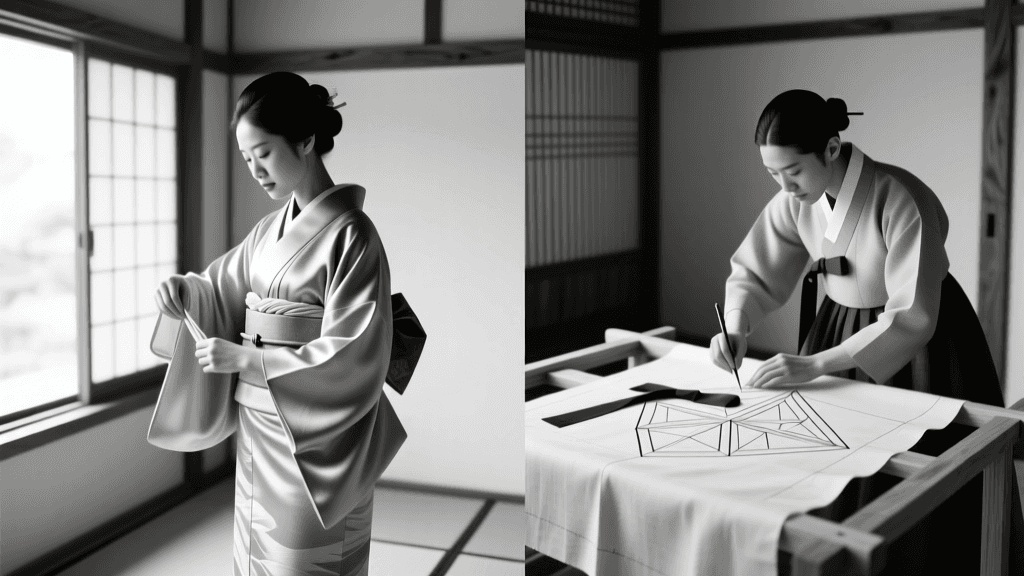
Unlike Western garment construction, which relies heavily on complex darts, curved seams, and bias cutting to mold fabric to the body, traditional East Asian tailoring celebrates the two-dimensional plane. The artistry lies in the draping, the precise folding, and the structural geometry of the garments. According to the UNESCO Convention for the Safeguarding of the Intangible Cultural Heritage, the transmission of these specialized crafting skills through immersive, hands-on workshops is critical for preserving cultural identities in an increasingly homogenized world. This comprehensive guide explores the most prestigious kimono and hanbok workshops available in 2026, detailing what you will learn, the tools you need, and how to enroll.
Kyoto's Premier Kimono Tailoring (Wafuku Saiho) Seminars
Kyoto remains the undisputed epicenter of kimono craftsmanship. While many tourists are familiar with kitsuke (the art of wearing and tying a kimono), the actual construction of the garment—wafuku saiho—is a deeply guarded and highly technical discipline. In 2026, the most sought-after seminars for international students are those that bridge the gap between ancient techniques and modern sustainable applications.
Curriculum Highlights: Beyond the Basics
Top-tier Kyoto ateliers and institutions affiliated with networks like the Bunka Fashion College now offer 4-to-8-week intensive modules specifically designed for foreign designers. The curriculum in 2026 focuses heavily on the unique properties of tanmono—the traditional bolt-width fabric (usually 36 cm wide) used for kimono. Students learn the zero-waste cutting techniques inherent to kimono drafting, where every single centimeter of the 12-meter bolt is utilized, leaving no scraps behind.
Key techniques taught in these seminars include:
- Chikara-nui (Reinforcement Stitching): Mastering the microscopic hand-stitches used to fortify high-stress areas like the collar and armholes without adding bulk.
- Kuke (Blind Hemming): Learning the traditional invisible stitching techniques that allow the kimono to drape fluidly while maintaining crisp, architectural lines.
- Modern Upcycling Integration: A new staple in 2026 seminars is the module on deconstructing vintage silk kimono and applying traditional saiho seams to create modern, modular garments that can be easily disassembled and re-sewn, honoring the Japanese concept of mottainai (avoiding waste).
Seoul's Intensive Hanbok Pattern Drafting Masterclasses
While the kimono is defined by its straight lines and geometric rigidity, the traditional Korean hanbok is celebrated for its elegant, sweeping curves and voluminous silhouettes. In Seoul, the epicenter of hanbok innovation is the Bukchon Hanok Village and the surrounding institutional hubs supported by the Korean Craft & Design Foundation (KCDF). In 2026, Seoul's masterclasses have evolved to offer a fascinating blend of ancestral drafting methods and cutting-edge digital fitting technology.
Modernizing the Jeogori and Chima
The core of any Seoul-based hanbok seminar revolves around drafting the jeogori (the upper jacket) and the chima (the voluminous wrap skirt). The most challenging and revered aspect of the jeogori is the baerae—the curved, sweeping line of the underarm and sleeve. Achieving the perfect baerae requires an intimate understanding of traditional Korean proportions, which historically relied on the wearer's specific body measurements rather than standardized sizing.
In 2026, master artisans in Seoul are teaching students how to draft these curves using the traditional ja (Korean ruler), while simultaneously introducing 3D body-scanning software. This hybrid approach allows international students to map the precise drape of the baerae on diverse, non-Korean body types, ensuring that the structural integrity and historical accuracy of the hanbok are maintained without compromising the fit. Seminars also cover the intricate silk-braiding techniques (maedeup) used to create the goreum (the signature chest bow), a skill that often takes a dedicated three-day sub-module to master.
2026 Workshop Comparison Chart
Choosing between a Kyoto kimono seminar and a Seoul hanbok masterclass depends on your design goals, budget, and time commitment. Below is a structured comparison of the leading intensive programs available in 2026.
| Feature | Kyoto Kimono (Wafuku Saiho) Intensive | Seoul Hanbok Drafting Masterclass |
|---|---|---|
| Primary Focus | Zero-waste cutting, straight-seam construction, hand-finishing | Curved sleeve drafting (baerae), volumetric skirts, silk braiding |
| Duration | 4 to 8 Weeks (Full-time) | 2 to 4 Weeks (Intensive) |
| 2026 Tuition | ¥380,000 - ¥650,000 (approx. $2,500 - $4,300 USD) | ₩2,200,000 - ₩3,500,000 (approx. $1,600 - $2,500 USD) |
| Prerequisites | Intermediate machine & hand sewing skills | Beginner to Intermediate pattern drafting knowledge |
| Language of Instruction | Japanese with English interpreters / Bilingual assistants | Korean with real-time digital translation & English guides |
| Final Project | One fully finished, hand-stitched silk Haori or Juban | One modernized Jeogori and traditional Chima ensemble |
Essential Tools for the 2026 Traditional Tailor
Attending these prestigious seminars requires more than just a passion for textiles; it requires the proper toolkit. While most ateliers provide heavy machinery, students are expected to bring their own hand tools. The standards for 2026 remain deeply rooted in heritage manufacturing, though a few modern ergonomic updates have become standard.
- Shozaburo No. 280 Tailor Shears: For Kyoto seminars, these legendary Japanese shears are non-negotiable. Forged with a hard steel core and soft iron exterior, they provide the razor-sharp precision required to cut delicate silk chirimen (crepe) without fraying the edges.
- Kujira-jaku (Whale Ruler): Essential for kimono drafting, this traditional ruler measures in sun and bu. Even in 2026, master teachers insist on using the kujira-jaku to understand the historical proportions of the garment before converting to metric measurements.
- Clover 25mm Tracing Wheel and Carbon Paper: Used extensively in Seoul hanbok seminars to transfer the complex, sweeping curves of the baerae and collar onto delicate ramie or silk organza.
- Gunze Silk Thread #50: Traditional tailoring requires threads that match the degradation and tension of the fabric. This specific Japanese silk thread is the industry standard for invisible hand-basting and final seaming in both kimono and hanbok construction.
- Traditional Korean Ja (Ruler): Often made of bamboo or brass, this ruler is divided into chi and chon. Understanding the ja is crucial for grasping the philosophical proportions of the hanbok, which are based on the harmony of yin and yang rather than strict anatomical mapping.
Navigating Enrollment and Cultural Visas
Securing a spot in these 2026 seminars requires advance planning, particularly regarding immigration and visa logistics. For the Kyoto intensives, which often exceed 90 days, international students must apply for Japan's Designated Activities Visa (Cultural Arts) or a Student Visa sponsored by the specific tailoring academy. The application window for the Fall 2026 Kyoto cohorts closes in late May, requiring a portfolio submission demonstrating foundational sewing competencies and a statement of intent focused on sustainable heritage preservation.
Seoul's shorter, 2-to-4-week masterclasses are more accessible for traveling professionals. Most international attendees can enroll under South Korea's K-ETA (Korea Electronic Travel Authorization) or a standard C-3 short-term tourist visa, provided the seminar does not involve paid employment or commercial retail activities within the country. However, students wishing to stay longer to apprentice under a Bukchon master artisan must secure a D-4 (General Trainee) visa, which requires a formal sponsorship letter from the Korean Craft & Design Foundation or a registered cultural enterprise.
Whether you are drawn to the zero-waste, geometric perfection of the Kyoto kimono or the sweeping, architectural curves of the Seoul hanbok, the workshops of 2026 offer an unprecedented opportunity to internalize these ancient techniques. By mastering the traditional drafting and draping methods of East Asia, modern designers are not just preserving history; they are actively forging the future of sustainable, intentional, and deeply meaningful fashion.