Best Kimono Photoshoot Locations in Kyoto & Photography Tips
The Ultimate Guide to Kimono Photography in Kyoto
Kyoto is universally recognized as the cultural heart of Japan, offering an unparalleled backdrop for traditional garment photography. For enthusiasts of Asian traditions, capturing the intricate beauty of a kimono against the city's historical architecture and serene landscapes is a bucket-list endeavor. According to the Japan National Tourism Organization, Kyoto remains the premier destination for cultural immersion, drawing millions of visitors eager to experience its preserved machiya townhouses, ancient shrines, and meticulously maintained gardens.
However, a successful kimono photoshoot requires more than just a beautiful garment and a scenic location. It demands an understanding of lighting, cultural etiquette, and the logistical nuances of navigating a bustling tourist city while wearing restrictive traditional attire. This comprehensive guide explores the best locations for kimono photography in Kyoto, provides actionable camera settings, and outlines the etiquette necessary to ensure a respectful and productive shoot.
Top Kimono Photoshoot Locations in Kyoto
Choosing the right location is critical. While famous landmarks offer iconic backdrops, they often come with overwhelming crowds. Balancing aesthetic appeal with accessibility is key. Below is a comparison chart of the top five locations for kimono photography, detailing the optimal conditions for each.
| Location | Best Time to Visit | Entry Fee | Crowd Level | Aesthetic Vibe |
|---|---|---|---|---|
| Fushimi Inari Taisha | 5:30 AM - 7:00 AM | Free | High (Low early) | Iconic, Vibrant, Spiritual |
| Sagano Bamboo Forest | 6:00 AM - 7:30 AM | Free | Very High | Ethereal, Textured, Natural |
| Yasaka Pagoda (Hokan-ji) | 7:00 AM - 8:30 AM | Free (Street) | High | Classic Skyline, Historic |
| Shoren-in Temple | 9:00 AM - 4:00 PM | 800 JPY | Low | Serene, Lush, Intimate |
| Murin-an Villa | 9:00 AM - 11:00 AM | 600 JPY | Very Low | Meiji-era, Elegant, Quiet |
1. Fushimi Inari Taisha
Famous for its thousands of vermilion torii gates, Fushimi Inari provides a striking color contrast to the cool tones of a silk kimono. The Japan National Tourism Organization highlights this shrine as a must-visit, but for photography, timing is everything. You must arrive before 6:00 AM to capture the gates without hundreds of tourists in the background. The dappled morning light filtering through the gates creates beautiful, natural rim lighting on the kimono's silk fabric.
2. Sagano Bamboo Forest (Arashiyama)
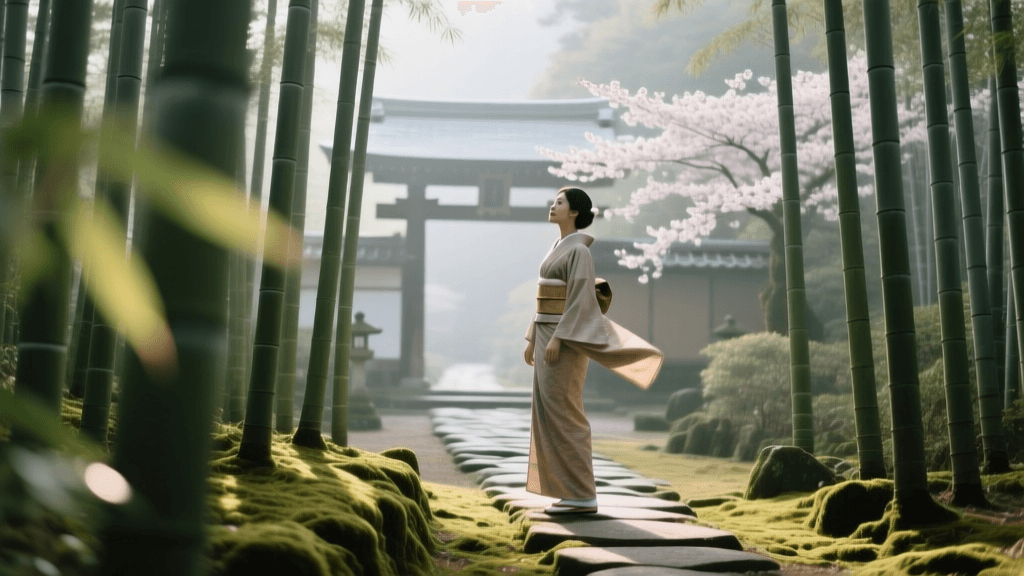
The towering bamboo stalks offer a magnificent, textured backdrop that complements the organic motifs often found in yuzen-dyed kimonos. Because the path is narrow and heavily trafficked, early morning is non-negotiable. Use a wide-angle lens (24mm or 35mm) to capture the sheer height of the bamboo, placing your subject slightly off-center to maintain a sense of scale and environment.
3. Yasaka Pagoda (Hokan-ji)
Located in the Higashiyama district, the cobblestone streets leading up to the five-story Yasaka Pagoda offer the quintessential 'old Kyoto' aesthetic. Shooting from a low angle on the sloping street emphasizes the grandeur of the pagoda while allowing the sweeping hem of a furisode kimono to fill the foreground.
4. Shoren-in Temple
For those willing to pay a modest entry fee, Shoren-in offers a tranquil alternative to the crowded public streets. Its sprawling moss gardens and ancient camphor trees provide a lush, green backdrop that makes the vibrant reds and purples of traditional textiles pop. Tripods are generally permitted in the garden areas if you are respectful of the space.
5. Murin-an Villa
This former estate of statesman Yamagata Aritomo features a stunning Meiji-era garden. It is a favorite among professional kimono photographers because the low crowd levels allow for uninterrupted, lengthy setup times. The wooden verandas and sliding shoji screens are perfect for indoor-outdoor transitional portraits.
Essential Photography Gear and Camera Settings
Photographing traditional garments requires specific gear to capture both the environmental context and the minute details of the textile weave and dye.
- Portrait Lens (85mm f/1.4 or f/1.8): This is your workhorse. The 85mm focal length compresses the background beautifully, creating creamy bokeh that isolates the subject. The wide aperture is crucial for low-light early morning shoots at Fushimi Inari or Arashiyama.
- Environmental Lens (35mm f/1.4): Use this to capture the subject interacting with the architecture, such as walking down the Higashiyama streets or sitting on a temple veranda.
- Macro Lens (90mm or 100mm): Essential for capturing the intricate details of the obi knot (musubi), the metallic threads of the obijime (cord), and the delicate embroidery on the collar.
- Reflector (Silver/Gold): A 5-in-1 collapsible reflector is vital for bouncing light into the shadows under the chin and highlighting the eyes, especially when shooting under the dense canopy of bamboo or trees.
Recommended Settings: Keep your ISO as low as possible (100-400) to preserve the rich colors of the silk. Shoot in RAW format to retain maximum dynamic range, as the glossy nature of silk and the metallic threads in the obi can easily cause blown-out highlights. Set your white balance to 'Cloudy' or 'Shade' during early morning shoots to warm up the naturally cool, blue-toned light.
Mastering Kimono Posing and Lighting
Posing in a kimono is fundamentally different from posing in Western clothing. The garment is wrapped tightly, restricting the stride and arm movement. Forcing modern, dynamic poses will look unnatural and can damage the delicate silk or loosen the complex obi knot.
Traditional Posing Techniques
The most flattering and culturally accurate stance is the uchimata (pigeon-toed) stance. The model should stand with their toes pointing slightly inward, knees gently touching, and weight shifted to one leg. This creates a graceful, tapered silhouette that mimics the shape of a traditional porcelain doll.
Hand placement is equally important. Hands should never hang limply at the sides. Instead, have the model gently clasp their hands in front of the obi, lightly touch the edge of their collar, or hold a traditional prop such as a wagasa (oil-paper umbrella) or a sensu (folding fan). When walking, the model should take very small, gliding steps, keeping the hem of the kimono relatively level.
Lighting Silk and Textiles
Silk is highly reflective. Direct, harsh midday sunlight will create specular highlights that wash out the intricate patterns of the fabric. The best lighting for kimono photography is overcast skies or open shade. An overcast day acts as a giant natural softbox, wrapping the subject in even, diffused light that accurately renders the deep indigos, crimsons, and golds of the textile. If you must shoot in direct sun, position the model with the sun behind them (backlighting) and use a reflector to illuminate their face.
Navigating Kyoto's Photography Etiquette and Rules
As the popularity of kimono tourism has surged, so have the friction points between photographers, tourists, and local residents. It is imperative to understand and respect local regulations. The Kyoto City Official Travel Guide explicitly outlines rules regarding photography in public and private spaces to protect the privacy and daily lives of citizens.
Crucial Rule: The use of tripods and selfie sticks on public streets, sidewalks, and in crowded tourist areas like Gion and Higashiyama is strictly prohibited by Kyoto City ordinances. Violators can be fined.
When shooting in Gion, be hyper-aware of your surroundings. Do not block narrow streets, and absolutely never chase, harass, or shove a camera in the face of a geiko or maiko. They are working professionals, and treating them as mere photo props is deeply disrespectful. Always ask for permission before photographing locals, and if you are shooting in a private garden or temple, always check the specific venue's rules regarding commercial photography and tripod usage.
Seasonal Considerations and Rental Logistics
The season dictates not only the scenery but also the type of kimono you should wear. In spring, pastel kimonos with cherry blossom motifs blend beautifully with Maruyama Park. In autumn, deep reds, oranges, and browns complement the fiery maple leaves of Tofuku-ji. Winter calls for heavy, dark fabrics adorned with pine, bamboo, and plum blossom motifs, looking stunning against the snow-dusted roofs of Kinkaku-ji.
If you do not own a kimono, Kyoto boasts hundreds of rental shops. Standard komon (casual patterned kimono) rentals typically cost between 5,000 and 8,000 JPY, including dressing, hair styling, and accessories. For a more formal and photogenic furisode (long-sleeved kimono for unmarried women) or homongi (visiting wear), expect to pay between 12,000 and 20,000 JPY. Factor in at least 60 to 90 minutes for the dressing process at the shop before heading to your first location.
By combining meticulous location scouting, an understanding of traditional posing, and a deep respect for local etiquette, you can capture breathtaking images that honor the profound legacy of Asian textile traditions.