Best 2026 Kimono Pattern Drafting Workshops Reviewed
The Renaissance of Traditional Garment Seminars in 2026
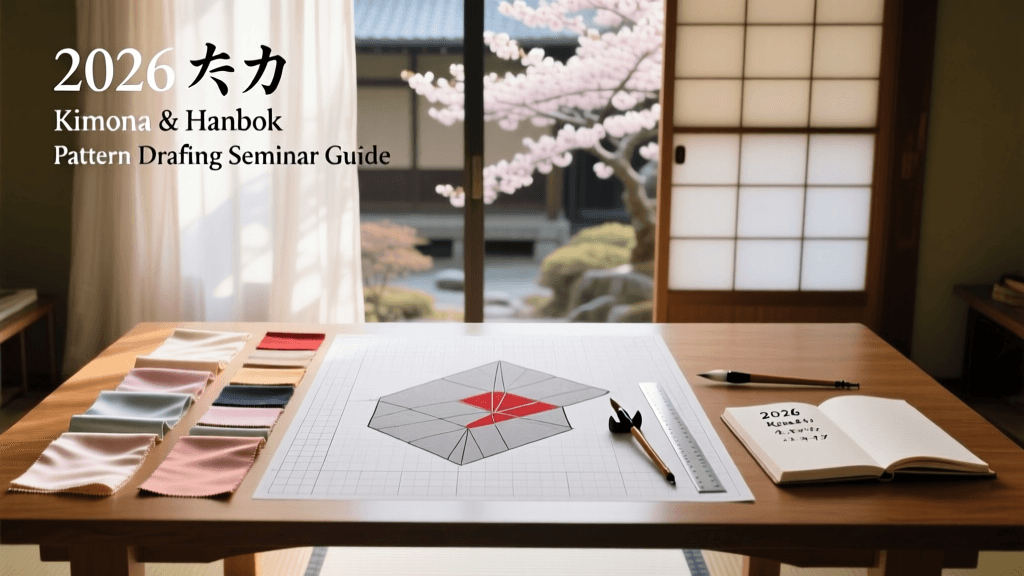
The landscape of traditional Asian garment making has undergone a profound transformation by 2026. Once restricted to multi-year, closed-door apprenticeships in East Asia, the intricate arts of kimono and hanbok construction are now accessible through elite, intensive workshops and hybrid seminars. For modern fashion designers, textile conservators, and cultural enthusiasts, mastering the flat-pattern drafting techniques of traditional Asian dress is no longer just a historical pursuit—it is a highly sought-after skill in the global couture and sustainable fashion markets.
Unlike Western tailoring, which relies heavily on curved seams and darts to mold fabric to the body's three-dimensional contours, traditional East Asian garment making honors the integrity of the woven cloth. Using a system of straight-line cutting and strategic folding, artisans create garments that are structurally resilient, entirely recyclable, and deeply symbolic. In 2026, the top workshops seamlessly blend centuries-old hand-sewing techniques with modern textile analysis, offering students an unprecedented opportunity to master these heritage crafts.
According to the UNESCO Intangible Cultural Heritage registry, the preservation of traditional craftsmanship is vital for maintaining cultural diversity. The seminars reviewed below represent the pinnacle of this preservation effort, offering rigorous, hands-on training in both Japanese and Korean traditional dress.
The Philosophy of Flat Pattern Drafting: Honbuse and Wamono
Before diving into specific workshops, it is crucial to understand the foundational philosophy taught in these 2026 cohorts. The Japanese concept of Wamono (traditional Japanese clothing) and the Korean principles of Hanbok construction both rely on the Tanmono—a standard bolt of fabric, typically 36 to 40 centimeters wide and 11 to 12 meters long. The genius of this system is that the entire bolt is used with virtually zero waste.
In these advanced seminars, students learn that the pattern is not drawn onto paper and cut out; rather, the fabric itself is the pattern. Using a traditional Shaku (ruler) and a Herazume (bamboo spatula), students are taught to mark, fold, and baste the silk using the Shitsuke-ito (basting thread) method. This ensures that the garment can be entirely disassembled, cleaned, re-dyed, and resewn—a cornerstone of the circular fashion economy that modern 2026 designers are eager to adopt.
Kyoto Nishijin Heritage Intensive: The Kimono Masterclass
Located in the historic weaving district of Kyoto, the Nishijin Heritage Intensive remains the most prestigious in-person seminar for kimono construction in 2026. This 14-day immersive program is designed for intermediate to advanced sewists who already possess a strong understanding of hand-stitching and silk manipulation.
Curriculum Highlights
- Days 1-3: Silk Preparation and Tensioning. Students learn to use the Kakehari (tensioning frame) and modern 2026 smart-clips that monitor silk warp tension via Bluetooth, preventing distortion when working with delicate habotai and chirimen (crepe) silks.
- Days 4-7: The Art of the Hiyoku (Lining). Mastering the attachment of the inner lining. Students practice the Honbuse technique, ensuring the lining is slightly smaller than the outer shell to create a flawless, unpuckered drape at the hem and sleeves.
- Days 8-11: Sleeve and Collar Architecture. Constructing the Sode (sleeve) and the Eri (collar). Special focus is placed on the Tomoe-eri (folded collar) technique, requiring microscopic precision in hand-basting to maintain sharp, geometric lines without visible stitching.
- Days 12-14: Final Assembly and Fitting. Students complete a fully lined, uncrested kimono (Komon style) and learn the intricate art of Ohashori (the waist tuck) fitting on live models.
The Kyoto seminar is highly competitive. As noted by the Japan National Tourism Organization, cultural immersion programs in Kyoto have seen a 40% surge in international applicants for 2026, driven by a global interest in sustainable, zero-waste design methodologies.
Seoul Hanbok Vibrancy Project: Mastering the Jeogori and Chima
For those drawn to the elegant, sweeping silhouettes of Korean traditional dress, the Seoul Hanbok Vibrancy Project offers a rigorous 10-day seminar focusing on the structural nuances of the Hanbok. While the kimono relies on straight lines and uniform widths, the Hanbok introduces subtle, sweeping curves that require a different approach to flat-pattern drafting.
Curriculum Highlights
- The Baerae (Sleeve Curve): Unlike the rectangular sleeves of a kimono, the Hanbok Jeogori (jacket) features the Baerae, a beautifully curved underarm seam that mimics the underside of a traditional Korean roof. Students spend three full days mastering the drafting and easing of this curve using organic ramie and silk blends.
- The Dongjeong (White Collar): The crisp, white, detachable collar of the Jeogori is a hallmark of Korean elegance. Seminars teach the precise starching, folding, and basting techniques required to make the Dongjeong stand perfectly upright against the neck.
- Chima Pleating and Weighting: The Chima (skirt) requires intricate, hidden pleating at the waistband. Students learn traditional weighting techniques using natural beeswax and modern 2026 micro-weights to ensure the skirt flares perfectly when the wearer moves.
- The Goreum (Ties): The final module focuses on tying and constructing the Goreum, the long, flowing ribbons that secure the jacket, emphasizing the asymmetrical bow that signifies different historical eras and social statuses.
The Korean Cultural Heritage Administration actively supports these seminars, recognizing that the transmission of Hanbok making skills is vital for national identity. The Korea Tourism Organization frequently highlights these specialized craft workshops as premier cultural experiences for international visitors and design professionals.
2026 Workshop Comparison Chart
Choosing the right seminar depends on your design goals, budget, and current skill level. Below is a comprehensive comparison of the top three traditional garment workshops available in 2026.
| Program Name | Location / Format | Duration | 2026 Tuition (USD) | Primary Focus | Skill Level |
|---|---|---|---|---|---|
| Nishijin Heritage Intensive | Kyoto, Japan (In-Person) | 14 Days | $4,850 | Kimono flat-pattern drafting, silk lining, zero-waste cutting | Advanced |
| Hanbok Vibrancy Project | Seoul, South Korea (In-Person) | 10 Days | $3,400 | Jeogori curves, Chima pleating, Ramie manipulation | Intermediate |
| Global Wamono AR Masterclass | Virtual (Hybrid AR/VR) | 6 Weeks | $950 | Digital pattern drafting, 3D drape simulation, historical theory | Beginner/Intermediate |
Essential Toolkit for the 2026 Traditional Tailor
Attending these seminars requires a specific set of tools. While the workshops provide the heavy equipment and textiles, students are expected to bring their personal hand-tools. The 2026 standard toolkit for traditional Asian garment making includes:
- Carbon-Fiber Shaku: The traditional Japanese measuring stick is now crafted from lightweight carbon fiber to prevent warping in humid studio environments, often featuring laser-etched, non-fading metric and traditional scale markings.
- Magnetic Silk Weights: Essential for holding the slippery Tanmono in place on the cutting table without piercing the delicate fibers. Modern versions use neodymium cores wrapped in smooth, snag-free silicone.
- Micro-Serrated Rotary Cutters: Designed specifically for cutting bias and straight grains on habotai silk and synthetic organza without fraying the edges before the basting thread is applied.
- Hera (Bamboo Spatulas): A set of three varying stiffness levels used for creasing silk, tucking seams, and marking fold lines without leaving permanent ink or chalk residue on heirloom textiles.
- Thimble Ring (Yubinuki): A traditional Japanese ring thimble, typically made of tightly wound silk thread over a leather core, which provides the necessary grip to push heavy needles through multiple layers of silk and lining.
How to Prepare and Apply for 2026 Cohorts
Securing a spot in the Kyoto or Seoul in-person seminars requires meticulous preparation. Applications for the 2026 fall cohorts typically close by early spring. Here is a structured guide to ensuring your application stands out:
- Portfolio Submission: You must submit a digital portfolio showcasing your hand-sewing capabilities. Include high-resolution macro photographs of your slip-stitching, basting, and seam finishing. The selection committee looks for uniform stitch length and tension control.
- Material Fee Deposits: Traditional silks, such as Nishijin-ori (brocade) and Korean Myeongju (raw silk), are incredibly expensive. A non-refundable material deposit of $500 to $800 is usually required upon acceptance to secure your personal bolt of fabric.
- Language and Translation: While the 2026 seminars offer real-time AR translation glasses for English-speaking students, a basic vocabulary of Japanese and Korean sewing terms (e.g., Nui-shiro for seam allowance, Son-mok for wrist opening) is highly recommended to build rapport with the master artisans.
- Physical Endurance: Traditional floor-sewing (sitting on tatami mats or low stools) requires significant core strength and flexibility. Many past students recommend beginning a daily stretching and yoga routine three months prior to the seminar to prevent back and knee strain during long hours of detailed needlework.
"The beauty of the kimono and the hanbok lies not just in the silk, but in the restraint of the maker. We do not force the fabric to become something it is not; we guide it to drape as the weaver intended. Teaching this restraint to the 2026 generation of global designers is our greatest responsibility."
— Master Artisan Yuki Tanaka, Lead Instructor at the Nishijin Heritage Intensive.
Conclusion: The Future of Heritage Tailoring
The workshops and seminars of 2026 represent a critical bridge between ancient craftsmanship and the future of sustainable fashion. By learning the meticulous, zero-waste pattern drafting techniques of the kimono and the structural poetry of the hanbok, modern makers are doing more than preserving history—they are actively participating in a global shift toward mindful, enduring garment creation. Whether you choose the immersive tatami studios of Kyoto, the vibrant ateliers of Seoul, or the cutting-edge virtual classrooms, mastering these traditional Asian garments will forever change the way you view, cut, and construct cloth.