Top Hanfu Styles for Qigong and Meditation in 2026
The Intersection of Hanfu and Somatic Wellness in 2026
As the global wellness landscape evolves in 2026, practitioners of traditional Chinese medicine (TCM) and mindfulness are increasingly turning to "somatic dressing"—the practice of wearing garments that actively support physical and energetic well-being. At the forefront of this movement is the revival of traditional Hanfu, specifically curated for Qigong and meditation. Unlike modern athleisure, which often relies on synthetic compression, traditional Chinese garments are engineered around the principles of energetic flow, meridian alignment, and natural thermoregulation.
According to the National Center for Complementary and Integrative Health, mind-body practices like Tai Chi and Qigong offer profound benefits for stress reduction, balance, and cardiovascular health. However, the physical garments worn during these practices play a crucial, often overlooked role. Tight waistbands and restrictive synthetic fabrics can impede the deep diaphragmatic breathing required for Qigong, while also stagnating the flow of Qi (vital energy) through the body's meridians. By returning to the flat-cutting techniques and natural fibers of authentic Hanfu, modern practitioners in 2026 are discovering a deeper, more unobstructed meditative state.
How Garment Structure Influences Qi Flow
Traditional Hanfu is constructed using a "flat-cut" method, meaning the fabric is cut in straight lines and folded, rather than tailored to the three-dimensional curves of the body. This creates a microclimate of air between the skin and the garment. In TCM, the skin is considered the "third lung," responsible for dispersing and descending Wei Qi (defensive energy). The loose, flowing nature of Hanfu allows the skin to breathe freely, facilitating the exchange of environmental and internal energy.
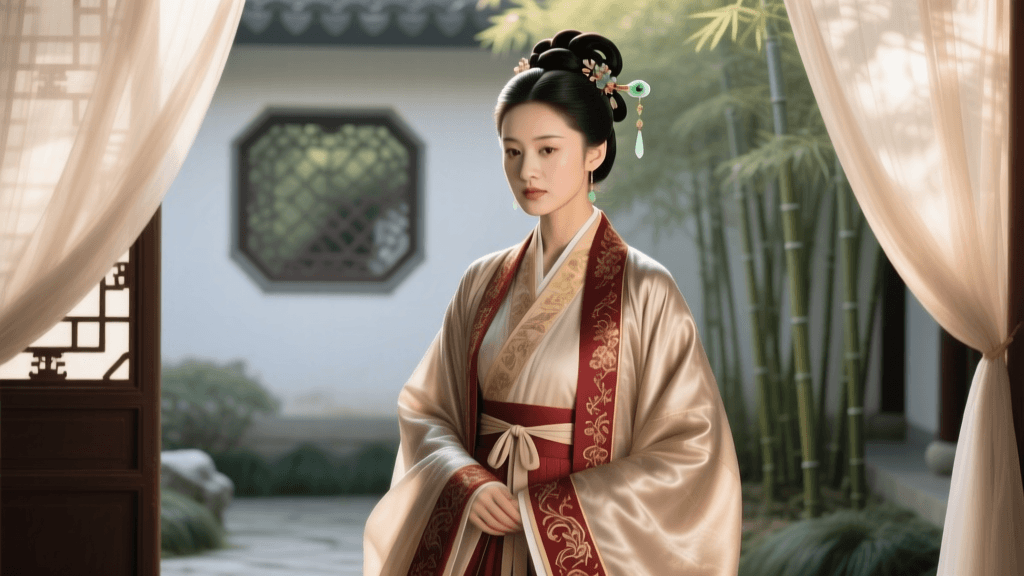
Furthermore, the signature Jiaoling Youren (cross-collar, right over left) of Hanfu is not merely aesthetic; it is deeply rooted in Yin and Yang philosophy. The left side (Yang) covers the right side (Yin), symbolizing the harnessing of active energy by receptive stillness—a core tenet of seated meditation and internal alchemy.
Top Hanfu Silhouettes for Meditation and Qigong
Choosing the right silhouette depends on whether your practice is dynamic (active Qigong) or static (seated meditation). Here are the top styles favored by wellness practitioners in 2026.
1. The Daopao (Daoist Robe) for Deep Meditation
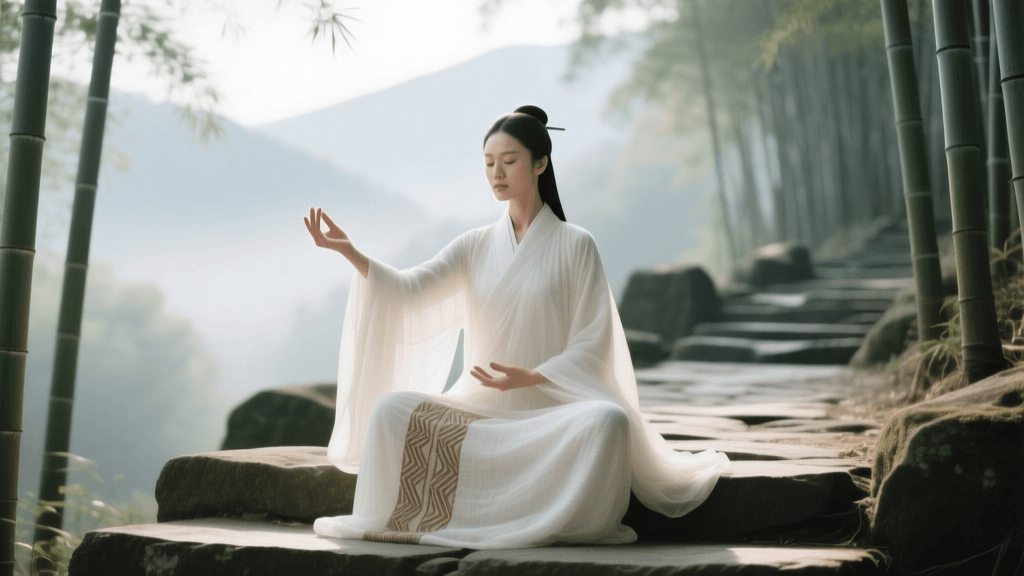
The Daopao is a wide-sleeved, full-length robe traditionally worn by Daoist scholars and monks. For seated meditation, the Daopao is unparalleled. Its expansive sleeves allow the arms to rest in the lap or in mudra positions without pulling the fabric taut across the shoulders. The voluminous skirt pools around the legs, creating a grounded, insulated base that keeps the lower dantian (the body's energetic center) warm and protected from drafts during long sitting sessions.
2. Duan Da and Yese for Active Qigong
For dynamic practices like Ba Duan Jin (Eight Brocades) or Wu Qin Xi (Five Animal Frolics), a full-length robe can be a tripping hazard. The Duan Da (short clothes) paired with a Yese (a traditional pleated or wrap skirt worn over trousers) offers the perfect balance. The trousers allow for deep stances and wide leg sweeps, while the tunic top remains loose enough to facilitate the deep abdominal breathing required to coordinate breath with movement.
3. The Mamian Qun (Horse-Face Skirt) for Grounding
While often seen as formal wear, a lightweight, unlined Mamian Qun made from raw hemp is highly favored by female practitioners for standing meditation (Zhan Zhuang). The structured, flat panels at the front and back provide a sense of physical grounding and postural alignment, while the pleated sides allow for complete freedom of movement in the hips and knees.
2026 Fabric Guide: Choosing Materials for Energetic Breathability
In 2026, the Hanfu market has seen a massive shift toward sustainable, bio-washed, and ethically sourced natural fibers. Synthetic blends are strictly avoided in wellness circles, as they are believed to generate static electricity that disrupts the body's bio-magnetic field. Below is a comparison of the top fabrics used in wellness-focused Hanfu.
| Fabric Type | Breathability | Traditional Qi Property | 2026 Avg. Market Price (USD) |
|---|---|---|---|
| Enzyme-Washed Hemp | Exceptional | Clears heat, grounds Yang energy, highly durable. | $85 - $140 per yard |
| Ahimsa (Peace) Silk | High | Nourishes Yin, calms the Shen (spirit), temperature regulating. | $110 - $180 per yard |
| Raw Ramie | Very High | Disperses dampness, ideal for humid climates and active sweat. | $60 - $95 per yard |
| Organic Unbleached Cotton | Moderate | Neutral, gentle on the skin, good for foundational layers. | $35 - $55 per yard |
Editor's Note on Ahimsa Silk: Traditional silk production involves boiling the cocoon, which some practitioners feel imbues the fabric with stagnant energy. The 2026 wellness standard is Ahimsa silk, where the moth is allowed to emerge naturally before the cocoon is harvested. This results in a slightly slubbed, raw texture that is incredibly soft and energetically "clean" for meditation.
Color Theory in TCM and Hanfu Selection
As defined by Encyclopedia Britannica, Qigong is a system of deep-breathing exercises and meditation designed to cultivate and balance Qi. A vital, yet often ignored, component of this cultivation is color therapy, rooted in the Five Elements (Wu Xing) theory of TCM. When selecting your Hanfu for specific meditative intentions, consider the following color associations:
- Green (Wood Element): Associated with the Liver and Gallbladder. Wearing green Hanfu during spring or morning practices helps soothe frustration, promote the smooth flow of Qi, and encourage visionary thinking.
- Red (Fire Element): Associated with the Heart. Best worn in moderation or as an inner layer during winter meditation to stimulate joy, circulation, and Shen (spirit) vitality.
- Yellow/Earth Tones (Earth Element): Associated with the Spleen and Stomach. Ideal for grounding practices, digestion-focused Qigong, and fostering a sense of stability and empathy.
- White/Metallic (Metal Element): Associated with the Lungs. Perfect for breathwork (Tu Na) and grief-release meditation, promoting clarity, boundaries, and respiratory health.
- Black/Deep Blue (Water Element): Associated with the Kidneys. Worn for deep, restorative Yin meditation, winter retreats, and cultivating willpower and deep energetic reserves.
Footwear: The Thousand-Layer Sole for Grounding
No wellness Hanfu ensemble is complete without proper footwear. Modern rubber-soled shoes insulate the body from the earth's natural electrical charge, blocking the grounding effect essential for standing Qigong. In 2026, there has been a major resurgence in traditional Bu Xie (cloth shoes) featuring the "thousand-layer sole."
These soles are made by stitching together dozens of layers of cotton and hemp, sealed with natural tung oil. They provide enough protection from rough surfaces while remaining thin and flexible enough to allow the reflexology points on the soles of the feet (particularly the Yongquan KD-1 acupressure point) to maintain a sensory connection with the ground. This connection is vital for "rooting" in Tai Chi and drawing earth Yin energy upward during meditation.
Building Your 2026 Wellness Wardrobe
Transitioning to a Hanfu-based wellness wardrobe does not require an immediate overhaul. Start by investing in a high-quality, enzyme-washed hemp Duan Da set for your active morning routines. For your evening seated meditation, a simple, unlined Ahimsa silk Daopao in a calming Earth or Water tone will transform your practice. Pay attention to the sensory feedback of the fabric against your skin; the goal is to remove all physical distractions so that your mind can fully descend into the dantian.
By aligning your external garments with the internal philosophies of traditional Chinese wellness, you create a holistic sanctuary. In 2026, Hanfu is no longer just a historical costume or a fashion statement—it is a functional, living tool for somatic healing, energetic alignment, and profound inner peace.