Kyoto Kimono Craft: Nishijin Weaving & Yuzen Dyeing Workshops
The Heartbeat of the Kimono: Kyoto’s Textile Heritage
Kyoto is universally recognized as the cultural heart of Japan, and nowhere is this more evident than in its meticulous preservation of traditional garment crafts. The creation of a single, high-quality kimono is not the work of one individual, but rather a symphony of specialized artisans. From the spinning of raw silk to the weaving of intricate patterns and the delicate application of resist dyes, the journey of a kimono is a masterclass in patience and precision. For textile enthusiasts, fashion historians, and cultural travelers, participating in a traditional artisan workshop in Kyoto offers an unparalleled, hands-on understanding of Japanese sartorial heritage.
While the city boasts numerous craft disciplines, the two foundational pillars of kimono creation are Nishijin-ori (Nishijin weaving) and Kyo-Yuzen (Kyoto Yuzen dyeing). Understanding the distinction between these two crafts, and knowing how to engage with the workshops that teach them, is essential for anyone looking to deeply appreciate Asian textile traditions.
Nishijin-ori: The Symphony of the Jacquard Loom
Nishijin-ori translates to 'the weaving of Nishijin,' a district in northwestern Kyoto. The history of this textile dates back over a thousand years to the Heian period (794–1185), when imperial weavers created luxurious fabrics for the aristocracy. Following the devastating Onin War in the 15th century, weavers returned to the Nishijin area and revitalized the industry, incorporating advanced techniques from the Asian mainland.
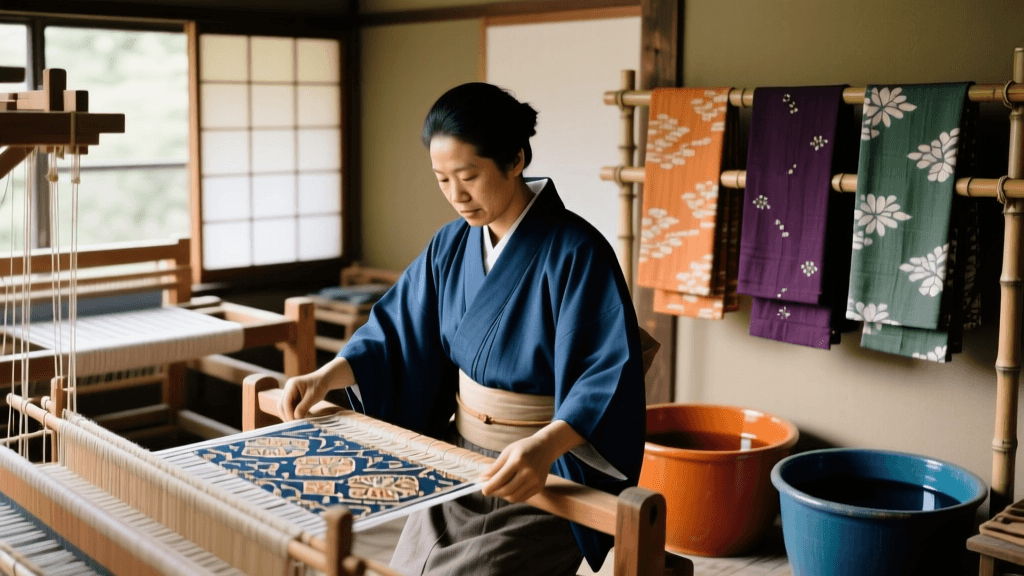
Today, Nishijin is most famous for its opulent obi (kimono sashes). A formal Nishijin obi is a structural marvel, often woven with kinran (gold leaf threads) and ginran (silver threads) to create raised, brocade-like patterns. The weaving process utilizes massive, computer-assisted Jacquard looms, though the design, thread preparation, and tension management remain entirely reliant on human expertise. According to the Nishijin Textile Center, the creation of a single, high-end brocade obi can take an artisan several months of continuous labor, resulting in a garment piece that often costs more than the kimono itself.
The Weaving Workshop Experience
For visitors, Nishijin weaving workshops focus on the rhythmic, tactile experience of the loom. Because mastering the Jacquard loom takes years, tourist and beginner workshops typically utilize smaller, traditional handlooms. Participants learn to pass the shuttle (hi) through the warp threads and use the reed (osa) to beat the weft into place. The most common output for a beginner is a woven coaster or a small table mat, utilizing pre-dyed silk or cotton threads to create geometric, striped patterns.
Kyo-Yuzen: Painting with Resist and Dye
If Nishijin weaving is about structural geometry, Kyo-Yuzen is about fluid artistry. Developed in the late 17th century by a fan painter named Miyazaki Yuzensai, this technique revolutionized Japanese fashion. Prior to Yuzen, complex patterns were achieved through laborious embroidery or rigid weaving. Yuzen allowed artisans to 'paint' directly onto silk, creating sweeping, pictorial designs of nature, seasons, and literature.
The Kyo-Yuzen process is a grueling, multi-step endeavor. It begins with itome-nori, a meticulous application of rice-paste resist along the outlines of a design. This paste acts as a dam, preventing different colors from bleeding into one another. Once the outlines are set, artisans use brushes to apply vibrant dyes within the boundaries. The fabric is then steamed to fix the colors, and finally washed in cold water—historically done in the Kamo River, a practice that has now moved to specialized studio vats to protect the local ecology. The Victoria and Albert Museum's Asian collections frequently highlight Kyo-Yuzen pieces as prime examples of how Japanese garments serve as wearable canvases, reflecting the specific season and occasion of the wearer.
The Dyeing Workshop Experience
Yuzen workshops are inherently messier and more interactive than weaving sessions. Participants are usually provided with a pre-stretched silk item, such as a folding fan, a scarf, or a small tote bag, with the itome-nori resist lines already applied by a master artisan. The visitor's role is to select their color palette and carefully fill in the design using fine brushes. This requires a steady hand and an understanding of how wet dyes blend and gradient on silk.
A Practical Guide to Artisan Workshops in Kyoto
Engaging with these traditional crafts requires some logistical planning. Workshops are often run by working studios or heritage preservation centers, meaning space is limited and schedules are strict. Below is a structured comparison to help you choose the right experience for your travel itinerary.
| Feature | Nishijin Weaving Workshop | Kyo-Yuzen Dyeing Workshop |
|---|---|---|
| Primary Location | Nishijin District (Kamigyo Ward) | Muromachi / Shimogyo Wards |
| Duration | 45 - 60 Minutes | 90 - 120 Minutes |
| Average Cost | 2,000 - 3,500 JPY | 3,500 - 6,000 JPY |
| Primary Output | Woven Coaster or Small Mat | Painted Silk Fan, Scarf, or Tote |
| Mess Factor | Low (Dust and thread only) | High (Dyes and rice paste) |
| Skill Required | Basic rhythm and patience | Steady hand for brushwork |
| Drying/Finishing | Take home immediately | Requires studio steaming (pick up next day or ship) |
Essential Tips for Workshop Attendees
- Book in Advance: English-speaking guided workshops are highly sought after. Reserve your spot at least three to four weeks prior to your visit, especially during the spring cherry blossom and autumn foliage seasons.
- Dress Appropriately: For Yuzen dyeing, wear dark clothing that you do not mind getting stained. While studios provide aprons, silk dyes are notoriously unforgiving on cotton and linen.
- Cash is King: While major heritage centers accept credit cards, many smaller, family-run artisan studios in Kyoto still operate on a cash-only basis. Always carry sufficient Yen.
- Shipping Logistics: Because Yuzen items require steaming and washing after you paint them, you usually cannot take your finished piece home the same day. Most studios offer international shipping via EMS for an additional fee of 2,000 to 4,000 JPY.
Identifying and Purchasing Authentic Crafts
Whether you are buying a finished kimono, an obi, or a smaller textile souvenir, it is vital to know how to identify authentic, master-crafted items versus mass-produced, machine-printed alternatives. The Japanese government takes the protection of its cultural heritage seriously. The Ministry of Economy, Trade and Industry (METI) designates specific items as Dento Kogei (Traditional Crafts).
When shopping in Kyoto, look for the official Dento Kogei mark—a circular sticker featuring a stylized character that certifies the item was made using traditional techniques, traditional materials, and by artisans in the designated region. The Kogei Japan portal provides a comprehensive database of these certified crafts, serving as an excellent reference for serious collectors. Authentic Nishijin brocade will have a heavy, structured drape and a distinct, raised texture on the reverse side. Authentic hand-painted Yuzen will feature the tell-tale itome (white resist lines) separating colors, and the dye will penetrate entirely through to the back of the silk, unlike surface-level digital printing.
'To wear a kimono is to wrap oneself in the seasons, but to create one is to wrap oneself in history. The artisan does not merely make a garment; they archive the cultural memory of Japan.' — Kyoto Textile Heritage Proverb
Conclusion
Participating in a Nishijin weaving or Kyo-Yuzen dyeing workshop is more than a simple tourist activity; it is an act of cultural preservation. By supporting these artisan workshops, travelers contribute to the economic viability of traditional crafts, ensuring that the skills required to create the Asian world's most iconic garment continue to be passed down to the next generation. Whether you are rhythmically beating the weft on a wooden loom or carefully brushing indigo dye onto a silk fan, you are actively participating in a living, breathing tradition that has defined Japanese elegance for centuries.