Master Kimono Making: Japan Schools vs Apprenticeships 2026
The Renaissance of Japanese Garment Education in 2026
The preservation and evolution of traditional Japanese garments have reached a critical and exciting inflection point in 2026. As the global fashion industry increasingly values sustainability, artisanal craftsmanship, and cultural heritage, the demand for authentic kimono-making skills has surged. However, aspiring designers and textile artists face a pivotal decision: should they pursue the rigorous, immersive path of a traditional apprenticeship in historic craft hubs like Kyoto and Kanazawa, or should they enroll in a formalized, contemporary fashion institution like Bunka Fashion College in Tokyo? This comprehensive guide explores the nuances, costs, and realities of Japanese fashion education and apprenticeship programs in 2026, helping you choose the right pathway to master the art of the kimono.
The Traditional Apprenticeship (Deshi) Pathway
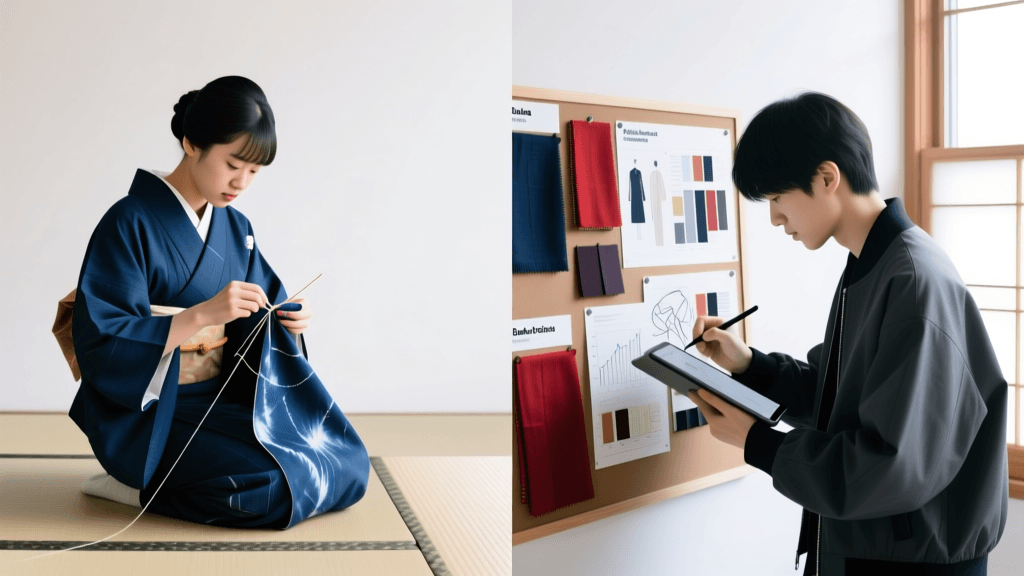
The deschi (apprentice) system remains the most authentic way to learn the deeply guarded secrets of Japanese textile arts. In 2026, the Japanese government, recognizing the severe aging of the artisan population, has heavily subsidized apprenticeship programs through the Ministry of Economy, Trade and Industry (METI). According to the Ministry of Economy, Trade and Industry (METI), the "Next-Gen Artisan" grant now provides eligible domestic and international apprentices with a monthly stipend of 150,000 JPY to offset the notoriously low starting wages in traditional workshops.
Apprenticeships are highly specialized. You do not simply learn "kimono making"; you dedicate yourself to a specific micro-craft. In Kyoto’s Nishijin district, you might spend five years solely mastering the threading of a jacquard loom for Nishijin-ori (brocade weaving). In Kanazawa, your apprenticeship might focus entirely on Kaga-yuzen, a meticulous resist-dyeing technique. The sensory experience of these workshops is unparalleled. Apprentices wake before dawn, breathing in the sharp, earthy scent of fermented sukumo (indigo leaves) in the dye vats, and spend their days listening to the rhythmic, deafening clack of wooden looms while feeling the smooth, cool tension of Tango chirimen (crepe silk) stretched across bamboo frames.
The master-disciple dynamic is intense and deeply rooted in Zen spirituality and hierarchical respect. Communication is often non-verbal; apprentices are expected to "steal" the master’s techniques through intense observation rather than direct instruction. While this method produces artisans of unmatched skill and spiritual discipline, it requires immense patience, physical endurance, and a willingness to spend the first two years primarily doing studio maintenance, washing brushes, and preparing rice-paste resist (itome-nori) before ever touching a silk bolt.
Formal Education: Bunka Fashion College and University Tracks
For those seeking a more structured, time-bound, and globally integrated education, formal institutions offer a compelling alternative. Bunka Fashion College in Tokyo remains the premier institution for fashion in Japan. In 2026, Bunka’s Department of Traditional Arts and Kimono Design has revolutionized its curriculum by blending ancestral techniques with cutting-edge technology. Students now learn flat-pattern kimono drafting alongside 3D drape simulation software, allowing them to visualize how heavy brocades will fall on the human body before cutting expensive silk.
Furthermore, Bunka’s 2026 "Digital Heritage" module utilizes LiDAR scanning and AI-assisted pattern grading to archive and reproduce vintage Edo-period kosode (early kimono). This appeals to international students who want to understand the historical architecture of the garment while applying it to modern, sustainable fashion contexts. Similarly, Kyoto Seika University offers a four-year degree in Traditional Arts, focusing heavily on the philosophical and historical contexts of Japanese aesthetics, such as wabi-sabi and iki, alongside practical studio time in shibori (tie-dye) and sashiko (decorative reinforcement stitching).
The formal school environment is collaborative, fast-paced, and heavily focused on portfolio development and industry networking. Students participate in annual runway shows where traditional kimono silhouettes are often deconstructed and merged with contemporary streetwear, reflecting the dynamic international design scene of 2026.
Comparative Analysis: Apprenticeship vs. Formal Schooling
Choosing between a workshop in Kyoto and a classroom in Tokyo requires a clear understanding of your career goals. Below is a detailed comparison of the two pathways as they stand in 2026.
| Feature | Traditional Apprenticeship (Deshi) | Formal School (e.g., Bunka Fashion College) |
|---|---|---|
| Duration | 3 to 7 years for mastery | 2 to 4 years (Diploma or Degree) |
| 2026 Estimated Cost | Low tuition, but low wages (offset by METI stipends) | Approx. 1,250,000 JPY per year (Tuition) |
| Primary Focus | Deep mastery of a single micro-craft (e.g., Yuzen dyeing) | Broad garment construction, design theory, and tech integration |
| Teaching Style | Observation, repetition, Zen discipline, non-verbal cues | Structured lectures, critiques, digital labs, collaborative projects |
| Career Outcome | Master Artisan, Heritage Preserver, Independent Atelier Owner | Fashion Designer, Creative Director, Textile Innovator |
Navigating Visas and Language Requirements for 2026
For international students, the bureaucratic landscape in 2026 has become more accommodating to foreign artisans, provided you meet strict language and credential requirements. If you choose the formal school route, you will apply for a standard "Student Visa." Institutions like Bunka require a minimum JLPT (Japanese-Language Proficiency Test) N2 certification, though N1 is highly recommended to grasp the nuanced terminology of traditional textiles, such as the difference between kinsha and ro silk weaves.
For the apprenticeship route, the immigration pathway is more complex but highly rewarding. In recent years, Japan introduced specific visa categories under "Designated Activities" for foreign nationals engaged in the preservation of traditional crafts. To qualify for this in 2026, you must secure a formal contract with a registered Master Artisan recognized by the Agency for Cultural Affairs. You must also prove that your presence contributes to the international promotion or technical preservation of the craft. Securing this visa often requires a Japanese guarantor and a detailed business plan outlining your five-year commitment to the workshop.
Essential Tools and Material Costs in 2026
Whether you are in a formal classroom or a dusty Kyoto workshop, the tools of the trade remain sacred. However, the costs of raw materials have shifted in 2026 due to climate impacts on sericulture and the rising demand for natural dyes. Aspiring artisans must budget for the following essentials:
- Tango Chirimen Silk Bolts (Tanmono): A standard 12-meter bolt of high-grade, unbleached crepe silk now costs between 45,000 and 80,000 JPY, reflecting a 15% increase from previous years due to domestic silkworm farming shortages.
- Yuzen Brushes (Jizome-fude): Handcrafted bamboo and animal hair brushes used for applying resist paste. A professional set of 15 varying thicknesses costs approximately 35,000 JPY and must be maintained daily.
- Natural Indigo (Aizome) Vats: Maintaining a living indigo vat requires sukumo (fermented polygonum tinctorium leaves), sake, and wood ash lye. The initial setup for a professional-grade vat in 2026 costs around 120,000 JPY, requiring daily feeding and temperature monitoring.
- Shinshi (Bamboo Stretchers): Used to keep silk taut during dyeing. A set of 50 adjustable bamboo stretchers with metal pins costs roughly 25,000 JPY and is considered a lifelong investment.
Conclusion: Choosing Your Path to Mastery
The decision between a traditional apprenticeship and a formal fashion school in 2026 ultimately depends on your relationship with time, tradition, and innovation. If your goal is to become a guardian of intangible cultural heritage, willing to submit to the grueling, meditative discipline of the deschi system to achieve flawless execution in a single craft, the workshops of Kyoto and Kanazawa await. Conversely, if you wish to dissect the kimono, understand its structural genius, and recontextualize it for the global, tech-forward fashion market of the late 2020s, institutions like Bunka Fashion College provide the perfect incubator. Both paths are vital to the survival of Japanese traditional garments, ensuring that the legacy of the kimono continues to inspire and endure for generations to come.