Exploring China's Top Hanfu Museums And Exhibitions
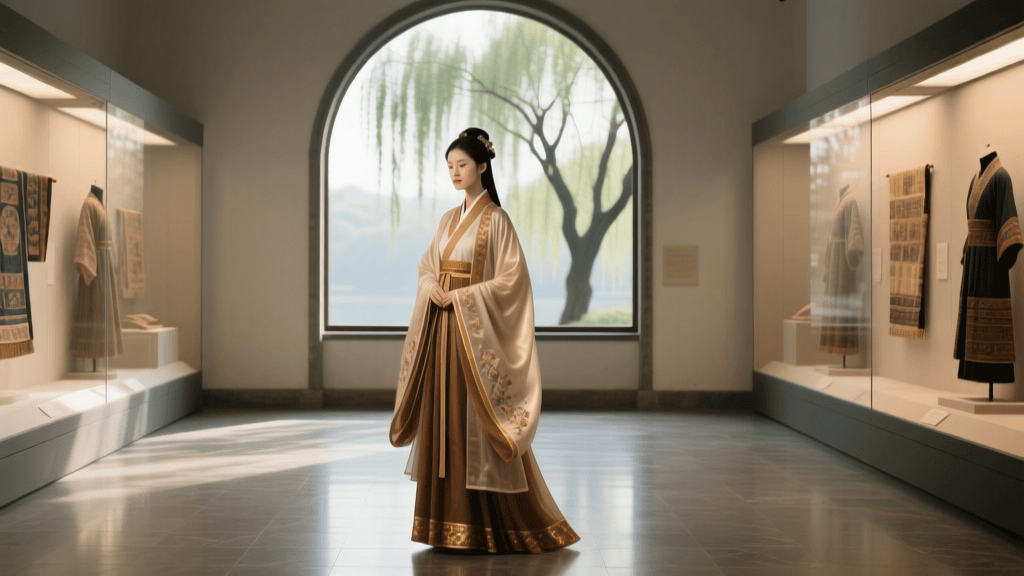
The Role of Museums in the Hanfu Revival
The modern Hanfu movement has transformed from a niche internet subculture into a mainstream cultural phenomenon, driving millions of enthusiasts to seek authentic historical knowledge. While social media provides visual inspiration, the true foundation of traditional Chinese clothing lies in the meticulous preservation efforts of national museums and heritage sites. For historians, designers, and Hanfu practitioners, these institutions serve as the ultimate reference libraries, housing fragile textiles that dictate how modern garments are tailored, layered, and dyed.
Understanding the evolution of Hanfu requires examining original artifacts—from the flowing, lightweight silks of the Han Dynasty to the structured, woven brocades of the Ming Dynasty. According to The Metropolitan Museum of Art, the development of sericulture and complex loom technologies in ancient China not only shaped domestic fashion but also catalyzed global trade networks like the Silk Road. Today, China's specialized textile museums offer an immersive look into this rich sartorial history, providing actionable insights for anyone looking to deepen their understanding of Asian traditions.
Must-Visit Hanfu and Textile Heritage Sites
China National Silk Museum (Hangzhou)
Located near the scenic West Lake, the China National Silk Museum (CNSM) is the largest silk-focused museum in the world and a mandatory pilgrimage for Hanfu enthusiasts. The museum's permanent exhibition, 'Chinese Silk Fashion through the Ages,' chronicles the evolution of textiles from the Neolithic period to the Qing Dynasty.
For Hanfu practitioners, the most valuable section is the conservation laboratory display, where experts demonstrate how fragile excavated garments are stabilized. The CNSM frequently hosts temporary exhibitions featuring specific dynastic aesthetics, such as the intricate pleating techniques of Song Dynasty skirts or the heavy, auspicious motifs of Ming Dynasty mamianqun (horse-face skirts). The museum also houses a specialized library and a retail space offering high-quality, museum-approved replicas and silk accessories.
Fujian Museum and the Huang Sheng Tomb Artifacts (Fuzhou)
While not exclusively a textile museum, the Fujian Museum in Fuzhou holds one of the most significant Hanfu discoveries in Chinese history: the Southern Song Dynasty tomb of Huang Sheng. Excavated in 1975, the tomb yielded over 350 remarkably preserved textiles, providing an unprecedented look into the wardrobe of a Song Dynasty noblewoman.
Enthusiasts visit this exhibition to study the authentic construction of the beizi (a parallel-collar outer jacket) and the qixiong qun (chest-high pleated skirt). The artifacts reveal the Song Dynasty preference for understated elegance, subtle tonal embroidery, and lightweight, breathable weaves suited for the humid southern climate. Observing the actual stitch density and seam allowances of these 800-year-old garments provides modern tailors with exact measurements for historical reproduction.
Chengdu Shu Brocade and Embroidery Museum (Chengdu)
Shu brocade, originating from Sichuan province, is one of China's four famous brocades and was highly prized during the Han and Tang dynasties. The Chengdu Shu Brocade and Embroidery Museum focuses heavily on the mechanical and artistic processes behind these luxurious fabrics.
The museum features operational, traditional wooden draw-looms, allowing visitors to hear the rhythmic clatter of the shuttles and observe the complex two-person weaving technique required to create Han and Tang dynasty patterns. For those interested in the structural foundations of early Hanfu, this museum explains how the width of ancient looms (typically around 50-60 centimeters) dictated the paneling and seaming of traditional robes like the shenyi (deep robe).
Comparative Guide to Major Textile Exhibitions
Planning a heritage tour requires understanding the unique focus, costs, and optimal visiting times for each institution. Below is a structured comparison to help you build your itinerary.
| Museum Name | Location | Primary Textile Focus | Estimated Entry Cost | Best Time to Visit |
|---|---|---|---|---|
| China National Silk Museum | Hangzhou, Zhejiang | Comprehensive Silk History & Conservation | Free (Reservation required) | Spring (March-May) |
| Fujian Museum | Fuzhou, Fujian | Song Dynasty Excavated Garments (Huang Sheng) | Free (Passport required) | Autumn (Sept-Nov) |
| Chengdu Shu Brocade Museum | Chengdu, Sichuan | Han/Tang Brocade & Traditional Looms | ~50 RMB | Year-round (Avoid Oct Holidays) |
| Suzhou Silk Museum | Suzhou, Jiangsu | Jiangnan Weaving & Ming Aesthetics | ~20 RMB | Spring/Autumn |
| Palace Museum Textile Gallery | Beijing | Ming/Qing Imperial Court Garments | 60 RMB (Palace Entry) | Winter (Nov-Feb) for lower crowds |
Actionable Advice for the Hanfu Cultural Traveler
Visiting these heritage sites requires some logistical preparation, especially for international travelers and those wishing to wear Hanfu during their visit.
- Booking and Registration: Most major museums in China, including the China National Silk Museum, are free but require advance booking. You must use WeChat Mini-Programs (search the museum's Chinese name, e.g., 中国丝绸博物馆) to reserve a time slot. Foreign visitors will need to input their passport numbers and present the physical passport at the entrance.
- Wearing Hanfu to Museums: Museums highly encourage visitors to wear traditional clothing, and it makes for excellent photography in the architectural courtyards. However, inside the exhibition halls, be mindful of your garments. Avoid wearing long, trailing skirts (tuodi) that might brush against display cases or trip other visitors. Use skirt guards or hold your hems when navigating crowded corridors.
- Photography Etiquette: Flash photography is strictly prohibited in all textile exhibition halls. The intense light from camera flashes degrades fragile, centuries-old natural dyes. Tripods and selfie sticks are also banned to protect the artifacts and other patrons. Use a smartphone with a good low-light sensor or a camera with a fast lens (e.g., f/1.8) to capture the intricate embroidery without flash.
- Lighting and Display Cases: To protect the textiles, exhibition halls are kept intentionally dim, often utilizing fiber-optic lighting inside the cases. When studying seam constructions, press your face close to the glass (without touching it) to observe the interior finishing and lining techniques of the garments.
Engaging with Intangible Cultural Heritage (ICH)
Beyond static displays, many of these museums serve as active hubs for Intangible Cultural Heritage preservation. The UNESCO Intangible Cultural Heritage list recognizes Chinese sericulture and silk craftsmanship, highlighting the importance of passing down these skills to new generations.
Travelers can participate in hands-on workshops often hosted on museum grounds or in adjacent heritage villages. For a fee ranging from 150 to 400 RMB, visitors can engage in:
- Natural Dyeing: Learning to use indigo, madder root, and pagoda tree buds to dye raw silk fabrics, a crucial skill for understanding the historical color palettes of different dynasties.
- Hand-Loom Weaving: Operating small-scale traditional looms to weave basic tabby and twill weaves, providing a physical understanding of fabric drape and weight.
- Embroidery Basics: Studying regional techniques like Suzhou embroidery (Su Xiu) and Shu embroidery (Shu Xiu), focusing on the stitch types historically used to embellish Hanfu collars and cuffs.
'To truly understand the drape of a Ming Dynasty robe, one must understand the tension of the loom that wove its fabric. Museums bridge the gap between the artifact and the artisan.' — Textile Conservationist, China National Silk Museum.
Global Perspectives and Digital Archives
For those unable to travel to China immediately, global institutions offer incredible resources for studying traditional Chinese garments. The Victoria and Albert Museum in London houses an extensive Asian textile collection, featuring Ming and Qing dynasty robes that showcase the evolution of the aoqun (jacket and skirt) ensemble. Furthermore, many Chinese museums have launched high-resolution digital archives, allowing researchers to zoom in on the microscopic weave structures of ancient silks from anywhere in the world.
Conclusion
Exploring Hanfu museums and cultural exhibitions is an essential step for anyone deeply invested in Asian traditions. These heritage sites do more than preserve the past; they provide the empirical data—measurements, fabric weights, dye formulas, and structural tailoring—that fuels the accurate and respectful revival of traditional Chinese clothing today. By planning your visit carefully, respecting preservation protocols, and engaging with intangible heritage workshops, you can transform your understanding of Hanfu from a visual aesthetic into a profound historical practice.