Decoding Kimono Motifs: Seasonal Colors & Symbolism
The Canvas of Nature: Introduction to Kimono Symbolism
The traditional Japanese kimono is far more than a mere garment; it is a wearable canvas that reflects the wearer's deep connection to the natural world, social standing, and the fleeting passage of time. Unlike Western fashion, which often prioritizes the silhouette, the essence of the kimono lies in its two-dimensional surface. This surface is meticulously decorated with motifs and colors that carry profound symbolic weight. According to the Victoria and Albert Museum, the evolution of these decorative techniques, from intricate weaves to hand-painted dyes, transformed the kimono into a sophisticated medium for visual storytelling.
To understand Japanese traditional dress, one must learn to read its visual language. The motifs adorning a silk houmongi (visiting kimono) or a casual cotton yukata are never chosen at random. They are governed by strict, centuries-old rules of seasonality, poetry, and color theory. Wearing a winter plum blossom motif in the height of summer is considered a significant sartorial misstep, akin to wearing a heavy wool coat in July. This article decodes the complex symbolism of kimono motifs and colors, providing a practical guide for collectors, enthusiasts, and practitioners of Japanese tea ceremony and traditional arts.
The Rule of Anticipation: Timing Your Motifs
The most critical rule of kimono seasonality is the concept of anticipation. In Japanese aesthetics, one should wear a motif just before its corresponding season reaches its peak, never after. This reflects the cultural appreciation for the fleeting, anticipatory beauty of nature—a concept closely tied to mono no aware (the pathos of things).
- Spring Motifs: Begin wearing cherry blossom (sakura) patterns in late February, well before the actual blooms appear in April. Once the real flowers fall, wearing the motif is considered out of season.
- Summer Motifs: Water motifs, sweetfish (ayu), and morning glories (asagao) are introduced in May to visually cool the wearer and observer before the oppressive humidity of the Japanese summer sets in.
- Autumn Motifs: Maple leaves (momiji) and pampas grass (susuki) appear in late August, signaling the coming harvest and the cooling winds.
- Winter Motifs: Pine, bamboo, and plum (shochikubai) are worn through the deep winter, symbolizing resilience and the promise of spring.
Seasonal Motifs and Their Symbolic Meanings
Spring (Haru): Ephemeral Beauty
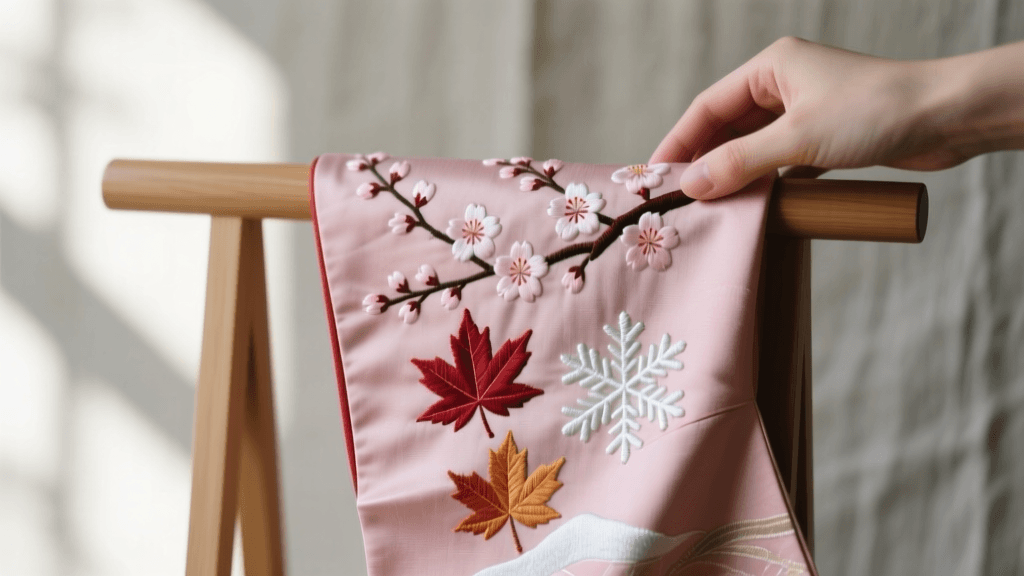
Spring is the most celebrated season in Japanese culture, and its motifs reflect themes of renewal, youth, and fleeting beauty. The cherry blossom (sakura) is the undisputed queen of spring motifs. Often depicted in pale pinks and stark whites, it symbolizes the transient nature of life. Another prominent spring motif is the wisteria (fuji), characterized by cascading purple clusters. Wisteria represents endurance and is often paired with water motifs to evoke the cooling feeling of a gentle spring breeze.
Summer (Natsu): Cooling the Senses
Summer kimono motifs are designed to provide visual relief from the heat. The Metropolitan Museum of Art notes that lightweight, breathable fabrics like ro and sha (gauze weaves) are often dyed with cooling aquatic motifs. Water wheels (gensui), flowing streams, and the seigaiha (blue ocean waves) pattern are ubiquitous. The morning glory (asagao) is another beloved summer flower, blooming only in the cool early hours of the day and fading by noon, perfectly capturing the ephemeral relief of a summer morning.
Autumn (Aki): Harvest and Melancholy
Autumn motifs embrace the changing landscape and the passage of time. The chrysanthemum (kiku) is highly auspicious, representing longevity and rejuvenation, and is closely tied to the Imperial family. Maple leaves (momiji) are depicted in vibrant reds, oranges, and golds, often shown scattering in the wind or floating down a stream, evoking a beautiful, poetic melancholy.
Winter (Fuyu): Resilience and Renewal
Winter motifs focus on flora that survive the harsh cold. The shochikubai trio—pine (matsu), bamboo (take), and plum (ume)—is the ultimate symbol of winter. Pine represents steadfastness and longevity, bamboo symbolizes flexibility and resilience, and the plum blossom, which blooms in the snow, stands for courage and hope. The camellia (tsubaki), with its striking red petals falling whole to the snow-covered ground, is another striking winter motif, though historically avoided by samurai as the falling flower resembled a severed head.
The Alchemy of Color: Dyes and Social Codes
Color in Japanese traditional garments is not merely decorative; it is deeply symbolic and historically regulated. During the Heian period (794–1185), the aristocracy developed kasane no irome, a complex system of layered color combinations that communicated rank, season, and poetic refinement. The subtle peek of a crimson silk lining beneath a pale green outer robe evoked the exact image of spring willow branches.
Natural dyes dictated the color palette for centuries, and their rarity often determined social hierarchy:
"The use of specific dyes, such as the deep purple derived from gromwell root (murasaki) and the rich crimson from safflower (benibana), was strictly controlled by sumptuary laws. These colors were reserved for the highest echelons of the imperial court, while commoners were relegated to muted hues like indigo and hemp brown."
Indigo (Ai): Beyond its visual coolness, indigo was highly practical. It repels insects and masks sweat stains, making it the quintessential color for summer yukata and the workwear of the Edo-period working class. Madder and Safflower (Akanegusa / Benibana): Reds symbolize vitality, protection against evil spirits, and are heavily featured in the furisode (long-sleeved kimono) worn by young, unmarried women during Coming of Age Day. Gold and Silver (Kinpaku / Ginpaku): Applied via delicate leafing or metallic thread weaving, these colors denote celebration, formality, and are reserved for weddings and highly formal tea ceremonies.
Practical Guide: Sourcing, Sizing, and Investing
For those looking to build a functional, seasonally accurate kimono wardrobe, understanding the market, measurements, and lead times is essential. Whether you are buying vintage or commissioning a bespoke piece, here is what you need to know.
Sizing and Measurements
Unlike Western clothing, kimonos are constructed from standard bolts of fabric called tanmono. The standard width of a bolt is roughly 36 to 38 centimeters (about 14-15 inches). Because the garment is wrapped and folded, the critical measurement is the mitake (total body length). For a proper fit that allows for the ohashori (the waist fold that adjusts the length), the kimono's total length should be roughly equal to your height. If you are 165 cm tall, look for a vintage kimono with a mitake of 160-165 cm.
Costs and Sourcing
- Vintage Silk Komon (Everyday Kimono): Ideal for casual outings and practice. Sourced from Kyoto recyclers or online Japanese auctions, Showa-era (1980s-1990s) pieces in excellent condition typically cost between $80 and $150 USD. Allow 1-2 weeks for international shipping.
- Vintage Houmongi (Visiting Kimono): Featuring elegant, continuous motifs that flow across the seams. High-quality vintage pieces with seasonal motifs like autumn maple or spring wisteria range from $250 to $600 USD.
- Bespoke Artisanal Yuzen Kimono: Commissioning a modern, hand-painted silk kimono from a certified Kyoto artisan is a major investment. Prices start at $4,500 and can exceed $12,000 USD. The tailoring and dyeing process requires a lead time of 4 to 6 months. If you need a winter plum blossom kimono for a January event, you must place your order by July.
Tailoring (Shitate)
If you purchase a vintage kimono that requires resizing, or if you buy a new, unsewn tanmono bolt, you will need professional tailoring. A standard shitate (sewing) service costs between $150 and $300 USD and takes approximately 2 to 3 weeks. Ensure your tailor uses traditional hand-sewing techniques (wasai), which allow the garment to be completely taken apart for cleaning and re-dyeing in the future.
Seasonal Motif and Color Matrix
Use this quick-reference table to ensure your kimono choices align with traditional Japanese seasonality.
| Season | Primary Motifs | Symbolic Colors | Wearing Window |
|---|---|---|---|
| Spring | Cherry Blossom, Wisteria, Peony | Pale Pink, Soft Green, Lavender | Late Feb - Mid April |
| Summer | Water Wheels, Morning Glory, Sweetfish | Indigo, Aqua, Crisp White | May - August |
| Autumn | Maple, Chrysanthemum, Pampas Grass | Madder Red, Ochre, Gold | Late Aug - November |
| Winter | Pine/Bamboo/Plum, Camellia, Snow Rings | Deep Crimson, Pine Green, White | December - Early Feb |
Conclusion
The traditional Japanese kimono is a masterclass in the harmonious integration of art, nature, and social etiquette. By understanding the intricate symbolism of its motifs and the historical weight of its colors, wearers do more than simply dress themselves; they participate in a centuries-old dialogue with the natural world. Whether you are draping a vintage indigo yukata to escape the summer heat or investing in a bespoke silk houmongi adorned with autumn chrysanthemums, respecting the rules of seasonality and color ensures that you honor the profound legacy of Japanese textile arts. For further exploration of historical textile techniques, the Japanese Architecture and Art Net Users System (JAANUS) remains an invaluable dictionary for decoding specific motif terminologies and their artistic lineages.