Bespoke Zori & Geta Craft: 2026 Kyoto Buying Guide
The Renaissance of Japanese Footwear Craft in 2026
The global fashion landscape of 2026 has witnessed an unprecedented resurgence in the appreciation for heritage craftsmanship, particularly within the realm of traditional Japanese footwear. Once relegated primarily to ceremonial occasions, summer festivals, or martial arts dojos, bespoke zori and geta have now transcended their historical boundaries. Today, they are celebrated by sustainable fashion advocates, textile collectors, and cultural preservationists worldwide. In Kyoto, the historic heart of Japan's artisanal community, master craftsmen are experiencing a renaissance, blending centuries-old techniques with contemporary ergonomic designs and eco-conscious materials.
Unlike the mass-produced synthetic alternatives that flooded the market in the late 20th century, modern consumers in 2026 are actively seeking out authentic, hand-woven footwear. This shift is driven by a desire for sustainability, durability, and a tangible connection to human artistry. According to historical archives and cultural exhibitions maintained by the Smithsonian National Museum of Asian Art, the evolution of Japanese footwear is deeply intertwined with the country's social hierarchy, spiritual practices, and textile innovations. Understanding this rich history is the first step in appreciating the true value of a bespoke pair of zori or geta.
Understanding the Anatomy: Geta vs. Zori
To commission or purchase traditional Japanese footwear, one must first understand the distinct structural differences between the two primary styles: geta and zori. While both utilize the iconic V-shaped thong, their bases and intended uses vary significantly.
The Geta (Wooden Clogs)
Geta are characterized by their elevated wooden base, known as the dai. The dai is typically carved from a single piece of lightweight wood, such as Paulownia (kiri), Cedar (sugi), or Cypress (hinoki). Beneath the dai are the ha (teeth), which elevate the wearer above the ground. Historically, this kept expensive silk kimonos clean from mud and rain. In 2026, modern geta often feature lower, wider teeth for improved stability on paved urban surfaces, while traditional high-toothed ame-geta (rain geta) remain popular for their striking silhouette and practical weather resistance.
The Zori (Woven Sandals)
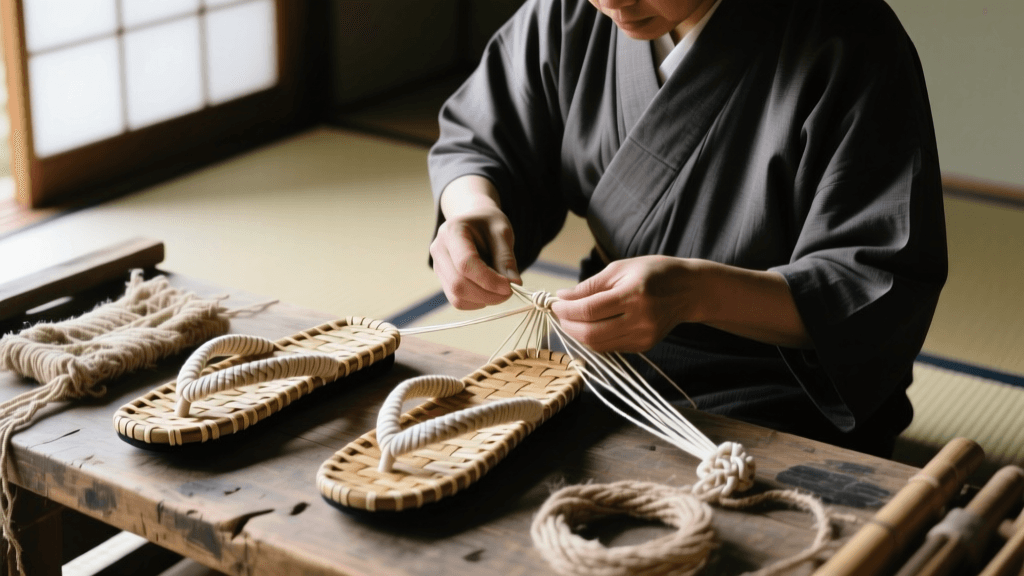
Zori feature a flat, woven base called the omote. The omote can be crafted from a variety of materials, including igusa (woven rush), rattan, bamboo sheath, or even premium leather for formal menswear. Zori are generally considered more formal than geta and are the standard footwear worn with formal kimono ensembles. The flexibility of the woven base allows the foot to grip the sandal naturally, promoting a healthy, grounded walking posture that modern podiatrists have recently begun to praise.
The Soul of the Footwear: Hanao Craftsmanship
The hanao is the V-shaped thong that secures the footwear to the foot. In Japanese culture, the hanao is considered the soul of the shoe. The craft of hanao-suge (thong tying) is a highly specialized skill that requires immense finger strength and precision. A master artisan must pull the inner cords tightly enough to secure the foot without causing friction, while ensuring the outer fabric lies perfectly flat and symmetrical.
In 2026, the materials used for hanao have expanded beyond traditional velvet and silk. Kyoto artisans are now incorporating upcycled vintage kimono silk, ethically sourced leather, and even durable, water-resistant hemp blends for everyday wear. The Kyoto Prefectural Government has recently highlighted several multi-generational workshops that are pioneering these new material blends, ensuring the survival of the hanao-suge craft by adapting it to the demands of modern, active lifestyles.
Traditional Weaving Techniques in the Modern Era
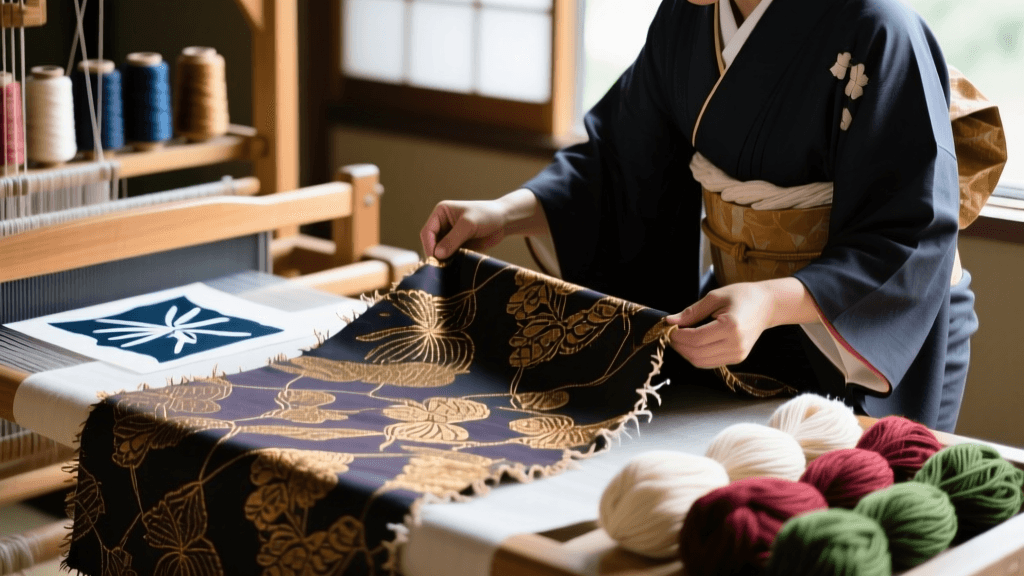
The surface of a high-end zori is a masterclass in textile engineering. The most prized weaving technique is kagami-ami (mirror weave), a complex method that creates a dense, highly durable, and beautifully textured surface. Artisans use a specialized wooden loom, weaving the warp and weft threads so tightly that the base becomes rigid yet slightly yielding to the arch of the foot.
Another prominent technique is sugari-ami, which utilizes twisted hemp or cotton cords to create a ribbed, massaging texture. This technique is particularly favored in 2026 for its ergonomic benefits and its natural breathability during the humid Japanese summers. The weaving process for a single pair of premium kagami-ami zori omote can take an experienced artisan up to four days, highlighting the immense labor value embedded in each pair.
Sustainable Material Sourcing in 2026
Sustainability is no longer a buzzword; it is the operational baseline for Kyoto's premier footwear workshops. The harvesting of Paulownia wood, for instance, is now strictly managed through rotational planting programs that ensure zero deforestation. Paulownia is highly valued not only for its feather-light weight but also for its natural resistance to moisture and warping.
Furthermore, the use of igusa (rush grass) has seen a revival through organic farming initiatives in the Kumamoto and Okayama prefectures. By eliminating chemical pesticides, artisans are producing rush that is safer for the skin and possesses a richer, more enduring natural aroma. Some avant-garde workshops have even begun experimenting with invasive plant species, weaving them into durable casual geta bases as a form of ecological management.
2026 Bespoke Commissioning Guide
For those looking to invest in bespoke Japanese footwear, understanding the current market rates, lead times, and material options is essential. The following table outlines the standard commissioning parameters for Kyoto-based artisans in 2026.
| Footwear Type | Primary Materials | 2026 Price Range (USD) | Lead Time | Best Occasion |
|---|---|---|---|---|
| Formal Zori | Rattan Omote, Silk Hanao | $350 - $600 | 6 - 8 Weeks | Weddings, Tea Ceremonies |
| Casual Geta | Paulownia Dai, Velvet Hanao | $180 - $280 | 4 - 6 Weeks | Yukata, Summer Festivals |
| Artisan Waraji | Organic Hemp, Rice Straw | $120 - $200 | 3 - 4 Weeks | Martial Arts, Cultural Display |
| Bespoke Ame-Geta | Lacquered Cedar, Leather Hanao | $450 - $750 | 10 - 12 Weeks | Formal Rainwear, High Fashion |
Note: Prices reflect direct commissions from master artisans and include custom foot measurements, which are often conducted via 3D scanning apps provided by the workshops in 2026, or through traditional paper tracing templates mailed internationally.
How to Wear, Walk, and Care for Your Footwear
Wearing geta and zori requires a slight adjustment to one's natural gait. Unlike Western shoes that encourage a heel-to-toe rolling stride, traditional Japanese footwear is designed for a flatter, more grounded step. Wearers should aim to lift the footwear using their toes, gripping the hanao gently. This promotes a shorter, more deliberate stride, which inherently improves posture and reduces lower back strain.
Care and Maintenance
Proper care will ensure your bespoke footwear lasts for decades. Follow these essential maintenance guidelines:
- Moisture Control: Never wear silk-hanao zori in heavy rain. If your Paulownia geta become wet, allow them to air dry in a shaded, well-ventilated area. Direct sunlight will crack the wood.
- Cleaning the Omote: Use a soft, dry brush (such as a horsehair shoe brush) to gently sweep away dust from woven rush or rattan surfaces. Never use wet cloths on natural igusa.
- Hanao Maintenance: If the velvet or silk hanao becomes soiled, spot clean with a barely damp microfiber cloth and a mild, pH-neutral detergent. Do not submerge the thong in water.
- Storage: Store your footwear in a traditional kiribako (paulownia wood box) or a breathable cotton bag. Paulownia boxes naturally regulate humidity and deter insects, making them the ultimate storage solution for heritage textiles and woodcrafts.
Conclusion
The craft of bespoke zori and geta is a testament to the enduring legacy of Japanese artisanship. In 2026, as the world increasingly values slow fashion and sustainable practices, these traditional sandals offer a profound alternative to disposable footwear. Whether you are commissioning a pair of formal rattan zori for a wedding or a set of lightweight Paulownia geta for summer evenings, investing in this craft means supporting a lineage of weavers and woodcarvers who pour their soul into every thread and carve. By understanding the anatomy, materials, and care required for these masterpieces, you ensure that this beautiful tradition continues to walk confidently into the future.