Master Kyo-Yuzen Silk Dyeing: Kyoto Artisan Workshops
The Legacy of Kyo-Yuzen Silk Dyeing
Kyoto stands as the undisputed cultural heart of Japan, and nowhere is this more evident than in its historic textile districts. Among the myriad of traditional crafts that define the city, Kyo-Yuzen silk dyeing reigns supreme. Recognized for its breathtaking pictorial designs, vibrant color palettes, and meticulous hand-painted details, Kyo-Yuzen is the premier technique used to create luxury kimono and obi sashes. According to Kogei Japan, the official guide to Japanese traditional crafts, the technique requires the mastery of over a dozen distinct specialized processes, often involving multiple artisans working in concert to finish a single garment.
The origins of this magnificent craft trace back to the late 17th century during the Edo period. A fan painter named Miyazaki Yuzensai revolutionized silk decoration by introducing a free-form, painterly approach to textile design. Prior to his innovations, textiles were largely restricted to geometric weaves, simple tie-dyes, and rigid embroidery patterns. Yuzensai applied a rice-paste resist technique that allowed for intricate, curving, and multi-colored illustrations to be painted directly onto silk, much like a canvas. This breakthrough democratized fashion among the wealthy merchant classes, who used these lavish garments to circumvent the strict sumptuary laws of the Tokugawa shogunate.
Inside the Artisan Workshop: The Yuzen Process
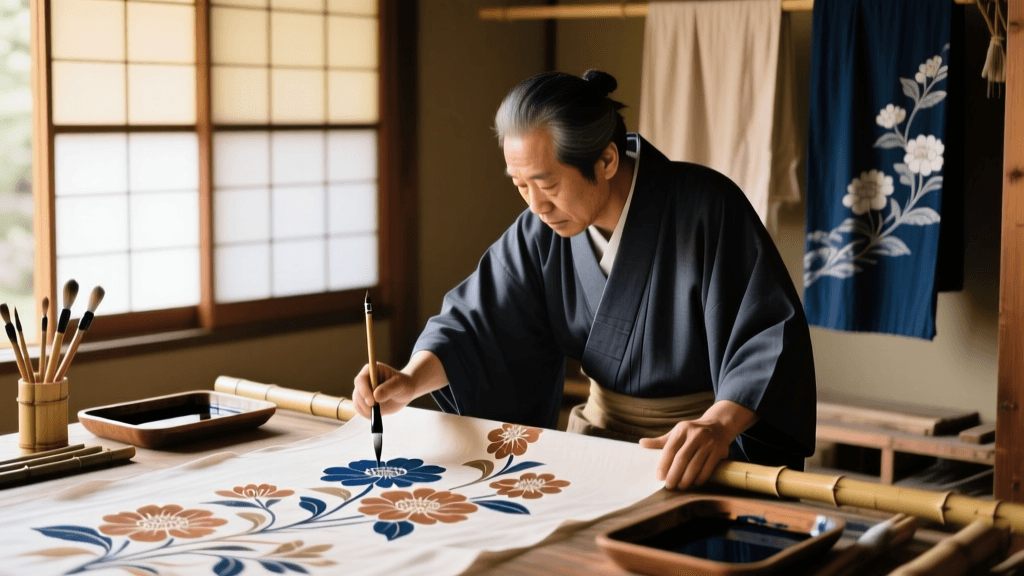
Unlike standard resist-dyeing methods such as batik or tie-dye, the Kyo-Yuzen process is astonishingly complex. A visit to a traditional Kyoto workshop reveals a highly organized space where silk is stretched taut on bamboo frames, and the air is thick with the scent of steam and natural dyes. The creation of a single Kyo-Yuzen kimono can take several months and involves the following critical stages:
- Shita-e (Underdrawing): The artisan sketches the design directly onto the silk using aobana (dayflower juice), which is water-soluble and disappears completely during the final washing stage.
- Itome-nori (Resist Application): Using a specialized metal-tipped funnel called a tsutsu, the artisan traces the underdrawing with a fine line of sticky rice-bran paste. This paste acts as a dam, preventing adjacent colors from bleeding into one another.
- Ji-ire (Base Preparation): The silk is treated with a soybean juice solution to prepare the fibers to accept dye evenly and vibrantly.
- Iro-sashi (Coloring): Artisans use small brushes to paint dyes within the resist boundaries. This step requires an intimate knowledge of color theory and chemical reactions, as the true colors only emerge after steaming.
- Mushi (Steaming): The dyed silk is steamed at high temperatures to fix the pigments into the silk fibers permanently.
- Mizumoto (Washing): Historically done in the icy waters of the Kamo River, the silk is now washed in specialized workshop basins to remove the rice paste and excess dye, revealing the crisp, white outlines that define Yuzen art.
- Jizome (Background Dyeing): Finally, the background of the fabric is dyed using the hikizome technique, where the artisan sweeps a wide brush loaded with dye across the stretched silk.
The philosophy driving these workshops is rooted in the concept of shokunin, or the artisan spirit. This ethos demands not only technical mastery but also a deep spiritual commitment to the craft and a sense of social obligation to preserve cultural heritage. Master dyers often spend decades perfecting a single step of the Yuzen process, such as the precise formulation of the rice-bran paste, which must be adjusted daily based on the ambient temperature and humidity of the Kyoto basin. This hyper-local sensitivity to the environment is what gives Kyo-Yuzen its distinct character, setting it apart from the heavier, more opulent Kaga-Yuzen style produced in Ishikawa Prefecture.
Authentic Tools and Materials Used by Artisans
To truly appreciate the craft, one must understand the specialized tools utilized in these workshops. The Metropolitan Museum of Art notes in its Heilbrunn Timeline of Art History that Japanese textile artisans developed highly specific implements to achieve unparalleled precision. The tsutsu (resist cone) is traditionally made from a brass or copper tip fitted to a waterproofed paper or fabric cone, allowing the artisan to control the thickness of the paste line through hand pressure. For coloring, artisans rely on surikomi-bake, small brushes made from deer hair or horsehair, which hold the liquid dye and release it smoothly onto the tightly woven silk.
The silk itself is typically a high-grade chirimen (crepe) or rinzu (satin damask). Chirimen is favored for its textured surface and excellent drape, which catches the light and gives the dyed colors a deep, luminous quality. The dyes used today are a mix of traditional botanical extracts—such as indigo, safflower, and madder root—and modern synthetic acid dyes, which offer a broader spectrum of colorfast options necessary for contemporary fashion demands.
Planning Your Kyo-Yuzen Workshop Experience
For textile enthusiasts, fashion historians, and travelers seeking immersive cultural experiences, participating in a Kyo-Yuzen workshop is a must-do activity in Kyoto. These workshops range from brief tourist-friendly sessions to intensive multi-day courses for serious students of the craft. When planning your visit, it is crucial to book at least two to three weeks in advance, as artisan studios have limited capacity and often require time to prepare the silk and dyes specifically for your session.
Most introductory workshops allow participants to dye a furoshiki (wrapping cloth), a tenugui (hand towel), or a small silk scarf. You will typically be guided through the itome-nori (resist application) and iro-sashi (coloring) stages, while the studio handles the steaming and washing processes post-visit. Be prepared to spend between 3,000 JPY and 15,000 JPY depending on the size of the item and the exclusivity of the instruction. English-speaking guides are available at major studios, but smaller, family-run ateliers may require you to bring a translator or rely on visual demonstrations.
Workshop Comparison Chart
| Studio Name | Location | Duration | Estimated Cost (JPY) | Output Item |
|---|---|---|---|---|
| Marumasu-Nishimuraya | Nakagyo Ward, Kyoto | 90 - 120 mins | 4,000 - 8,000 | Furoshiki or Silk Scarf |
| Chiso Yuzen Museum | Kamigyo Ward, Kyoto | 120 mins | 10,000 - 15,000 | Tenugui or Tote Bag |
| Kyoto Museum of Traditional Crafts | Higashiyama Ward, Kyoto> | 60 - 90 mins | 3,000 - 5,000 | Handkerchief or Coaster |
| Some-Ryu (Private Atelier) | Fushimi Ward, Kyoto | Full Day (6 hrs) | 35,000+ | Custom Obi or Kimono Panel |
Caring for Hand-Dyed Yuzen Silk
Owning a piece of Kyo-Yuzen silk requires dedicated care to preserve its vibrant colors and structural integrity. Because the silk fibers are protein-based and the dyes are deeply penetrated, improper cleaning can lead to irreversible damage. Never machine wash or aggressively wring Yuzen-dyed silk. For minor stains, spot clean gently with a damp cloth and a pH-neutral silk detergent. For comprehensive cleaning, it is mandatory to take the garment to a specialized kimono cleaner (kimono arai) who understands the delicate nature of the resist-dyed outlines and metallic leaf accents often applied in later stages.
When storing Yuzen silk, avoid wire hangers which can distort the shoulder lines. Instead, fold the garment carefully along its traditional seams, interleaving the folds with acid-free tissue paper to prevent crease marks and dye transfer. Store the wrapped silk in a breathable cotton pouch or a traditional paulownia wood chest (tansu), which naturally regulates humidity and repels insects. Avoid plastic bags, as trapped moisture can lead to mildew, which will rapidly degrade the silk fibers and stain the Yuzen artwork.
Furthermore, it is highly recommended to air out your Yuzen silk garments at least twice a year, ideally during the dry, crisp days of late autumn or early winter. This practice, known as mushiboshi, allows trapped moisture to escape and prevents the growth of mold. Hang the garment in a shaded, well-ventilated area away from direct sunlight, as prolonged UV exposure will cause the vibrant botanical and synthetic dyes to fade unevenly over time.
Preserving Japan's Textile Heritage
The future of Kyo-Yuzen relies heavily on the transmission of skills from master artisans to the next generation. As the demand for everyday kimono has declined in modern Japan, many historic dyeing houses have pivoted to creating contemporary fashion accessories, interior textiles, and art pieces to sustain their livelihoods. Institutions like the Kyoto Museum of Traditional Crafts (Fureaikan) play a vital role in educating the public and supporting these artisans through exhibitions and retail opportunities. By participating in a workshop, purchasing authentic pieces, and sharing the history of Kyo-Yuzen, international enthusiasts directly contribute to the survival of this magnificent Asian tradition.