Hanfu E-Commerce Evolution: From Local Markets to Global Sales
The Historical Roots: Silk Markets and Early Revivalists
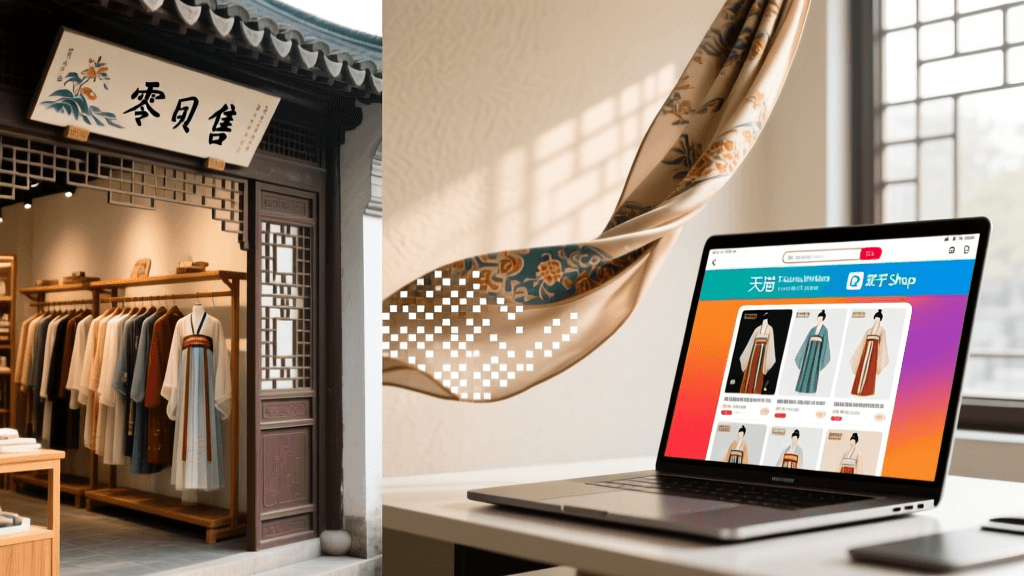
Before the digital revolution transformed traditional Chinese fashion, acquiring authentic Hanfu was a formidable challenge. In the early 2000s, the Hanfu revival movement was largely confined to niche internet forums and small, localized physical markets. Enthusiasts relied on bespoke tailors in cities like Chengdu and Hangzhou, or they scoured traditional silk markets—such as Beijing’s Silk Street or Hangzhou’s China Silk City—to source raw materials. According to The Metropolitan Museum of Art, the historical foundation of these garments relies heavily on the intricate weaving and flat-cutting techniques developed during the Ming Dynasty, techniques that early revivalists struggled to replicate without specialized artisans.
During this nascent stage, physical markets offered limited ready-to-wear options. Buyers had to purchase raw brocade or linen and commission local seamstresses, often providing historical paintings or museum references to guide the tailoring process. This localized, high-friction purchasing model kept Hanfu isolated to a dedicated subculture, with high costs and long lead times preventing mainstream adoption.
The E-Commerce Explosion: Taobao, Tmall, and Brand Scaling
The retail landscape shifted dramatically with the maturation of Chinese e-commerce giants like Taobao and Tmall. By the mid-2010s, Taobao became the incubator for the first generation of dedicated Hanfu brands. E-commerce allowed niche designers to bypass the geographical limitations of physical markets, connecting directly with a nationwide audience of young consumers eager to reclaim their cultural heritage.
Brands like Shisanyu and Zhong Ling leveraged Tmall to scale production, introducing the 'pre-sale' (yushou) model. This e-commerce strategy allowed brands to gauge market demand, collect upfront capital, and manufacture in precise batches, drastically reducing inventory waste. Today, the online Hanfu market is a multi-billion-yuan industry, characterized by sophisticated supply chains, live-streaming sales on Douyin (TikTok), and highly detailed digital storefronts that educate consumers on historical accuracy.
Comparative Analysis: Sourcing Hanfu Across Retail Channels
For modern consumers, understanding the differences between physical markets, domestic e-commerce, and global platforms is crucial for balancing cost, authenticity, and convenience. Below is a structured comparison of the primary retail channels for purchasing Hanfu today.
| Purchasing Channel | Price Range (USD) | Lead Time | Customization | Best Suited For |
|---|---|---|---|---|
| Local Physical Markets (e.g., Silk Street) | $80 - $300+ | Immediate | Low (Alterations only) | Tourists, Immediate Needs, Fabric Sourcing |
| Taobao / Tmall (Direct Domestic) | $30 - $500+ | 3 - 45 Days | High (Pre-sale sizing) | Enthusiasts, Daily Wear, Historical Accuracy |
| Global E-commerce (AliExpress / Amazon) | $40 - $120 | 15 - 30 Days | Low (Standard sizing) | Beginners, Cosplay, Festival Wear |
| Shopping Agents (Superbuy / CSSBuy) | $30 - $500+ | 20 - 40 Days | High (QC & Consolidation) | Intl. Collectors, Accurate Fit, Brand Access |
Practical Buying Guide: Sizing, Fabrics, and Seasonal Choices
Transitioning from browsing to buying requires a solid grasp of traditional garment construction and textile properties. Unlike Western fashion, which relies on tailored, three-dimensional draping, Hanfu is constructed using flat-laid measurements. When shopping on e-commerce platforms, buyers must pay attention to specific metrics and seasonal fabrics.
Mastering Flat-Laid Measurements
- Chest Width (Xiongwei): Measure around the fullest part of your chest. For traditional Hanfu jackets (Ao or Shan), add 10-15 cm to your actual chest measurement to allow for the characteristic cross-collar overlap and comfortable layering.
- Skirt Length (Qunchang): Measure from your natural waist (above the navel) to your desired hemline. For a traditional Mamianqun (horse-face skirt), the skirt should ideally graze the top of the foot, typically requiring a length of 95-105 cm depending on height.
- Sleeve Length (Xiuchang): Traditional sleeves often extend past the fingertips. Measure from the base of the neck, over the shoulder, down to the wrist, and add 10-20 cm for the elegant drape of 'Pipa' or 'Guangxiu' sleeves.
Seasonal Fabric Selection and Costs
The UNESCO Intangible Cultural Heritage registry highlights the profound legacy of Chinese sericulture and silk weaving, which remains central to premium Hanfu production. Choosing the right fabric is essential for comfort and historical authenticity.
- Spring/Autumn: Look for Zhijin (woven gold) or medium-weight jacquard brocades for Mamianqun skirts. These structured fabrics hold the knife-pleats perfectly. Expect to pay $80-$150 for a high-quality, authentic jacquard skirt.
- Summer: Opt for Xiangyunsha (gambiered Canton gauze) or lightweight linen-ramie blends. Xiangyunsha is a premium, breathable silk treated with plant dyes and river mud, often costing $200-$400+ due to its labor-intensive, heritage-crafted nature.
- Winter: Choose wool-blend Mamianqun and lined, quilted jackets (Pifeng) filled with cotton or down. Heavy velvet and faux-fur trims are popular modern adaptations for winter Hanfu, typically priced between $100-$250.
Navigating Cross-Border E-Commerce and Shopping Agents
For international buyers outside of mainland China, direct purchasing can be hindered by language barriers, payment gateways (Alipay/WeChat Pay), and domestic shipping restrictions. This has given rise to a robust ecosystem of 'Shopping Agents' like Superbuy, CSSBuy, and Sugargoo.
Using an agent involves a multi-step process: you paste the Taobao or Tmall product link into the agent’s search bar, they purchase the item on your behalf, and it is shipped to their domestic warehouse. Once it arrives, the agent provides Quality Control (QC) photos—a critical step for checking brocade alignment and pleat stitching. After approval, you pay for international shipping. While this adds a 10-15% service fee and extends the lead time to 3-5 weeks, it grants global consumers access to the exact same high-tier, historically accurate garments sold in the domestic market, bypassing the inflated markups and limited selections often found on Western-facing sites.
The Future of Hanfu Retail: Live-Streaming and Virtual Try-Ons
The evolution from physical silk markets to global e-commerce is far from over. Today, the frontier of Hanfu retail lies in live-streaming and augmented reality. Brands now host daily broadcasts on Douyin and Taobao Live, where hosts demonstrate the intricate layering of garments, explain the historical context of Ming and Qing dynasty motifs—as documented by institutions like the Metropolitan Museum of Art—and offer exclusive flash-sale pricing.
Furthermore, AI-driven virtual try-on technology is beginning to solve the e-commerce sizing dilemma. By inputting precise body measurements, consumers can generate a 3D avatar to visualize how different skirt lengths, sleeve drapes, and color combinations will look in real life. As cross-border logistics continue to improve and digital retail tools become more sophisticated, traditional Chinese garments are no longer confined to historical archives or local markets; they are a thriving, accessible component of the global digital fashion economy.