Mastering Kyo-Yuzen: Inside Kyoto Silk Dyeing Artisan Workshops
The Living Heritage of Kyo-Yuzen Silk Dyeing
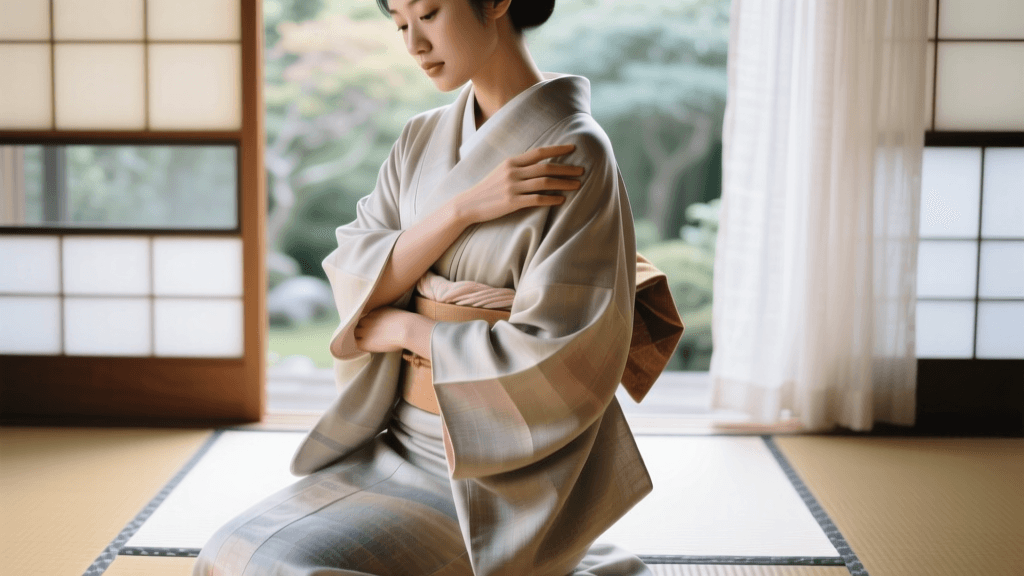
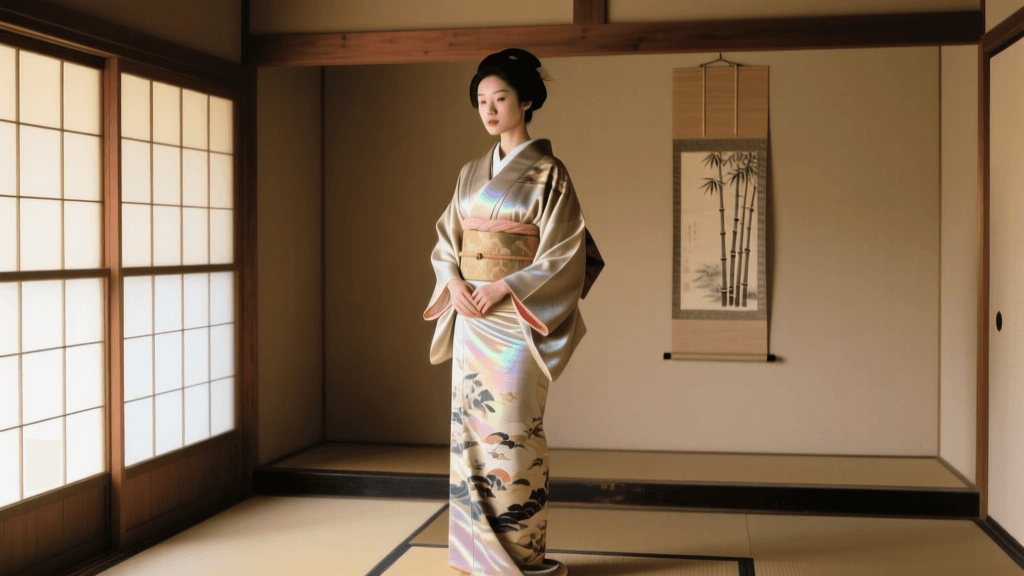
When we think of the exquisite, flowing canvases of traditional Japanese clothing, the mind immediately drifts to the intricate, nature-inspired motifs adorning a formal kimono. At the very heart of this sartorial artistry is Kyo-Yuzen, the preeminent silk dyeing technique born in Kyoto. Unlike woven textiles where the pattern is integrated into the fabric's structure, Yuzen treats the silk as a painter's canvas, allowing for an unparalleled freedom of color, gradient, and pictorial detail. For textile enthusiasts, cultural historians, and travelers seeking authentic engagement with Japanese traditions, stepping inside a Kyoto Yuzen artisan workshop offers a profound glimpse into the soul of the shokunin (master artisan).
The origins of Kyo-Yuzen trace back to the late 17th century, during the Genroku era of the Edo period. It is named after Miyazaki Yuzensai, a master fan painter whose innovative surface-design techniques revolutionized kimono fashion. According to the Metropolitan Museum of Art's Heilbrunn Timeline of Art History, the evolution of Japanese textiles during the Edo period was heavily influenced by shifting social dynamics and strict sumptuary laws. The Tokugawa shogunate frequently banned the merchant class from wearing ostentatious woven brocades and vibrant tie-dyes. In response, Yuzensai's method of applying rice-paste resist and hand-painting directly onto the silk allowed commoners to bypass these restrictions, wearing breathtakingly elaborate, painted garments that looked like fine art.
The Artisan Process: From Sketch to Silk
True tegaki (hand-painted) Kyo-Yuzen is not a solitary endeavor but a highly specialized collaborative process. A single kimono bolt (tanmono) may pass through the hands of a designer, a resist-paste specialist, a colorist, and a background dyer. The Victoria and Albert Museum notes that the kimono is not merely a garment but a complex assembly of artistic disciplines, with surface decoration serving as the primary indicator of formality, seasonality, and the wearer's aesthetic sensibility.
The Step-by-Step Yuzen Technique
To understand the value of a hand-dyed kimono, one must understand the painstaking labor involved in its creation. A traditional workshop will guide observers through these critical phases:
- Shita-e (Underdrawing): The artisan sketches the design directly onto the white silk using a brush and aobana (dayflower) juice. This natural ink is water-soluble and completely vanishes when the fabric is later washed, leaving no trace of the sketch.
- Itome-nori (Rice Paste Resist): Using a specialized metal-tipped cone, the artisan traces the outlines of the design with a thick, sticky rice paste. This creates a physical dam that prevents dyes from bleeding into adjacent areas when color is applied.
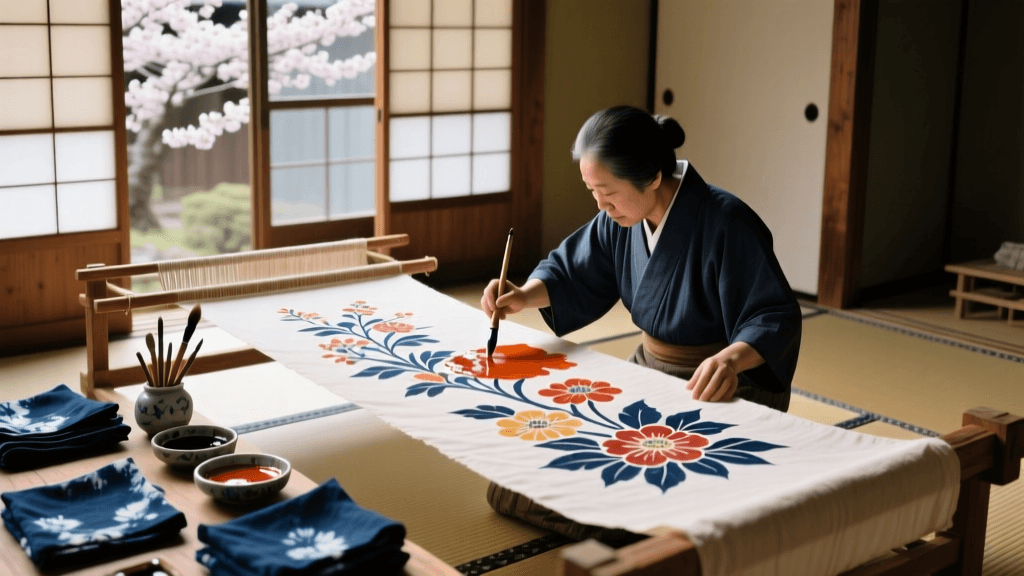
- Iro-sashi (Coloring): Once the paste dries, the colorist applies vibrant chemical or natural dyes using delicate brushes made of deer hair and bamboo. This stage requires an encyclopedic knowledge of color theory, as the artisan must account for how hues shift when the fabric is steamed to set the dye.
- Ji-zome (Background Dyeing): After the detailed motifs are painted and steamed, the entire bolt is stretched taut. The artisan uses wide brushes to sweep a uniform background color across the negative space, a physically demanding task that requires absolute precision to avoid streaks.
- Kinpaku and Shishu (Embellishment): Finally, the piece may be sent to specialists who apply gold leaf (kinpaku) or execute intricate silk embroidery (shishu) to add texture and opulence.
The Shokunin Spirit and Kyoto's Dyeing Geography
The geography of Kyoto is intrinsically linked to its dyeing heritage. Historically, the final stage of Yuzen dyeing involved mizumoto (water washing), where artisans would rinse the rice paste and excess dye from the silk in the cold, rushing waters of the Kamogawa River. The sight of long, vibrant silk bolts streaming in the river current was once a defining visual of Kyoto's changing seasons. Today, due to environmental protection regulations, mizumoto is almost exclusively performed indoors using advanced filtration systems, but the reliance on Kyoto's pure, soft groundwater remains a critical component of the dye's brilliance.
'The spirit of the shokunin is not just about technical mastery; it is a devotion to the material. When we dye silk, we are negotiating with water, temperature, and time. The silk tells us what it needs.' — Master Yuzen Artisan, Nishijin District.
Experiencing a Yuzen Workshop in Kyoto
For visitors to Japan, participating in a Yuzen workshop is a highly recommended way to support traditional crafts and gain a tactile appreciation for the art form. Kyoto offers a spectrum of experiences, from quick tourist-friendly sessions to deep-dive courses for serious textile students.
What to Expect and How to Prepare
Most accessible workshops are located in the Higashiyama ward or the historic Nishijin textile district. When booking a session, consider the following practical advice:
- Timing and Duration: Standard tourist experiences last between 90 minutes and 2 hours. You will typically work on a small, pre-outlined item such as a furoshiki (wrapping cloth), a silk scarf, or a tenugui (hand towel).
- Language Barriers: While some major studios offer English-speaking guides or translated instruction sheets, many smaller, authentic ateliers operate primarily in Japanese. Booking through a cultural concierge service or selecting a studio that explicitly advertises multilingual support is highly advised.
- Clothing: Wear dark, comfortable clothing that you do not mind getting stained. While aprons are provided, the iro-sashi (coloring) stage can be messy, and silk dyes are notoriously difficult to remove from cotton or denim.
- Costs: Prices vary wildly based on the size of the canvas and the prestige of the studio. Expect to pay between 3,500 JPY and 8,000 JPY for a standard 2-hour session. Comprehensive courses that span multiple days and result in a finished obi or kimono panel can exceed 100,000 JPY.
Comparison of Kyoto Yuzen Workshop Experiences
| Workshop Type | Duration | Average Cost (JPY) | Item Created | Best For |
|---|---|---|---|---|
| Introductory Tourist Session | 1.5 - 2 Hours | 3,500 - 5,500 | Silk Scarf, Furoshiki, or Tote | First-time visitors, casual cultural immersion |
| Intermediate Deep-Dive | 4 - 6 Hours | 15,000 - 25,000 | Obi-age (scarf) or Haori panel | Textile students, serious hobbyists |
| Master Apprenticeship | Multiple Days/Weeks | 80,000+ | Full Kimono Bolt (Tanmono) | Researchers, dedicated artisans, collectors |
Caring for Hand-Dyed Yuzen Silk
Acquiring a hand-dyed Yuzen piece, whether through a workshop or a vintage kimono dealer, requires an understanding of traditional garment care. Because the dyes are deeply set into the protein fibers of the silk, and because the fabric may feature delicate gold leaf or embroidery, standard dry cleaning is often detrimental. The Metropolitan Museum of Art emphasizes that the structural integrity and surface design of historical and high-end kimono require specialized conservation and care techniques.
In Japan, the gold standard for cleaning Yuzen silk is maru-arai (full wash). This is a highly specialized service where a master cleaner disassembles the kimono at the seams, washes each flat panel using specialized solvents and natural agents to lift oils and stains without disturbing the dye or resist lines, and then re-stretches and re-sews the garment. For minor spot cleaning, artisans use a technique called shimi-nuki, applying targeted chemical agents with bamboo spatulas. Never attempt to wash a Yuzen silk garment in water at home, as the water-soluble sizing and certain natural dyes will bleed instantly, ruining the artisan's meticulous color separation.
Preserving the Craft for Future Generations
The future of Kyo-Yuzen, like many traditional Japanese crafts, faces significant challenges. The declining domestic demand for everyday kimono wear, coupled with an aging population of master artisans, has put immense pressure on the industry. However, a new wave of young designers and international textile enthusiasts is helping to revitalize the craft. By participating in workshops, commissioning bespoke pieces, and educating themselves on the profound history of these techniques, global consumers play a direct role in ensuring that the vibrant legacy of Kyoto's silk dyeing ateliers continues to flow for centuries to come.