Edo Period Kimono Fashion: History, Styles, and Modern Sizing Guide
The Dawn of the Modern Kimono: The Edo Period (1603–1867)
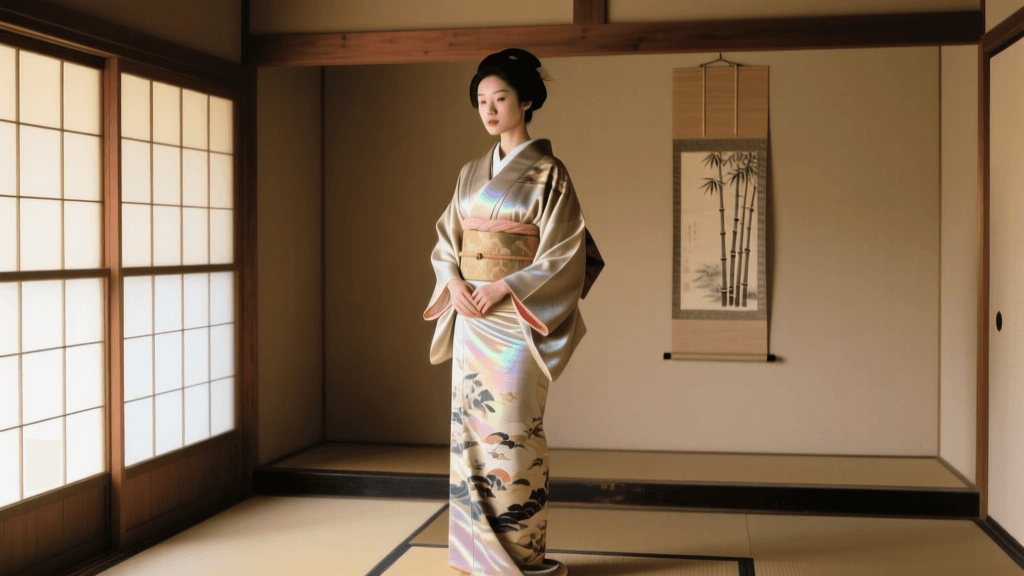
The Edo period stands as a monumental era in the history of Japanese traditional garments. Under the stable but strictly regulated rule of the Tokugawa shogunate, Japan experienced over two and a half centuries of peace, economic growth, and profound cultural development. It was during this time that the foundational silhouette of the modern kimono was established, evolving from a humble undergarment into a canvas of extraordinary artistic expression. For modern collectors, cultural enthusiasts, and practitioners of traditional Japanese arts, understanding Edo period fashion is essential for accurately sourcing, sizing, and wearing historical garments today.
According to the Victoria and Albert Museum, the Edo period marked the transition of the kosode (a robe with small sleeve openings) from an under-robe worn by the aristocracy into the primary outer garment for all classes. As the kosode became the outermost layer, the need for decorative brilliance shifted from the layering of multiple robes (as seen in the Heian period) to the surface design of a single, magnificent garment.
Sumptuary Laws and the Birth of Iki
To understand Edo fashion, one must understand the strict sumptuary laws enacted by the shogunate. These laws dictated what different social classes could wear, severely restricting the merchant class (chonin) from displaying overt wealth through flashy colors or expensive gold-thread brocades. In response, the merchant class developed the sophisticated aesthetic of iki—a concept of subtle, understated elegance and quiet rebellion.
This led to the creation of Edo-komon, a micro-pattern dyeing technique where tiny, intricate motifs were stenciled onto silk. From a distance, an Edo-komon kimono appeared to be a solid, modest color, thus obeying the letter of the law. Up close, however, the fabric revealed thousands of meticulously dyed dots forming auspicious patterns. Furthermore, merchants would line their subdued outer garments with outrageously expensive, hand-painted silk, keeping their true wealth hidden against their skin. This historical context remains vital today when evaluating the craftsmanship and value of antique textiles.
The Transformation of the Obi
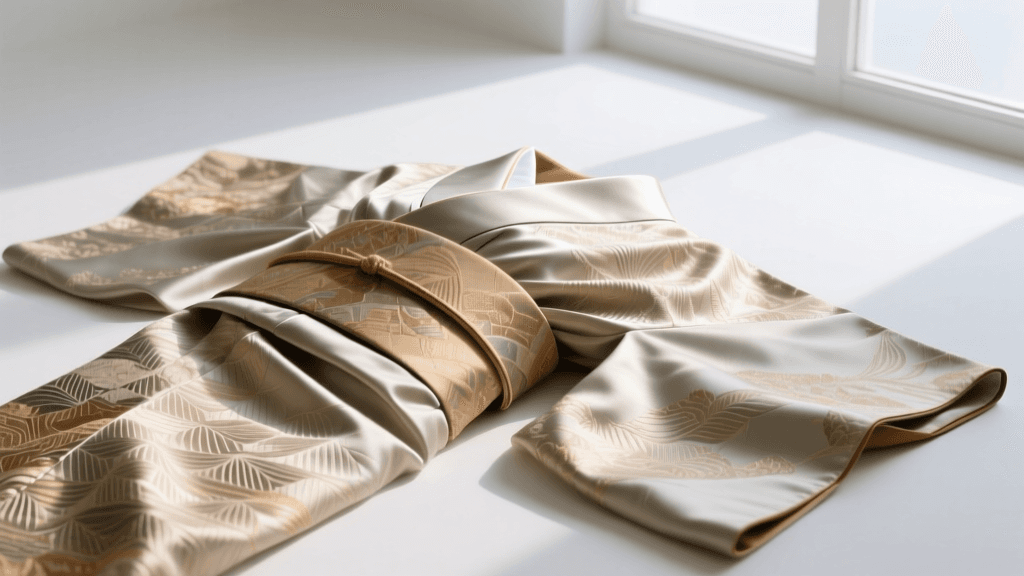
Perhaps the most dramatic sartorial shift of the Edo period was the evolution of the obi. In the early 1600s, the obi was a narrow, practical sash used simply to hold the kosode closed. However, as the textile arts flourished, the obi widened dramatically. By the late Edo period, women’s obi had expanded to nearly 30 centimeters in width, transforming into a heavily brocaded, structural centerpiece of the outfit.
This widening necessitated the invention of new tying techniques and the relocation of the knot from the front to the back, a shift that standardized the modern kimono silhouette. The Metropolitan Museum of Art notes that this era also saw the rise of the Nishijin weaving district in Kyoto, which produced the lavish Nishijin-ori brocades that became the gold standard for formal obi.
Practical Guide: Sizing Historical and Vintage Garments
For modern wearers looking to purchase vintage Edo-style, Meiji, or Taisho-era garments, understanding traditional Japanese measurements is crucial. Unlike Western clothing, which is sized by bust, waist, and hip, kimono are sized primarily by height and arm span. Because historical garments were custom-tailored and frequently unpicked, washed, and re-tailored (arai-hari), finding a perfect vintage match requires precise measurement knowledge.
Essential Measurement Terminology
- Yuki (裄): The most critical measurement. Measured from the center back of the neck, across the shoulder, and down to the wrist bone. Modern standard is 62–68 cm.
- Mitake (身丈): The total back length of the garment from the base of the collar to the hem. Ideally, this should match the wearer's exact height for a traditional Ohashori (waist fold) adjustment.
- Sode (袖): The sleeve drop. For standard historical garments, this is around 45–50 cm, whereas furisode (swinging sleeves) can drop up to 114 cm.
- Maehaba & Ushirohaba: The front and back panel widths. Historical garments often feature narrower back panels, which can affect how the garment wraps around modern, curvier body types.
Edo-Style Garment Sizing, Cost, and Occasion Chart
The following table provides actionable data for collectors and wearers looking to acquire historical reproductions or well-preserved antique garments that reflect Edo and subsequent Meiji/Taisho aesthetics.
| Garment Type | Standard Mitake (Back Length) | Standard Yuki (Arm Span) | Average Market Cost (USD) | Best Modern Occasion |
|---|---|---|---|---|
| Edo-Komon (Micro-pattern) | 120 - 140 cm | 60 - 65 cm | $300 - $800 (Vintage) | Tea Ceremony, Semi-formal Events |
| Kyo-Yuzen (Hand-painted) | 130 - 155 cm | 62 - 68 cm | $2,500 - $6,000+ (New) | Weddings, Formal Galas |
| Tsumugi (Pongee Silk) | 125 - 145 cm | 60 - 66 cm | $150 - $450 (Vintage) | Everyday Wear, Cultural Festivals |
| Nishijin-ori Maru Obi | N/A (Length: ~420 cm) | N/A (Width: ~30 cm) | $800 - $2,000 (Antique) | Formal Wear, Display/Collection |
Actionable Advice: Sourcing, Dressing, and Maintenance
Acquiring and wearing historical Japanese garments requires specific knowledge of the market and the physical demands of the clothing. Here is a practical guide for the modern enthusiast.
1. Sourcing Authentic Pieces
When seeking authentic Edo-style or late-Edo/Meiji transition pieces, the best physical markets are the Toji Temple Flea Market in Kyoto (held on the 21st of each month) and the Seta Antique Market. For international buyers, specialized online dealers in Kyoto offer authenticated vintage silk. Always request high-resolution photos of the mon (family crests) and the interior lining (hakkake), as the condition of the lower lining is the first indicator of a garment's structural integrity.
2. The Reality of Dressing (Kitsuke)
Wearing a formal, historically accurate kimono and heavy Nishijin brocade obi is not a quick process. Plan for 45 to 60 minutes of dressing time. You will need a complete kit of undergarments and accessories, including:
- Juban: The under-robe to protect the silk from sweat.
- Koshihimo: At least 3-4 cotton waist ties to secure the folds.
- Datejime: A wide, elasticized under-sash to flatten the bust and waist.
- Obi-ita & Obi-makura: A stiff board and a small pillow used to create the perfect, structured shape of the back knot (such as the historical otaiko style).
Pro-Tip: If you are attending a formal event, budget approximately $80–$150 to hire a professional kitsuke stylist at a local kimono salon, as tying a heavy, historically accurate maru or fukuro obi securely requires specialized technique.
3. Care and Preservation
Historical silks are highly susceptible to humidity and light. Never store a vintage kimono on a Western wire hanger; the weight of the silk will distort the shoulders and ruin the yuki measurement. Instead, fold the garment along its original seam lines using acid-free tissue paper and store it in a breathable cotton wrap (tatou-shi) inside a wooden drawer (preferably paulownia wood, which naturally regulates humidity). For cleaning, avoid standard Western dry cleaning, which uses harsh chemicals that strip the silk of its natural proteins and cause the Yuzen dyes to bleed. Seek out a specialist who performs maru-arai, a traditional Japanese washing technique that involves completely unpicking the garment, washing the flat fabric panels in specialized solvents, and re-sewing it.
Conclusion
The fashion of the Edo period is a masterclass in the intersection of art, politics, and wearable culture. From the subtle rebellion of Edo-komon to the structural marvel of the Nishijin obi, these garments offer a tangible connection to Japan's rich history. By understanding the historical context, mastering the unique sizing metrics, and committing to proper traditional maintenance, modern collectors and wearers can ensure these magnificent textiles continue to be appreciated for generations to come. For further research into historical textile preservation, the Kyoto National Museum offers extensive digital archives detailing the conservation of Edo-period masterpieces.