Japanese Natural Dye Plants: 2026 Eco-Friendly Methods
The Renaissance of Kusaki-Zome in 2026
As the global textile industry faces mounting pressure to adopt circular and zero-waste practices, the ancient Japanese art of kusaki-zome (plant and tree dyeing) has experienced a massive resurgence. In 2026, sustainable fashion is no longer a niche market; it is the baseline expectation. Artisans, designers, and hobbyists are turning away from petroleum-based synthetic dyes and heavy-metal mordants, embracing the botanical brilliance of Japanese natural dye plants. These eco-friendly methods not only yield breathtaking, living colors that evolve beautifully over time, but they also align perfectly with modern closed-loop water systems and regenerative agriculture.
Unlike the toxic runoff associated with conventional textile manufacturing, kusaki-zome utilizes renewable plant matter, agricultural byproducts, and biodegradable assistants. According to sustainability frameworks championed by organizations like Textile Exchange, transitioning to botanical dyes can reduce a studio's freshwater toxicity footprint by up to 95%. In this comprehensive guide, we explore the most impactful Japanese dye plants, eco-friendly mordanting techniques, and actionable strategies for running a sustainable dye studio in 2026.
Top Sustainable Japanese Dye Plants
The Japanese archipelago boasts a rich biodiversity that has been cultivated for centuries to produce a spectacular spectrum of colors. Here are the foundational plants driving the eco-friendly dye movement today.
Ai (Japanese Indigo - Persicaria tinctoria)
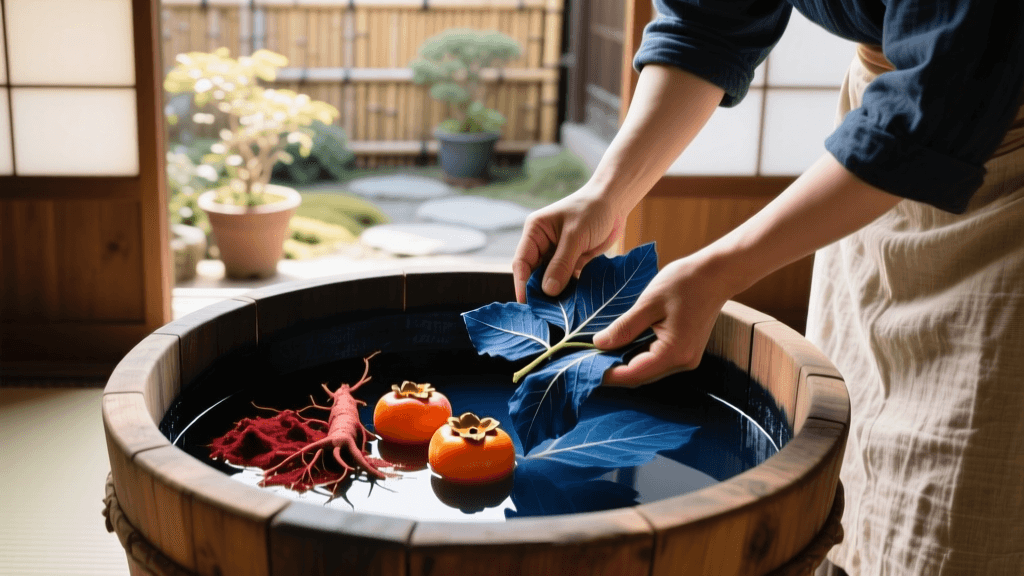
Japanese indigo, or ai, is arguably the most famous of all natural dyes, revered for its deep, oceanic blues. Unlike tropical indigo species that require high heat, Persicaria tinctoria thrives in temperate climates and can be processed using cold-water fermentation methods. In 2026, the cultivation of organic ai has become highly optimized, with heirloom seed varieties yielding higher indican concentrations. The extraction process relies on alkaline reduction using natural wood ash lye or synthetic fructose (thiox), eliminating the need for toxic sodium hydrosulfite. The resulting indigo vat is entirely biodegradable, and the spent plant matter is routinely composted to enrich the soil for the next planting cycle.
Kakishibu (Persimmon Tannin)
Kakishibu is a remarkable traditional dye made from the fermented juice of unripe, astringent persimmons. It produces stunning shades of warm brown, amber, and deep mahogany. What makes kakishibu a darling of the 2026 zero-waste movement is that it requires absolutely no mordant to bind to cellulose or protein fibers; the high tannin content acts as a natural substantive dye. Furthermore, when exposed to sunlight and oxygen over time, the color deepens and the fabric becomes naturally water-resistant and antibacterial. Because it utilizes unripe fruits that would otherwise be culled during agricultural thinning, kakishibu represents a perfect example of upcycling agricultural waste.
Akane (Japanese Madder - Rubia argyi)
For vibrant reds and earthy terracottas, akane (Japanese madder) is the botanical standard. The dye is extracted from the roots of the plant, which are typically harvested after three to four years of growth. Modern sustainable farms in 2026 practice selective root harvesting, leaving portions of the root system intact to allow the plant to regenerate. Akane requires a mordant to achieve colorfastness, but when paired with eco-friendly alum, it produces brilliant, wash-fast reds that synthetic dyes struggle to replicate without heavy environmental costs.
Tamanegi (Onion Skins)
While not exclusive to Japan, the use of tamanegi (yellow and red onion skins) is a staple in Japanese household dyeing and modern urban studios. It is the ultimate zero-waste dye material, sourced directly from restaurant kitchens and grocery store discards. Onion skins are incredibly rich in quercetin, yielding bright golden yellows and deep burnt oranges depending on the mordant used. It requires minimal simmering time, conserving energy, and the exhausted dye bath can be safely poured onto garden beds.
Eco-Friendly Mordanting and Water Management
A critical component of sustainable kusaki-zome is the mordant—the substance used to bind the dye to the fiber. Historically, some dyers used heavy metals like chrome or tin, which are highly toxic and environmentally devastating. In 2026, the standard for eco-friendly studios strictly prohibits these substances.
Safe Mordant Alternatives
- Potassium Aluminum Sulfate (Alum): The safest and most widely used metallic mordant. It is non-toxic, approved for use in water purification, and yields bright, clear colors.
- Soy Milk Binder: A traditional Japanese technique where fabric is soaked in protein-rich soy milk before dyeing. The protein acts as a bridge for tannin-based dyes (like kakishibu and ai) to bind to cellulose fibers like cotton and linen.
- Symplocos and Myrobalan: Plant-based tannins used to mordant cellulose fibers naturally, eliminating the need for mined minerals altogether.
Closed-Loop Water Systems
Dyeing is inherently water-intensive. However, modern 2026 studio setups prioritize water conservation. By utilizing rainwater harvesting systems and solar-thermal heating for dye vats, studios drastically reduce their municipal water and energy reliance. Furthermore, the adoption of multi-bath exhaustion techniques ensures that a single dye pot is used repeatedly until the pigment is entirely depleted. The final, clear exhaustion water—which contains only trace amounts of alum and plant matter—is safely neutralized and used for landscape irrigation, adhering to the EPA's Green Chemistry principles for waste prevention.
Comparison: Environmental Impact of Dye Methods
Understanding the ecological footprint of your materials is essential for a sustainable practice. The table below compares traditional Japanese plant dyes against conventional synthetic alternatives based on 2026 environmental impact metrics.
| Dye Source | Water Toxicity | Biodegradability | Energy Requirement | Primary Mordant Needed |
|---|---|---|---|---|
| Ai (Indigo) | None | 100% | Low (Cold Vat) | Alkaline Reducer |
| Kakishibu (Persimmon) | None | 100% | None (Sun Curing) | None (Substantive) |
| Akane (Madder) | Low | 100% | Medium (Simmer) | Alum / Tannin |
| Tamanegi (Onion) | None | 100% | Low (Simmer) | Alum / Iron |
| Synthetic Azo Dyes | High | < 10% | High (Boil/Chemical) | Heavy Metals / Salts |
Actionable Guide: Starting Your Eco-Friendly Dye Studio
Whether you are a hobbyist looking to dye your own wardrobe or a professional artisan scaling up, establishing an eco-friendly kusaki-zome workflow requires careful planning. For comprehensive botanical dye recipes and mordanting chemistry, the Maiwa School of Textiles remains an indispensable, authoritative resource for dyers worldwide.
1. Sourcing Materials Responsibly
In 2026, transparency in the supply chain is paramount. Source your ai seeds from certified organic Japanese or local regenerative farms. When purchasing pre-made kakishibu, look for artisanal producers in regions like Nara or Wakayama who ferment the juice in traditional cedar barrels without synthetic preservatives. For mordants, purchase USP-grade (food-safe) alum to ensure no heavy metal contamination.
2. Equipment Selection
Ditch reactive metals like copper or iron for your primary dye vats, as they can alter colors unpredictably and leach into the environment if disposed of improperly. Invest in high-grade stainless steel stockpots or enameled cast iron. For temperature control, utilize induction burners paired with digital thermometers; induction heating is vastly more energy-efficient than gas or traditional electric coils, keeping your studio's carbon footprint low.
3. Fiber Preparation (Scouring)
Natural dyes require impeccably clean fibers to bond correctly. Instead of using harsh synthetic detergents, scour your cotton, linen, or silk using soda ash (sodium carbonate) and a pH-neutral, biodegradable plant-based soap. For silk, a gentle simmer with Marseille soap is sufficient to remove sericin without damaging the delicate protein structure.
4. The Dyeing Process and Exhaustion
Always measure your plant material by Weight of Fiber (WOF). For example, dried akane roots typically require 50-100% WOF, while dried onion skins require about 30% WOF. Heat your dye bath slowly to prevent shocking the plant compounds. Once the primary dye bath yields its strongest color, do not discard the plant matter. Replenish the water and heat it again to extract secondary and tertiary shades. These lighter exhaustion shades are perfect for creating nuanced, layered garments.
Conclusion
The practice of kusaki-zome is more than just a method of coloring fabric; it is a profound dialogue with nature. By embracing Japanese natural dye plants like ai, kakishibu, akane, and tamanegi, and combining them with 2026's best eco-friendly methodologies, we can create textiles that are not only visually stunning but ecologically restorative. As you build your sustainable dye practice, remember that every drop of water saved, every toxic mordant avoided, and every agricultural byproduct utilized contributes to a healthier, more vibrant planet.