Japanese Natural Dye Plants: Sustainable Eco Methods for 2026
The Renaissance of Kusaki-zome in 2026
As the global fashion and textile industries face increasingly stringent environmental regulations in 2026, the ancient Japanese art of Kusaki-zome (草木染め), or natural plant dyeing, has experienced a profound renaissance. Far from being a mere historical curiosity, traditional Japanese dyeing techniques are now at the forefront of the circular fashion movement. Modern artisans and eco-conscious designers are looking to Japan's ancestral botanical methods to replace toxic synthetic dyes, heavy metal mordants, and water-intensive processing.
According to the Ellen MacArthur Foundation, the transition to circular textile systems requires eliminating hazardous substances and drastically reducing water pollution. Japanese natural dye plants offer a viable, scalable, and deeply sustainable alternative. By utilizing agricultural byproducts, invasive plant species, and closed-loop water systems, today's Kusaki-zome practitioners are proving that heritage crafts hold the key to a zero-waste future.
Core Japanese Dye Plants for Sustainable Textiles
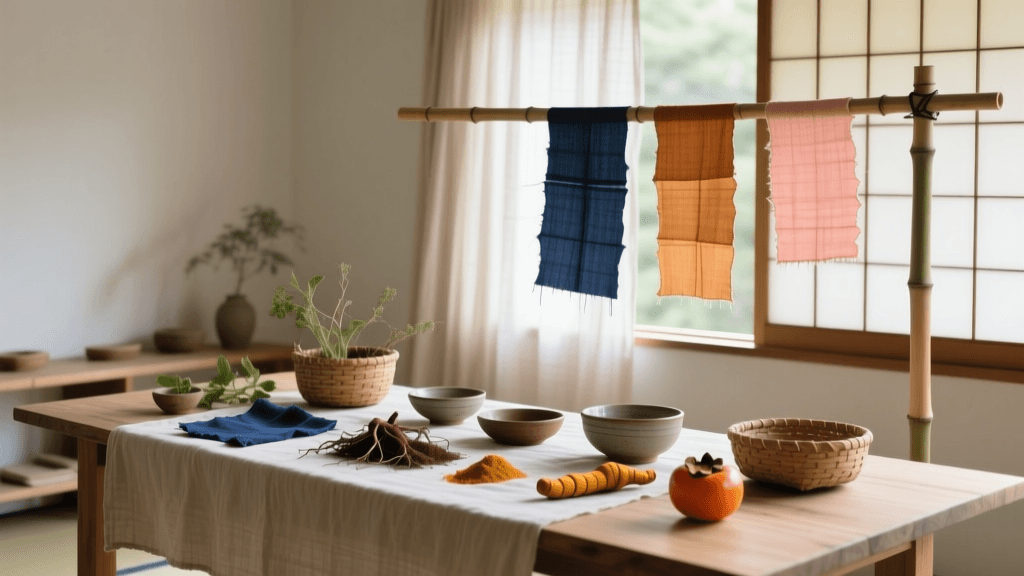
The foundation of Kusaki-zome lies in a deep understanding of local flora. In 2026, sustainable dye gardens and foraging networks have become essential infrastructure for independent textile studios. Below is a comparison of the most prominent Japanese dye plants utilized in modern eco-friendly practices.
| Plant Name (Japanese / Botanical) | Color Yield | Eco-Impact & Sourcing | Primary Mordant / Binder |
|---|---|---|---|
| Ai (Persicaria tinctoria) | Deep Indigo Blue | High. Cultivated in rotational crops; leaves composted post-extraction. | Alkaline reduction (no metal mordant needed) |
| Akane (Rubia argyi) | Madder Red / Terracotta | Medium. Roots harvested after 3 years; requires careful soil management. | Alum or Bio-tannin |
| Kihada (Phellodendron amurense) | Vibrant Yellow | High. Utilizes bark from sustainably managed Amur Cork trees; highly pest-resistant. | None required (substantive dye) |
| Kakishibu (Diospyros kaki) | Warm Brown / Amber | Very High. Made from fermented unripe persimmons; an agricultural byproduct. | UV Light / Sun Curing |
Spotlight on Persicaria tinctoria (Japanese Indigo)
Unlike tropical indigo (Indigofera tinctoria), Japanese indigo (Persicaria tinctoria) thrives in temperate climates and can be grown in small-scale urban dye gardens. The leaves are harvested in late summer and composted after the pigment is extracted, returning vital nitrogen to the soil. The dye vat itself is maintained using natural alkaline builders like wood ash lye or calcium hydroxide, completely avoiding the synthetic sodium dithionite used in conventional denim manufacturing.
Bio-Mordanting: Eliminating Toxic Heavy Metals
Historically, many natural dyes required metallic salts—such as chrome, tin, or copper—to bind the pigment to the fiber. In 2026, the use of heavy metals in home and studio dyeing is widely discouraged due to their toxic impact on municipal water systems and soil health. The modern Kusaki-zome practitioner relies entirely on bio-mordants and plant-based binders.
- Symplocos: A plant-based alum alternative. The dried leaves of the Symplocos tree naturally accumulate aluminum from the soil. Boiling these leaves creates a safe, effective, and entirely botanical mordant bath that yields bright, colorfast results without mining new minerals.
- Oak Galls and Sumac: Rich in natural tannins, these are used to mordant cellulose fibers (like cotton and linen) before dyeing. Tannins act as a bridge between the plant fiber and the dye molecule.
- Soy Milk Binder: For protein-binding dyes on cellulose fibers, soaking the fabric in diluted, unflavored soy milk (1 part soy milk to 5 parts water) coats the fibers in plant protein, allowing dyes like Akane (madder) to adhere vibrantly without metallic salts.
Step-by-Step: Eco-Friendly Kakishibu (Persimmon Tannin) Dyeing
One of the most sustainable and uniquely Japanese dyeing methods is Kakishibu, or persimmon tannin dyeing. Unlike heat-intensive dye baths, Kakishibu is applied cold and relies on UV oxidation to develop its color and water-resistant properties. It is widely used in 2026 for creating durable, weather-resistant canvas goods, paper, and architectural textiles.
Materials and Measurements
To begin, you will need 100% natural, unfermented or semi-fermented Kakishibu liquid, which can be sourced from specialized Japanese craft suppliers or made by fermenting crushed, unripe persimmons for up to two years. For a standard project, calculate your Weight of Fiber (WOF).
- Fabric: 500g of raw, scoured linen or hemp canvas.
- Kakishibu Liquid: 250ml (approx. 50% WOF for a deep, rich brown; use 20% WOF for a lighter amber).
- Tools: A wide hake (traditional Japanese brush made of animal hair or plant fibers), stainless steel or glass basins, and wooden drying racks.
The Application and Sun-Curing Process
- Preparation: Ensure your fabric is thoroughly scoured (washed with a pH-neutral, biodegradable soap) and dampened evenly. Damp fabric absorbs the tannin more uniformly than dry fabric.
- Application: Lay the fabric flat on a clean, non-porous surface. Using the hake brush, apply the Kakishibu liquid in long, overlapping strokes. The liquid will appear pale and slightly yellowish at this stage.
- UV Oxidation: Immediately move the fabric outdoors into direct sunlight. The UV rays trigger a chemical reaction with the tannins, slowly darkening the fabric from yellow to a deep, warm umber. Leave the fabric in the sun for 4 to 6 hours, flipping it once to ensure even exposure.
- Curing and Waterproofing: For maximum water resistance and color depth, repeat the application and sun-curing process 3 to 5 times over consecutive days. The tannins polymerize within the fiber, creating a natural, breathable waterproof barrier that eliminates the need for synthetic DWR (Durable Water Repellent) chemical coatings.
"The beauty of Kakishibu lies in its relationship with time and nature. The color continues to deepen and mature for years after the initial application, making it a living textile that ages gracefully alongside its wearer." — Master Dyer, Kyoto Textile Guild.
Water Conservation and Closed-Loop Systems
Water scarcity remains a pressing global issue in 2026, making water conservation a critical pillar of sustainable Kusaki-zome. Traditional dyeing can be water-intensive, but modern eco-studios have adopted closed-loop methodologies to ensure zero wastewater runoff.
Organizations like Fashion Revolution continuously advocate for transparency and resource management in the supply chain. Applying their principles at the artisanal level, dyers now utilize rainwater harvesting systems to fill dye vats, as rainwater naturally lacks the heavy minerals and chlorine found in municipal tap water, which can dull botanical colors.
Furthermore, managing the pH of the dye bath is essential for both color vibrancy and environmental safety. Before disposing of any exhausted dye bath, practitioners test the pH. Natural dyes often require acidic or alkaline environments; neutralizing the bath to a pH of 7.0 using citric acid or baking soda ensures it is safe to be poured directly onto garden compost. The spent plant matter from the extraction process—such as boiled madder roots or indigo leaves—is then layered into the compost bin, returning organic matter to the earth and completing the biological cycle.
Preserving Heritage Through Sustainable Innovation
The intersection of Asian traditions and modern environmental science has never been more vital. As documented by institutions preserving global craft history, such as the Victoria and Albert Museum's extensive archives on Japanese textiles, the techniques of Kusaki-zome were originally born out of a deep respect for the natural world and its seasonal rhythms.
By embracing bio-mordants, agricultural byproducts like persimmon tannin, and closed-loop water systems, today's textile artists are not merely preserving a historical craft; they are actively evolving it. Japanese natural dye plants offer a profound, actionable blueprint for the future of sustainable fashion—one where every color extracted from the earth can eventually be returned to it without leaving a trace of toxicity behind.