Sustainable Kusaki-Zome: Eco-Friendly Japanese Dyes in 2026
The 2026 Renaissance of Kusaki-Zome
As the global textile industry faces unprecedented scrutiny over microplastic pollution and toxic effluent in 2026, the ancient Japanese art of Kusaki-zome (草木染め), or grass and tree dyeing, has emerged as a leading standard for circular fashion. Unlike synthetic dyeing processes that rely on petrochemicals and heavy metal fixatives, Kusaki-zome utilizes renewable botanical materials, biodegradable auxiliaries, and closed-loop water systems. For modern artisans and sustainable fashion designers, mastering these eco-friendly methods is no longer just a nod to heritage; it is a vital, forward-looking environmental strategy.
The philosophy underpinning Kusaki-zome is deeply rooted in Shizen (nature) and Mottainai (a sense of regret concerning waste). In 2026, leading textile studios in Tokushima and Kyoto have adapted these traditional philosophies into scalable, zero-waste protocols. By replacing toxic synthetic hydrosulfite reducers and heavy metal mordants with plant-based alternatives, practitioners are achieving vibrant, colorfast textiles while returning nutrient-rich wastewater to the soil.
Core Eco-Friendly Japanese Dye Plants
To build a truly sustainable dye practice, one must select plants that offer high pigment yields, require minimal thermal energy, and thrive in regenerative agricultural systems. Three botanical pillars dominate the eco-friendly Japanese dye landscape this year.
Japanese Indigo (Ai / Persicaria tinctoria)
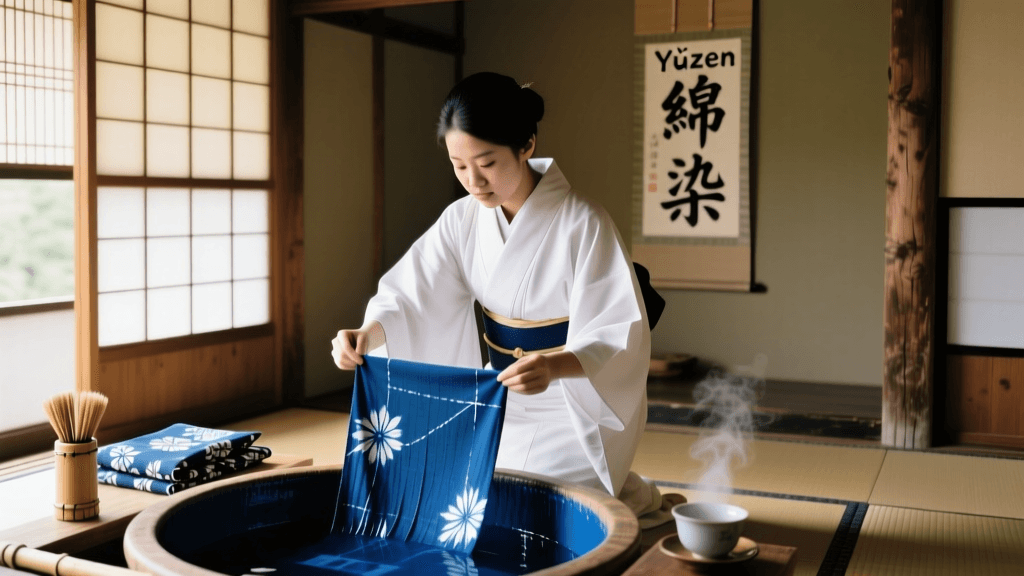
Unlike tropical Indigofera tinctoria, Japanese Indigo (Persicaria tinctoria) is an annual knotweed that thrives in temperate climates. According to botanical profiles documented by the Royal Botanic Gardens, Kew, this species is uniquely suited for sustainable crop rotation. The leaves are harvested in late summer and composted into sukumo (fermented indigo pigment). The 2026 innovation in Ai cultivation involves intercropping the indigo with nitrogen-fixing legumes, which naturally replenishes the soil without synthetic fertilizers. The dyeing process itself relies on alkaline fermentation rather than boiling, drastically reducing the energy footprint of the dye house.
Japanese Madder (Akane / Rubia argyi)
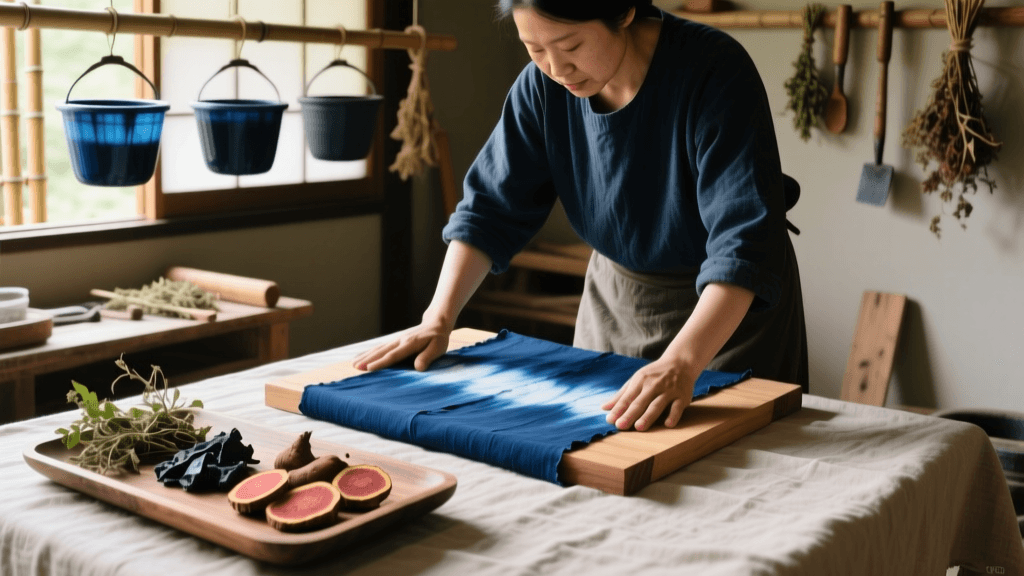
Akane yields a spectrum of warm terracottas, deep crimsons, and soft pinks. The pigment, alizarin, is concentrated in the roots, which are typically harvested after a three-year growth cycle. To maintain ecological balance, modern Akane foragers in 2026 utilize a rotational harvesting method, taking only a third of the root system and leaving the rest to regenerate. Akane requires heat to extract the dye, but eco-conscious studios now utilize solar thermal water heaters to bring the dye baths to the optimal 60°C (140°F), eliminating the need for gas or electric stoves.
Persimmon Tannin (Kakishibu)
Kakishibu is created by pressing and fermenting unripe, astringent persimmons. The resulting liquid is incredibly rich in tannins. What makes Kakishibu a superstar of sustainable dyeing is its dual action: it acts as both the dye and the mordant (fixative). When applied to cellulose fibers like cotton, linen, or hemp, and then cured in direct ultraviolet sunlight, the tannins polymerize. This creates a water-resistant, rot-proof, and insect-repellent fabric that requires absolutely zero chemical fixatives and minimal water rinsing.
Eliminating Toxic Mordants: The Bio-Mordant Shift
Historically, natural dyeing relied on metallic salts like alum, copper, and chrome to bind pigments to fibers. While alum is relatively safe, copper and chrome are highly toxic to aquatic ecosystems. The Victoria and Albert Museum notes that the historical reliance on heavy metals in natural dyeing has often been a barrier to its modern ecological certification. In 2026, the Kusaki-zome community has fully embraced bio-mordants and protein binders to achieve brilliant colorfastness without environmental toxicity.
- Soy Milk (Protein Binder): Cellulose fibers (cotton, linen) lack the natural proteins that animal fibers (silk, wool) possess for binding dye. Soaking fabric in diluted, unflavored soy milk coats the fibers in plant protein, creating a highly receptive surface for Akane and Ai without any metal salts.
- Wood Ash Lye (Alkaline Modifier): Instead of purchasing commercially processed calcium hydroxide, eco-studios leach hardwood ash with rainwater to create an alkaline lye. This is used both to shift the pH of madder baths (yielding deeper reds) and to maintain the alkalinity of the indigo vat.
- Tannin-Rich Bark (Mordant Base): Extracts from gallnuts or acorn cups are used to pre-mordant fibers, creating a strong bond for subsequent dye layers while utilizing forestry byproducts.
2026 Sustainability Metrics: Resource Comparison
Understanding the resource footprint of different dye plants is crucial for scaling sustainable textile production. The following table compares the environmental metrics of the three primary Japanese dye plants under optimal 2026 eco-protocols.
| Dye Plant | Botanical Name | Thermal Energy Required | Eco-Mordant Needed | Water Footprint (L/kg fiber) | Wastewater Reusability |
|---|---|---|---|---|---|
| Japanese Indigo (Ai) | Persicaria tinctoria | None (Ambient Fermentation) | None (Alkaline Vat) | 15 Liters | High (Can be composted) |
| Japanese Madder (Akane) | Rubia argyi | Moderate (60°C Solar Thermal) | Soy Milk or Tannin | 30 Liters | Medium (Exhaust baths) |
| Persimmon (Kakishibu) | Diospyros kaki | None (Sun Curing) | None (Self-Mordanting) | 5 Liters | High (Biodegradable) |
Step-by-Step: The Zero-Waste 1-2-3 Indigo Vat
The most significant breakthrough in sustainable indigo dyeing is the popularization of the 1-2-3 fructose vat, which eliminates the use of toxic synthetic reducing agents like sodium dithionite. This method uses food-grade ingredients to remove oxygen from the water, rendering the indigo pigment soluble.
- The Ratio: Use 1 part natural indigo pigment (extracted from Ai sukumo), 2 parts calcium hydroxide (slaked lime, or wood ash lye equivalent), and 3 parts fructose (fruit sugar).
- The Preparation: Heat 10 liters of water to 50°C (122°F). In a separate jar, dissolve the calcium hydroxide in a small amount of warm water, then add the fructose. Stir until fully dissolved.
- The Reduction: Gently stir the indigo pigment into the main pot. Slowly pour in the calcium/fructose solution. Cover the pot tightly to prevent oxygen from entering.
- The Wait: Let the vat sit undisturbed for 24 hours. The liquid should turn a deep amber-yellow, with a coppery-blue foam (the ai no hana, or indigo flower) on the surface.
- Dyeing: Submerge pre-wetted, soy-milk-treated fabric. Gently massage the fabric under the surface for 10 minutes. Remove and squeeze gently. As the fabric meets the oxygen in the air, it will magically shift from yellow-green to a brilliant, permanent blue.
Water Reclamation and Exhaust Dyeing
A core tenet of the 2026 Kusaki-zome methodology is the absolute refusal to waste dye liquor. Synthetic dye houses often dump heavily colored, toxic water after a single use. In contrast, Japanese natural dyers practice exhaust dyeing. After the primary dye bath has yielded its darkest shade, a second batch of fabric is introduced to the same pot. This second batch absorbs a lighter, pastel version of the color. This process is repeated until the water runs completely clear.
Furthermore, the final wastewater from a plant-based dye vat is rich in organic compounds. Studios equipped with bio-swales and reed bed filtration systems route this nutrient-dense water directly into their indigo and madder gardens, completing the circular agricultural loop. By integrating Kusaki-zome with regenerative farming and zero-waste chemistry, the textile artisans of 2026 are proving that the most sustainable technologies of the future are often the ancient traditions of the past.