Kimono Travel Essentials 2026: Packing & Where to Wear
Introduction to Kimono Travel in 2026
As global tourism in Japan reaches new heights in 2026, travelers are increasingly seeking authentic, immersive cultural experiences over standard sightseeing. Among the most profound ways to connect with Japanese heritage is by wearing a traditional kimono while exploring the country's historic streets, temples, and gardens. However, bringing your own kimono on an international trip requires meticulous planning, specialized packing techniques, and a deep understanding of garment care. Whether you are a dedicated collector, a practitioner of traditional arts, or simply a cultural enthusiast who recently purchased a vintage piece in Tokyo, knowing exactly what to pack and where to wear your garments is essential for a seamless journey.
Fabric Choices for the Modern Traveler
Before you begin packing, it is crucial to evaluate the fabric of your kimono. Traditional silk (kinu) is breathtaking but notoriously difficult to maintain on the road, especially during Japan's humid rainy season (tsuyu) in early summer or the unpredictable autumn showers. For the 2026 traveler, high-quality polyester blends and modern washable silks have become incredibly popular. These innovative textiles mimic the drape and sheen of authentic silk but can be hand-washed in a hotel sink and dried overnight. If you are traveling with antique silk, you must pack it with extreme care, utilizing specialized acid-free tissue paper and moisture-absorbing silica gel packets to prevent mold and permanent creasing.
The Ultimate Kimono Packing List
A kimono is not a single garment but a complex ensemble of layered textiles, ties, and accessories. Forgetting even one crucial component can render the entire outfit unwearable. Below is the comprehensive packing checklist for your 2026 Japan itinerary.
Core Garments
- Kimono: For daytime travel and sightseeing, a komon (all-over repeating pattern) or tsumugi (woven silk/cotton) is appropriate. Save the formal houmongi for evening tea ceremonies or upscale dining.
- Nagajuban (Under-Kimono): This protects your outer kimono from sweat and skin oils. For travel, pack a han-juban (half-undergarment), which consists only of the top half and a separate slip skirt, saving valuable suitcase space.
- Susuyoke (Slip Skirt): A lightweight, breathable wrap skirt worn beneath the kimono to prevent friction and ensure a smooth drape.
Undergarments and Ties
- Koshihimo (Waist Ties): You will need at least three to four of these long, thin cotton or silk cords to secure the nagajuban and the main kimono in place before tying the obi.
- Datejime (Wide Sashes): Pack two of these elastic or silk sashes. They are wrapped over the koshihimo to flatten the waist area and provide a smooth foundation for the obi.
- Obi-ita (Obi Board): A stiff, felt-covered board inserted into the front of the obi to prevent wrinkling and maintain a crisp, elegant silhouette.
The Obi and Accessories
- Obi (Sash): The Nagoya obi is the most practical choice for travel. It is pre-folded and stitched at one end, making the complex otaiko (drum bow) knot significantly easier to tie by yourself in a hotel room.
- Obijime (Decorative Cord): A braided cord tied around the center of the obi to secure the knot and add a pop of contrasting color.
- Obidome (Cord Ornament): A small, decorative bead or carved piece threaded onto the obijime for an extra touch of personalization.
Footwear and Extras
- Tabi (Split-Toe Socks): Essential for wearing traditional sandals. Pack at least two pairs of white cotton tabi. Modern stretch-tabi with rubber soles are also excellent for long days of walking on stone temple paths.
- Zori or Geta (Sandals): Zori are flat, formal sandals made of brocade or vinyl, while geta are wooden and more casual. Ensure the hanao (thongs) are not too tight, as they can cause blisters during extended sightseeing.
- Sensu (Folding Fan): A practical and elegant accessory to carry in your obi or handbag, especially useful during the warmer months.
How to Pack Your Kimono in a Suitcase
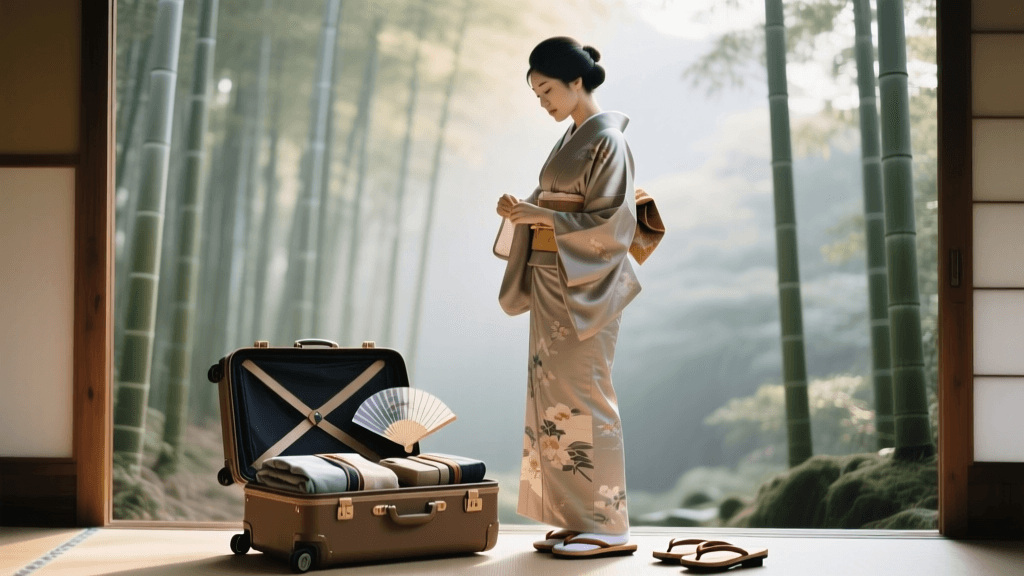
Never fold a kimono using standard Western clothing folding methods, as this will create harsh, unnatural creases that are nearly impossible to remove without professional steaming. Instead, use the traditional tatou method. Lay the kimono flat on a clean surface, fold it along its designated seams (the waki and okumi lines), and place it inside a specialized kimono envelope called a tatoushi. If you do not have a tatoushi, wrap the folded garment in unbleached cotton or acid-free tissue paper. Place the heaviest items (like the obi and zori) at the bottom of your suitcase, and lay the wrapped kimono flat on top to prevent crushing.
Where to Wear Your Kimono in Japan (2026 Guide)
While you can wear a kimono almost anywhere in Japan, certain locations offer the most breathtaking backdrops and culturally supportive environments. According to the Kyoto City Official Travel Guide, dressing in traditional attire is highly encouraged in historic districts, though travelers are asked to be mindful of local residents and avoid blocking narrow pathways.
Kyoto: Navigating the Traditional Heartland
Kyoto remains the undisputed capital of kimono culture. However, to avoid the heavy crowds of the Higashiyama district and Kiyomizu-dera in 2026, consider visiting the lesser-known but equally stunning Daigo-ji temple in the southeast, or the serene moss gardens of Saiho-ji (which requires advance reservation). The bamboo groves of Arashiyama are beautiful, but early morning visits (before 8:00 AM) are highly recommended for unobstructed photography and a peaceful stroll in your zori.
Kanazawa: The Underrated Cultural Gem
Thanks to continued Shinkansen expansions, Kanazawa is more accessible than ever and offers a spectacular alternative to Kyoto. The Higashi Chaya geisha district, with its preserved wooden teahouses, is the perfect setting for a komon kimono. Afterward, take a stroll through Kenroku-en, one of Japan's top three landscape gardens, where the seasonal colors perfectly complement traditional textile patterns.
Tokyo: Historic Enclaves
While Tokyo is a hyper-modern metropolis, it harbors historic enclaves where kimono wearers feel entirely at home. The Yanaka Ginza neighborhood retains a mid-century, working-class charm with narrow alleys and traditional sweet shops. Alternatively, the forested grounds of Meiji Jingu in Shibuya provide a majestic, nature-filled backdrop that contrasts beautifully with the vibrant silk of your garment.
Comparison Chart: Renting vs. Packing Your Own Kimono
Deciding whether to pack your own ensemble or rent one upon arrival depends on your itinerary, budget, and dedication to authenticity. Below is a comparison for the 2026 travel season.
| Feature | Packing Your Own Kimono | Renting in Japan (2026) |
|---|---|---|
| Cost | High initial investment; zero daily rental fees. | Approx. ¥5,000 - ¥12,000 per day ($35 - $85 USD). |
| Authenticity & Fit | Perfectly tailored to your body; vintage/antique options. | Standardized sizes; mostly modern, mass-produced prints. |
| Luggage Space | Requires significant suitcase space and careful packing. | Zero luggage impact; ideal for backpackers or short trips. |
| Time Required | 45-60 minutes to dress yourself in the hotel. | 30 minutes with the help of a professional dresser. |
| Weather Flexibility | You control the layers and fabric weight. | Limited seasonal options; may lack proper rain gear. |
Kimono Etiquette and Weather Adaptations
Wearing a kimono comes with a specific set of physical and cultural etiquettes. The most critical rule, deeply rooted in Japanese culture and documented by institutions like the Victoria and Albert Museum, is the wrapping direction: the left side of the kimono must always overlap the right side. Wrapping right-over-left is strictly reserved for dressing the deceased for burial. Additionally, when walking, take smaller, measured steps to prevent the hem from flapping open, and when sitting, gently pull the back of the kimono down to avoid sitting directly on the delicate obi knot.
Weather in Japan can be unpredictable. If you are traveling during the rainy season or early autumn, investing in a amagoat (traditional kimono raincoat) and a specialized waterproof umbrella is highly recommended. Modern 2026 iterations of these raincoats are made from lightweight, breathable, and transparent materials that protect your silk from water spots without hiding your beautiful ensemble.
Conclusion
Traveling to Japan with your own kimono is a deeply rewarding endeavor that bridges the gap between being a tourist and a participant in living history. By carefully selecting your fabrics, meticulously packing your accessories, and choosing the right locations to showcase your attire, you honor the rich legacy of Japanese textile arts. For the latest travel advisories, cultural etiquette updates, and regional event schedules, always consult the Japan National Tourism Organization (JNTO) before finalizing your 2026 itinerary. Pack thoughtfully, dress respectfully, and prepare to experience Japan through the elegant, timeless lens of the kimono.