Ceremonial vs Everyday Hanbok: The 2026 Buyer Guide
The Dual Renaissance of Korean Dress in 2026
As we navigate the fashion landscape of 2026, the South Korean hanbok stands as a masterclass in cultural preservation and modern adaptation. No longer confined strictly to historical dramas or rare holidays, traditional Korean dress has bifurcated into two distinct but equally important categories: the meticulously preserved ceremonial hanbok (jeontong hanbok) and the highly functional, modernized everyday hanbok (gaeryang hanbok). For collectors, cultural enthusiasts, and those looking to incorporate Asian traditions into their contemporary wardrobes, understanding the nuanced differences between these two styles is essential.
The Encyclopaedia Britannica notes that the fundamental structure of the hanbok—comprising the jeogori (jacket) and chima (wrap skirt) for women, and the jeogori and baji (trousers) for men—has remained remarkably consistent for centuries. However, the 2026 market offers vastly different interpretations of this silhouette depending on the garment's intended use. Whether you are preparing for a traditional Korean wedding, attending a Seollal (Lunar New Year) celebration, or simply seeking a breathable, elegant ensemble for a summer office environment, this comprehensive guide will help you navigate the ceremonial versus everyday hanbok divide.
Ceremonial Hanbok: Heritage, Silk, and Strict Silhouettes
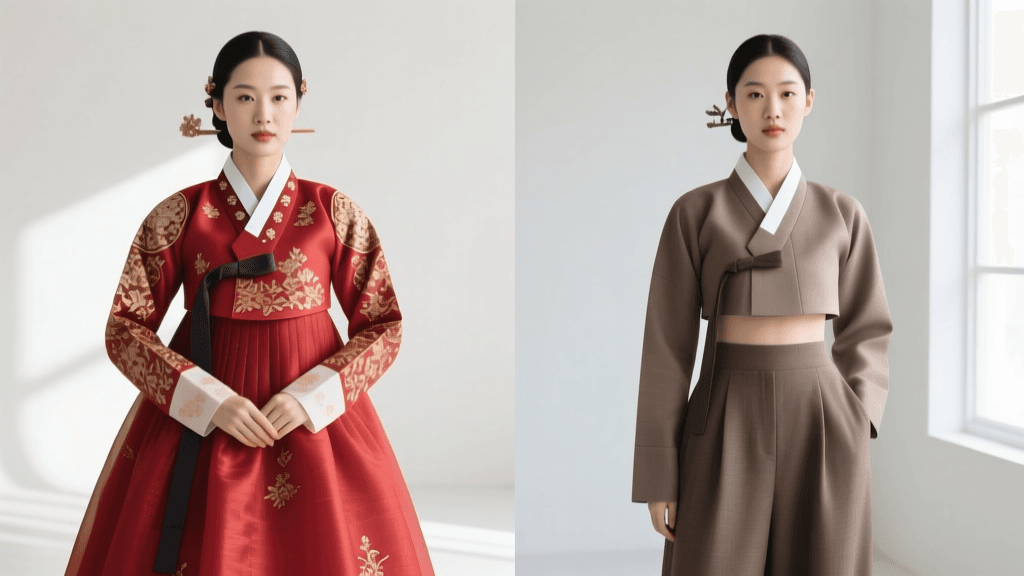
Ceremonial hanbok is designed to honor historical accuracy, utilizing traditional flat-cutting techniques and luxurious, natural fibers. These garments are typically worn during major life events and cultural holidays, such as Chuseok (Korean Thanksgiving), weddings, and a child's first birthday (doljanchi). In 2026, there is a massive resurgence in demand for heritage textiles, particularly myeongju (traditional Korean silk) and mosi (fine ramie), woven by certified artisans recognized by the National Museum of Korea and associated cultural heritage programs.
Key Characteristics of Ceremonial Wear
- Structured Silhouettes: The chima is exceptionally voluminous, often requiring multiple layers of under-skirts (sokchima) to achieve the iconic bell shape. The jeogori is cut with long, sweeping sleeves and traditional curved seams (baerae).
- Ornate Embroidery: Ceremonial pieces, especially bridal hwarot or festive dangui, feature intricate gold-leaf stamping (geumbak) and symbolic embroidery depicting peonies, cranes, or lotus flowers.
- Traditional Fastenings: Instead of modern hooks or zippers, ceremonial hanbok relies entirely on the goreum—the long, elegant chest ties that are knotted in a specific, historically accurate manner.
- Vibrant, Symbolic Colors: Rooted in the philosophy of obangsaek (the five traditional Korean colors), ceremonial wear frequently utilizes striking contrasts of red, blue, yellow, white, and black to symbolize balance and harmony.
Because of the labor-intensive weaving and natural dyeing processes required, authentic ceremonial hanbok remains a significant investment. In 2026, a custom-tailored silk ceremonial set from a master artisan in Seoul's Bukchon Hanok Village typically ranges from $1,200 to over $3,500 USD, reflecting the premium placed on intangible cultural heritage craftsmanship.
Everyday Hanbok (Gaeryang Hanbok): Function Meets Tradition
The gaeryang hanbok (reformed or modernized hanbok) movement has completely transformed how Koreans and global fashion enthusiasts interact with traditional dress on a daily basis. By 2026, everyday hanbok has become a staple in Seoul's creative districts like Ikseon-dong and Seongsu-dong, prized for its blend of classical elegance and modern utility. Designers have reimagined the garment to suit the rigors of contemporary life, commuting, and office environments without losing the romantic essence of the traditional silhouette.
Modern Adaptations for Daily Life
- Practical Proportions: The most noticeable change is the hemline. Modern chima skirts are frequently cut to midi or even knee-length, preventing the fabric from dragging on city streets. The jeogori is often tailored slightly closer to the body, with shortened sleeves to accommodate typing and desk work.
- Hidden Modernities: While the exterior maintains the illusion of traditional wrap skirts and tied jackets, everyday hanbok in 2026 frequently features hidden side zippers, elasticized waistbands, and deep, functional pockets.
- Breathable, Washable Fabrics: To allow for frequent wear, designers utilize high-quality cotton, linen, and sustainable Tencel blends. These fabrics drape beautifully but can withstand gentle machine washing, a stark contrast to the strict dry-clean-only nature of ceremonial silk.
- Muted and Earthy Palettes: While bright colors are still available, the 2026 everyday collections heavily favor muted pastels, deep earth tones, and monochromatic styling, making them easier to integrate with modern accessories like leather loafers and minimalist tote bags.
The Victoria and Albert Museum's Asian Collections have increasingly highlighted how global textile traditions adapt to modernity, and the everyday hanbok is a prime example of living history. Pricing for these modernized sets is highly accessible, with premium ready-to-wear brands offering complete sets (skirt and jacket) between $120 and $350 USD.
Side-by-Side Comparison: Ceremonial vs. Everyday Hanbok
To help you make an informed purchasing decision, refer to the comparison chart below detailing the core differences between the two styles as of the 2026 market.
| Feature | Ceremonial (Jeontong Hanbok) | Everyday (Gaeryang Hanbok) |
|---|---|---|
| Primary Use | Weddings, Lunar New Year, Chuseok, Stage | Office wear, casual outings, travel, daily use |
| Textiles | 100% Silk (Myeongju), Ramie (Mosi) | Cotton, Linen, Rayon, Tencel blends |
| Skirt Length | Floor-length, highly voluminous | Midi, knee-length, A-line or pleated |
| Fastenings | Traditional Goreum (chest ties) only | Hidden zippers, hooks, snap buttons |
| Maintenance | Specialist dry cleaning, careful airing | Gentle machine wash or hand wash |
| 2026 Price Range | $800 - $3,500+ USD | $80 - $350 USD |
| Undergarments | Requires layered Sokchima (underskirts) | Worn with standard modern undergarments |
Sizing, Fit, and Purchasing Advice for 2026
One of the most common hurdles for international buyers is navigating the sizing differences between traditional and modern hanbok. Ceremonial hanbok is traditionally free-sized or custom-tailored. Because the chima wraps around the body and ties above the bust, the primary measurement required is the chest circumference and the desired shoulder-to-floor length. The jeogori is cut with a flat shoulder seam that drops naturally, meaning it is forgiving across different shoulder widths.
Conversely, everyday hanbok in 2026 is produced using standardized Western sizing (XS through XL). When shopping for gaeryang hanbok online from Seoul-based boutiques, it is crucial to consult the brand's specific size chart. Pay close attention to the bust measurement on the jeogori, as modern tailoring features darts and structured seams that do not offer the same flexibility as traditional flat-cutting. If you are between sizes, always size up for the jacket to ensure the front panels cross comfortably over the chest without pulling the goreum ties taut.
Where to Source Authentic Garments
For ceremonial pieces, the gold standard remains a consultation with a certified hanbok jang-in (master artisan) or visiting heritage boutiques in Seoul's Jongno District. Many of these ateliers now offer virtual consultations and international shipping, utilizing 3D body scanning apps to ensure a perfect fit for overseas clients. For everyday wear, South Korean e-commerce platforms and global fashion aggregators feature dedicated 'Modern Hanbok' sections, with new capsule collections dropping at the start of every season.
Garment Care and Preservation
Proper care is vital to maintaining the structural integrity and color vibrancy of your garments. The care routine diverges sharply based on the category of your hanbok.
Caring for Ceremonial Silk and Ramie
Silk ceremonial hanbok must never be exposed to water. In 2026, eco-friendly, non-toxic dry cleaning services are widely recommended to preserve the natural sheen of the myeongju. After wearing, the garment should be hung in a well-ventilated, shaded area to air out before being stored. Store silk hanbok in breathable cotton garment bags—never plastic, which traps moisture and causes yellowing. Include natural cedar blocks or dried mugwort sachets to deter insects without introducing harsh chemical odors to the delicate fibers.
Maintaining Everyday Cotton and Linen
Everyday hanbok is designed for ease. Cotton and linen blends can generally be hand-washed in cool water with a pH-neutral detergent. Avoid vigorous wringing, which can distort the modern darts and seams. Instead, gently press the water out and hang the garment to dry in the shade; direct sunlight will rapidly fade the natural dyes often used in modern collections. A light steam ironing on the appropriate fabric setting will remove wrinkles and restore the crisp, elegant lines of the jeogori collar (git), which is often reinforced with a detachable white paper or fabric insert (dongjeong) to maintain its sharp, clean appearance.
Final Thoughts on Building Your Wardrobe
The beauty of the hanbok in 2026 lies in its versatility. You no longer have to choose between respecting historical tradition and participating in modern fashion; you can embrace both. A well-curated wardrobe might include one breathtaking, custom-fitted silk set reserved for life's most significant milestones, alongside two or three breathable, cotton gaeryang sets that bring a touch of poetic elegance to your daily routine. By understanding the distinct purposes, fabrics, and care requirements of both ceremonial and everyday hanbok, you can invest wisely in garments that celebrate Asian heritage while seamlessly fitting into your contemporary life.