Su, Shu, and Cantonese Embroidery Techniques for Hanfu
The Legacy of Chinese Silk Embroidery
When building an authentic and high-quality Hanfu wardrobe, understanding the nuances of traditional Chinese embroidery is essential. The art of silk embroidery in China dates back over two millennia, evolving into distinct regional styles that reflect local aesthetics, climate, and cultural values. According to the UNESCO Intangible Cultural Heritage registry, sericulture and silk craftsmanship are foundational to Chinese cultural identity. While there are traditionally 'Four Famous Embroideries' of China (Su, Shu, Xiang, and Yue), this guide focuses on the three most prominent techniques utilized in historical Hanfu recreation and modern couture: Suzhou (Su Xiu), Sichuan (Shu Xiu), and Cantonese (Yue Xiu).
Choosing the correct embroidery style for your Hanfu is not merely an aesthetic decision; it is a matter of historical accuracy and textile performance. The weight of the silk, the type of stitch, and the thread composition all dictate how a garment drapes, breathes, and endures over time. Below, we break down the technical specifications, historical applications, and actionable sourcing advice for Su, Shu, and Yue embroidery techniques.
Suzhou Embroidery (Su Xiu): The Pinnacle of Elegance
Originating from the Jiangsu province, Suzhou embroidery is globally renowned for its refined elegance, delicate color palettes, and meticulous craftsmanship. Su Xiu is characterized by its flat, even stitches and the astonishing technique of double-sided embroidery (shuangmian xiu), where the design is visible and identical on both sides of the fabric with no hidden knots.
Technical Specifications and Stitches
The hallmark of Su Xiu is thread splitting. A single strand of silk thread can be split into two, four, eight, or even sixteen microscopic filaments. This allows artisans to create hyper-realistic gradients and incredibly fine details, such as the delicate veins of a lotus leaf or the scales of a koi fish. The primary stitch used is the 'Pingzhen' (flat stitch), which lays the thread perfectly flush against the fabric, creating a smooth, painting-like surface.
Actionable Advice for Hanfu Styling
Su Xiu is best suited for the refined, scholarly aesthetics of the Ming and Song dynasties. When commissioning or purchasing a Ming-style Aoqun (a lined jacket paired with a pleated skirt), request a 19 momme silk satin or silk crepe de chine base. The 19 momme weight provides enough structure for the jacket while maintaining a luxurious drape. For the embroidery, ensure the artisan uses a size 10 or 12 embroidery needle and splits the thread to at least 1/8th thickness for floral motifs. Authentic, hand-embroidered Su Xiu panels are an investment; expect to pay between $300 and $800 USD for a high-quality, custom-embroidered jacket bodice.
Shu Embroidery (Shu Xiu): Bold Colors and Satin Stitches
Hailing from Sichuan province, Shu embroidery is celebrated for its bold, vibrant colors and robust, textured stitches. Historically, the Sichuan basin's humid climate influenced the development of Shu Xiu, as the thicker stitches and heavier silk bases provided durability and a rich, tactile experience. As noted by Wikipedia's Comprehensive Guide to Chinese Embroidery, Shu Xiu has been a staple of western Chinese textile trade since the Han dynasty.
Technical Specifications and Stitches
The signature technique of Shu Xiu is the 'Yunzhen' (halo stitch). This complex stitch involves layering threads of varying lengths and shades to create a seamless, glowing gradient effect, mimicking the halo of light around an object. Shu embroidery frequently utilizes a thicker silk thread compared to Su Xiu, resulting in a raised, three-dimensional texture. Artisans often employ a 'carriage return' stitch to ensure the threads are tightly packed and highly resistant to fraying.
Actionable Advice for Hanfu Styling
Shu Xiu is the perfect match for the opulent, cosmopolitan styles of the Tang dynasty. If you are styling a Tang-era Banbi (half-sleeve jacket) or a Qixiong Shanqun (chest-high skirt), Shu embroidery's vibrant reds, golds, and deep greens will capture the era's flamboyant spirit. Opt for a 16 momme silk crepe base, which holds the heavier Shu stitches without puckering. When caring for Shu Xiu, the raised stitches are prone to snagging. Always store these garments flat or rolled, never hung, to prevent the heavy embroidery from distorting the silk base over time. Custom Shu Xiu garments typically range from $150 to $350 USD, making it a slightly more accessible option for vibrant, everyday historical wear.
Cantonese Embroidery (Yue Xiu): Vibrant Textures and Goldwork
Cantonese embroidery, or Yue Xiu, originates from the Lingnan region (Guangdong province). Influenced by its history as a major maritime trade hub, Yue Xiu is famous for its extravagant use of metallic threads, peacock feathers, and highly textured, almost sculptural relief work. The Metropolitan Museum of Art highlights how southern Chinese silk traditions often incorporated diverse, imported materials to create striking visual contrasts.
Technical Specifications and Stitches
The defining feature of Yue Xiu is 'Panjin' (gold and silver thread couching). Instead of passing the metallic thread through the fabric—which would weaken it and dull the metal—artisans lay the gold thread on the surface of the silk and secure it with tiny, nearly invisible stitches of colored silk. Yue Xiu also frequently incorporates 'Dingzhen' (nail stitch) to create raised, padded motifs that cast actual shadows on the garment. The color palette is highly saturated, favoring stark contrasts like crimson and emerald.
Actionable Advice for Hanfu Styling
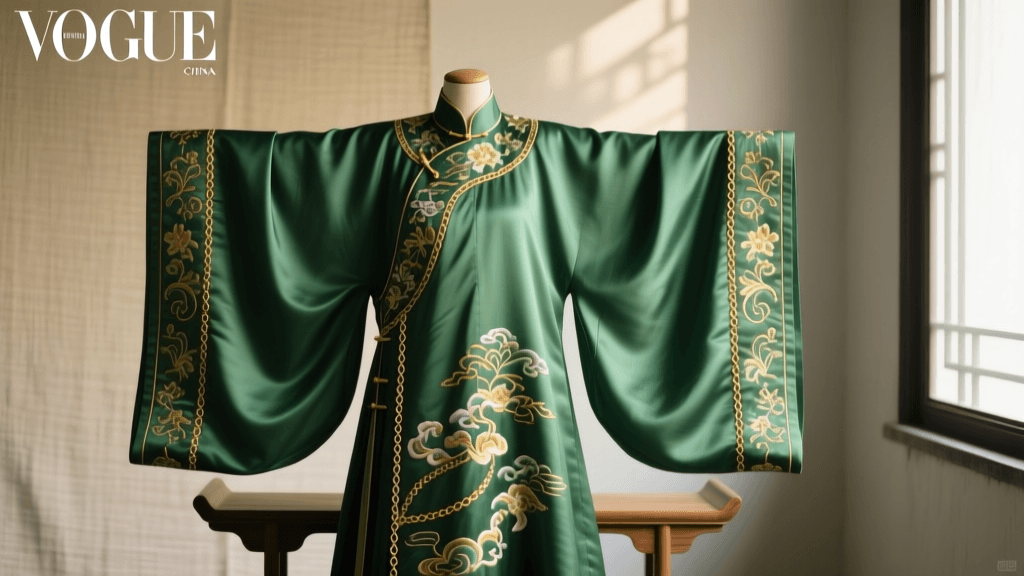
Yue Xiu is inherently ceremonial and regal. It is the premier choice for Ming dynasty ceremonial wear, particularly the Xiapei (cloud shoulder) and the Mang Pao (python robe). Because goldwork and padded stitches are heavy, you must use a robust fabric base. We strongly recommend a 30 momme heavy silk crepe or a silk-linen blend to support the weight of the embroidery without sagging. When ironing Yue Xiu, never press directly on the goldwork; use a thick velvet pressing board and steam from the reverse side to preserve the three-dimensional relief. Due to the cost of real metallic threads and the intense labor required, authentic Yue Xiu ceremonial pieces start at $500 USD and can easily exceed $1,500 USD.
Comparison Chart: Su, Shu, and Yue Embroidery
To help you select the right technique for your next Hanfu project, refer to the structured comparison below:
| Feature | Suzhou (Su Xiu) | Sichuan (Shu Xiu) | Cantonese (Yue Xiu) |
|---|---|---|---|
| Origin Region | Jiangsu (East) | Sichuan (West) | Guangdong (South) |
| Signature Stitch | Pingzhen (Flat Stitch) | Yunzhen (Halo Stitch) | Panjin (Gold Couching) |
| Visual Texture | Smooth, flat, painting-like | Raised, dense, gradient | Sculptural, metallic, padded |
| Ideal Silk Weight | 12 to 19 momme | 16 to 22 momme | 25 to 30+ momme |
| Best Hanfu Era | Song & Ming Dynasties | Han & Tang Dynasties | Ming & Qing Ceremonial |
| Avg. Price Range | $300 - $800+ | $150 - $350 | $500 - $1,500+ |
Practical Guide: Sourcing and Caring for Embroidered Hanfu
Investing in hand-embroidered Hanfu requires diligent care to preserve the integrity of the silk and the vibrancy of the dyes. Whether you are purchasing Su, Shu, or Yue embroidery, follow these strict maintenance protocols:
Washing and Cleaning
- Never Machine Wash: The agitation will destroy the delicate stitches and cause the silk to fray. Hand wash only in cold water (below 20°C).
- Use pH-Neutral Detergents: Standard laundry detergents are too alkaline and will strip the silk's natural sericin, causing the embroidery to lose its luster. Use specialized wool and silk washes like Eucalan or The Laundress Delicate Wash.
- Spot Clean Metallic Threads: For Yue Xiu goldwork, avoid submerging the garment if possible. Use a soft, damp microfiber cloth to gently dab away stains, as water can tarnish lower-grade metallic threads over time.
Storage and Preservation
- Avoid Wire Hangers: The weight of Shu and Yue embroidery will stretch the silk shoulders. Use wide, padded wooden hangers for jackets, or fold the garments with acid-free tissue paper to prevent hard creases.
- Climate Control: Silk is highly susceptible to mold in humid environments and brittleness in dry ones. Store your embroidered Hanfu in a breathable cotton garment bag in a room with 45-55% relative humidity.
- Light Exposure: Natural silk dyes, especially the vibrant reds and yellows used in Shu Xiu, will fade rapidly under UV light. Never store or display your embroidered garments in direct sunlight.
Conclusion
Mastering the distinctions between Suzhou, Shu, and Cantonese embroidery elevates your Hanfu practice from simple costuming to a profound appreciation of Chinese textile heritage. By matching the correct stitch technique, silk weight, and historical era, you ensure that your garments are not only visually stunning but also historically resonant and structurally sound. Whether you prefer the whisper-thin elegance of Su Xiu, the vibrant gradients of Shu Xiu, or the regal goldwork of Yue Xiu, understanding these techniques empowers you to make informed, authentic choices for your traditional wardrobe.